

What is Box-Type Atmosphere Furnace? A Thermal Processing Equipment for Controlled Atmosphere Sintering and Heat Treatment
Introduction
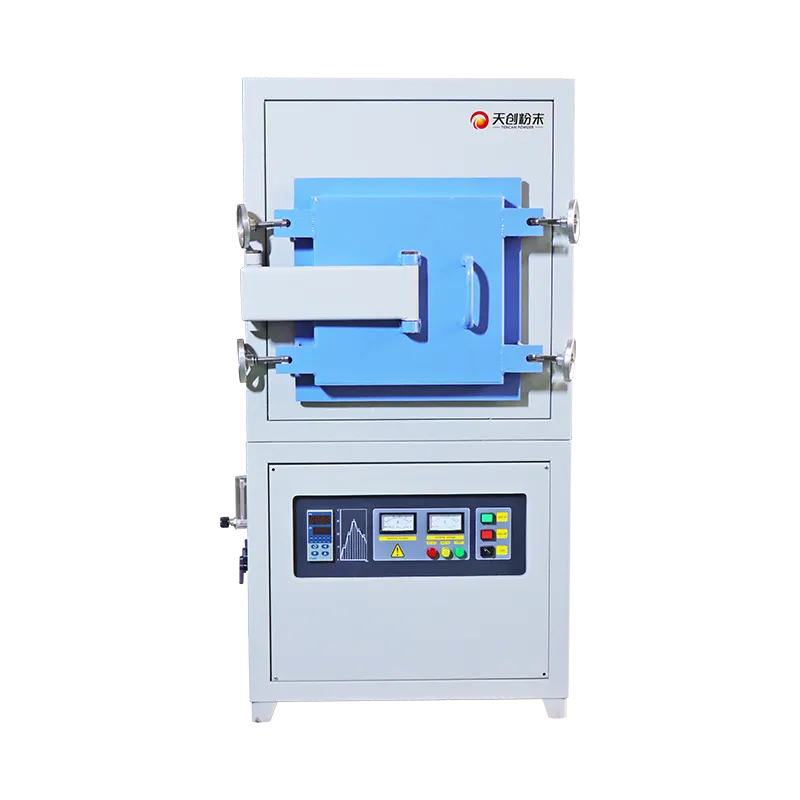
At its core, a Box-Type Atmosphere Furnace is a specialized thermal processing system designed to heat materials within a sealed chamber while precisely controlling the internal gas composition. It is widely used in laboratories and industrial settings to perform sintering, annealing, reduction, ashing, and other heat treatments under a protective or reactive atmosphere, preventing oxidation, decarburization, and other unwanted chemical reactions that occur in air.
Core Function and Working Principle
The Box-Type Atmosphere Furnace transforms raw materials (such as metal powders, ceramic green bodies, or chemical compounds) into finished products with desired microstructure and properties through controlled heating and atmosphere management. The furnace consists of a refractory-lined chamber, heating elements, a gas inlet/outlet system, and a programmable temperature controller.
During operation, the chamber is first evacuated or purged with an inert gas (e.g., argon, nitrogen) to remove air. Then, a specific atmosphere (e.g., hydrogen, nitrogen-hydrogen mixture, or vacuum) is introduced and maintained throughout the heating cycle. The heating elements raise the temperature to the target level (typically up to 1200°C or higher), while the atmosphere prevents oxidation and allows chemical reactions like reduction or sintering to occur. The entire process can be programmed with precise heating ramps, holding times, and cooling rates, ensuring repeatable results.
Key Components and Technical Features
Heating System
High-quality resistance heating elements (e.g., silicon carbide, molybdenum disilicide) are embedded in the furnace walls to provide uniform heat distribution. The furnace is insulated with ceramic fiber or refractory bricks to minimize heat loss and improve energy efficiency.
Gas Control System
A sophisticated gas manifold with mass flow controllers, valves, and pressure gauges allows the user to introduce one or multiple gases (inert, reducing, or oxidizing) with precise flow rates. The system can also be configured for vacuum operation, enabling the furnace to function as a vacuum atmosphere furnace when needed.
Temperature Control
Modern Box-Type Atmosphere Furnaces are equipped with PID controllers and programmable logic controllers (PLC) that support multi-segment temperature profiles. Users can set ramp-up rates, soak times, and cooling curves, all stored in memory for different recipes.
Key Performance Indicators and Selection Criteria
When selecting a Box-Type Atmosphere Furnace, consider the following parameters:
- Maximum Temperature: Typically ranges from 1000°C to 1600°C. Choose based on the melting point and sintering temperature of your materials.
- Chamber Size: Available in various volumes (e.g., 1L to 100L+). Larger chambers allow batch processing but require more power and gas consumption.
- Atmosphere Compatibility: Ensure the furnace can handle the specific gases you need (e.g., hydrogen requires special safety features).
- Heating Rate and Uniformity: Look for specifications on temperature uniformity across the chamber (e.g., ±5°C) to avoid hot spots.
- Automation and Data Logging: Advanced models offer touchscreen interfaces, recipe storage, and real-time data export for quality control.
Applications and Selection Advice
Box-Type Atmosphere Furnaces are indispensable in materials science, metallurgy, ceramics, and battery research. Common applications include:
- Sintering of advanced ceramics (alumina, zirconia) under air or inert atmosphere
- Annealing of metal parts (stainless steel, titanium) to relieve stress and improve ductility
- Reduction of metal oxides into pure metals (e.g., iron from iron oxide)
- Heat treatment of powder metallurgy components
- Calcination of catalysts and battery materials
For laboratory-scale R&D, a compact box furnace with basic gas control is sufficient. For production or pilot-scale work, consider larger units with robust gas management and safety interlocks. Always verify that the furnace's maximum temperature and atmosphere capabilities match your process requirements.
References
For more details, visit the Box-Type Atmosphere Furnace product page.
Related Products
Get In Touch
Our professional team will reply to you within one business day. Please feel free to contact us!