

What is a Box-Type Atmosphere Furnace? A Precision Box Furnace for Controlled Atmosphere Sintering and Heat Treatment
What is a Box-Type Atmosphere Furnace?
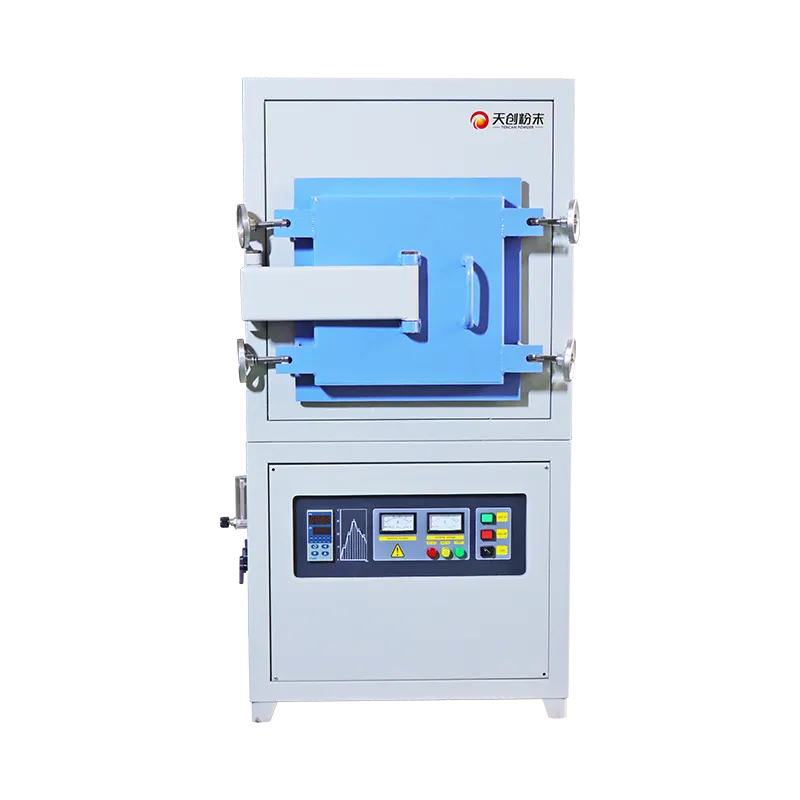
At its core, a box-type atmosphere furnace is a professional thermal processing system used by materials scientists, powder metallurgists, and ceramics engineers to sinter, anneal, or heat-treat samples under a precisely controlled gas atmosphere. The device encloses the workpiece in a sealed box chamber, heats it to high temperatures (often up to 1700°C or more), and simultaneously introduces or evacuates gases such as argon, nitrogen, hydrogen, or forming gas to prevent oxidation, decarburization, or other unwanted reactions. This controlled environment is critical for producing high-purity, high-performance materials that cannot be processed in open air.
Core Function and Working Principle
The primary function of a box-type atmosphere furnace is to transform raw powder compacts, green bodies, or metal parts into dense, sintered, or heat-treated products with tailored microstructures. The core working principle involves three simultaneous processes: heating, atmosphere control, and gas circulation.
Heating System
Inside the furnace, heating elements (such as molybdenum disilicide (MoSi2) rods for ultra-high temperatures or Kanthal resistance wires for moderate temperatures) are arranged around the chamber to provide uniform radiant heat. A high-precision temperature controller (e.g., Shimaden FP93 with 40 programmable segments) manages the heating profile, allowing multiple ramps, holds, and cooling steps. The chamber is insulated with lightweight ceramic fiber or polycrystalline alumina fiber to minimize heat loss and ensure rapid thermal response.
Atmosphere Control
Sealed doors with silicone gaskets and water-cooling channels maintain a gas-tight environment. A vacuum pump can evacuate the chamber before introducing protective gases (e.g., H2, Ar, N2, CO, NH3) via flow meters. The gas enters from multiple inlets, passes through the hot zone, and exits through a back outlet, often with a burning port to safely ignite flammable gases. The patented return air channel design (as described in the CN patent) ensures directional flow of the protective gas, eliminating dead zones and achieving uniform gas distribution around the workpieces, which is essential for consistent heat treatment results.
Cooling and Safety
Double-walled housing with a wind cooling system accelerates cooling after the program ends. Over-temperature and over-current protection automatically shut down the furnace in case of anomalies, ensuring safe operation.
Core Components and Key Technologies
Because a box-type atmosphere furnace is a single-type product family (rather than distinct subtypes), we focus on its critical parts and optional features:
Chamber Construction
The chamber is typically made of high-purity alumina ceramic fiber or refractory bricks, chosen for their thermal shock resistance and low thermal mass. For high-temperature models (e.g., 1700°C), MoSi2 heating elements are embedded in the fiber.
Sealing System
Front-loading doors with silicone gel seals and water-cooled jackets prevent gas leakage. Some models integrate a pre-vacuum function to remove air before backfilling with inert gas, achieving oxygen levels below 10 ppm.
Temperature Control
Advanced PID controllers with multi-zone programming (up to 40 segments) allow precise ramp-up, dwell, and cooling. Some models offer 6 sets of PID parameters for different temperature ranges, ensuring stable control from low to high temperatures.
Gas Handling
Flow meters, check valves, and pressure gauges regulate the atmosphere. For reduction processes (e.g., H2), a burning mouth at the gas outlet safely combusts excess hydrogen.
Key Performance Indicators and Selection Guide
Maximum Temperature and Working Temperature
Models range from 1200°C to 1700°C. Choose a furnace with a maximum temperature 100–200°C above your required working temperature to ensure longevity and safety.
Chamber Volume
Available from small benchtop units (e.g., 36 liters) to larger production sizes. Select based on batch size: a 36L chamber handles samples up to 300×400×300 mm.
Heating Rate and Uniformity
Fast heating up to 20°C/min is possible, but uniformity (±5°C) across the chamber is critical for reproducible results. Look for models with multiple heating zones and circulated atmosphere.
Atmosphere Purity
If your material requires ultra-low oxygen, choose a vacuum-rated furnace with a diffusion pump and pre-vacuum capability. For general inert gas protection, a simple gas purge system is sufficient.
Automation and Programming
Touchscreen interfaces with recipe storage (e.g., 10 programs) simplify operation. Data logging and remote monitoring options are available for advanced labs.
Maintenance
Ceramic fiber chambers are easy to replace, and heating elements are accessible from the outside. Regular replacement of door gaskets and flow meter calibration are recommended.
Application Fields and Selection Advice
Box-type atmosphere furnaces are widely used in:
- Powder Metallurgy: Sintering of metal powders (e.g., stainless steel, titanium, tungsten) in reducing or inert atmospheres to achieve full density.
- Advanced Ceramics: Sintering of alumina, zirconia, silicon nitride, and other technical ceramics without oxidation.
- Battery Materials: Heat treatment of cathode and anode materials (e.g., LCO, NMC, LFP) under controlled oxygen partial pressure.
- Research Laboratories: Annealing, calcination, and synthesis of novel materials under specific gas environments.
For small R&D labs, a compact 1200°C model with a single gas inlet is cost-effective. For production-scale sintering of ceramics or metals, a 1700°C furnace with larger chamber and vacuum capability is recommended. Always consult the manufacturer's specifications to match your process requirements.
References
Related Products
Get In Touch
Our professional team will reply to you within one business day. Please feel free to contact us!