
What is a Trough Mixer? A Horizontal Mixing Equipment for Powders and Pastes in Pharmaceutical, Chemical, and Food Industries

What is a Trough Mixer?
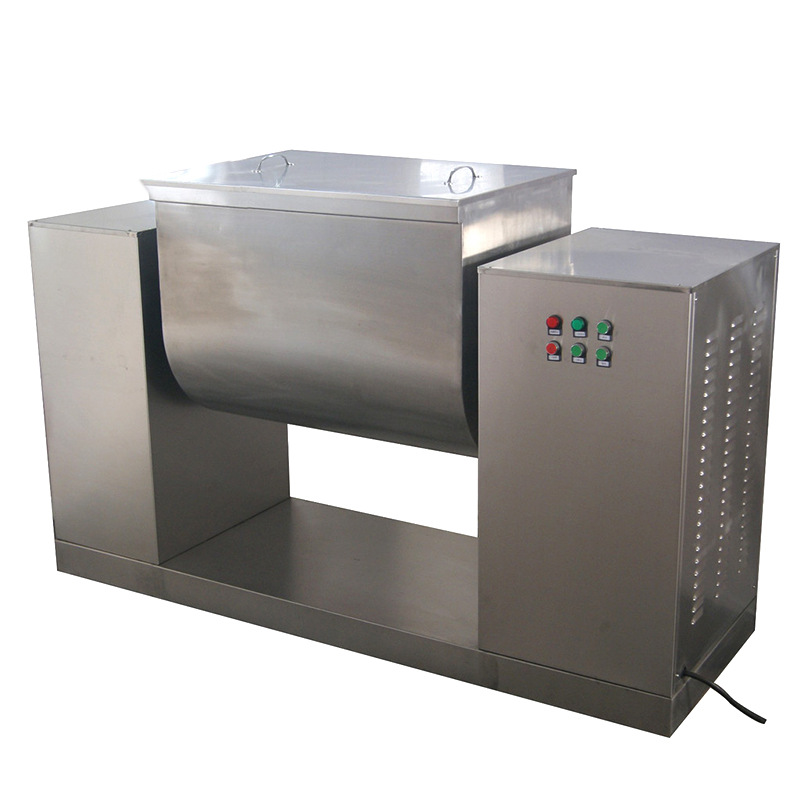
At its core, a trough mixer is a specialized horizontal mixing machine used by industries such as pharmaceuticals, chemicals, and food processing to homogeneously blend dry powders, granules, or semi-solid pastes. The equipment consists of a U-shaped trough containing one or more rotating agitators that move the material in a continuous folding and shearing motion, ensuring a consistent mixture batch after batch. Its simple yet robust design makes it a staple in both small-scale laboratories and large production lines.
Core Function and Working Principle
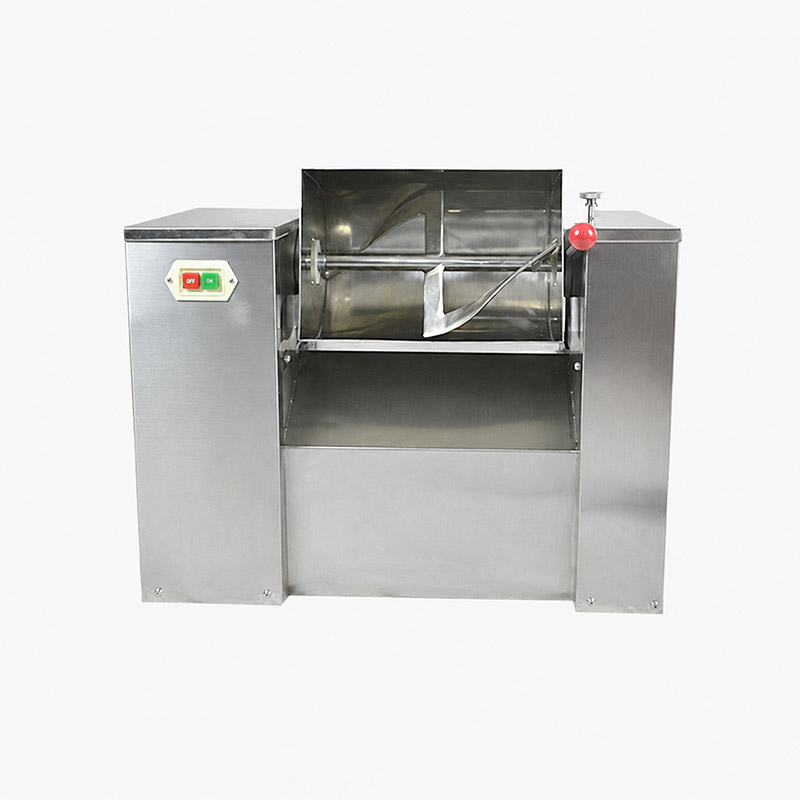
The primary function of a trough mixer is to transform dissimilar starting materials into a uniform blend. For instance, it can take a combination of active pharmaceutical ingredients, excipients, and binders and produce a homogeneous powder mixture ready for tableting. The working mechanism relies on a single or multiple S-shaped stirring blades mounted on a horizontal shaft inside the trough. When the shaft rotates, the blades push the material forward, lift it upward, and then allow it to fall back, creating a continuous tumbling and kneading action. This process combines convective mixing (bulk movement) with shear mixing (localized rubbing), effectively breaking down agglomerates and distributing components evenly.
Key process parameters include agitator rotation speed (typically adjustable), mixing time, and trough volume filling ratio. For example, the CH-400 model features a working volume of 400 liters, a blade speed of 24 rpm, and an electric tilting system for discharging the mixed product. These parameters must be tailored to the material’s flowability, bulk density, and desired homogeneity. Overmixing can lead to particle degradation, while undermixing results in poor uniformity.
Key Components and Critical Technology
While the trough mixer has a relatively simple construction, several components are critical to its performance and durability:
1. Trough (Mixing Chamber)
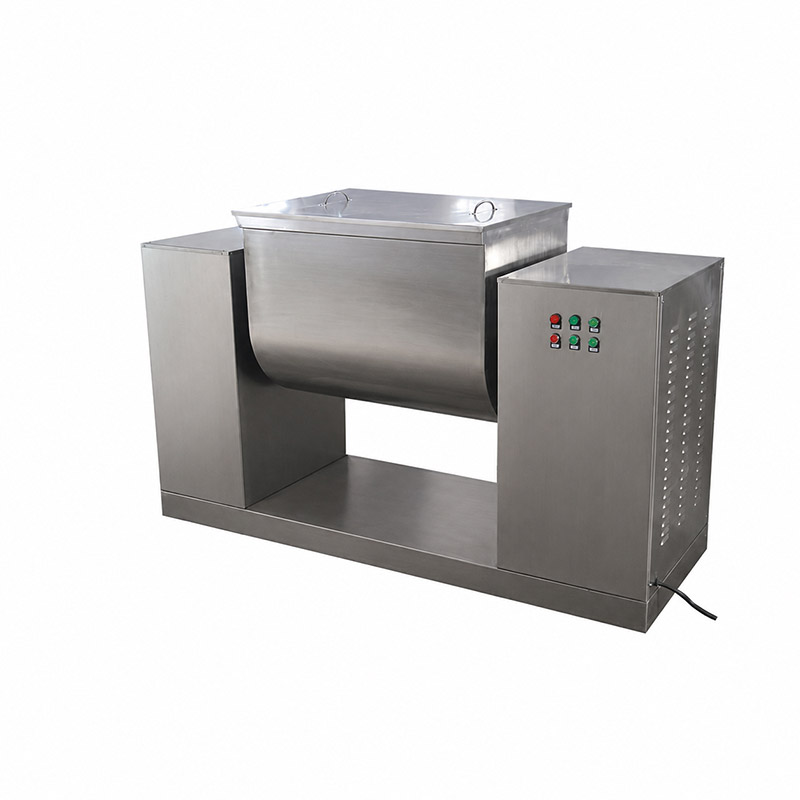
The trough is typically made of stainless steel (304 or 316 grade) to resist corrosion and meet hygiene standards for food and pharmaceutical use. Its U-shaped bottom facilitates complete evacuation of the batch, reducing waste. Some models include a heating/cooling jacket for temperature-sensitive materials.
2. Agitator Assembly
The S-shaped single blade or double blades are the heart of the machine. They are designed to be easily removable for cleaning, which is essential when switching between different products. The blade geometry forces axial and radial mixing, covering the entire trough volume.
3. Drive and Control System
An electric motor drives the agitator via a gearbox, with speed control options (fixed or variable). A timer can be preset to automatically stop the mixer after a set period. Many industrial trough mixers also feature an electric tilting mechanism for safe and convenient discharge, eliminating manual scooping.
4. Sealing and Safety
To prevent dust leakage, trough mixers often come with sealed covers or gaskets. Safety interlocks ensure the machine cannot operate when the cover is open, protecting operators. For applications requiring inert atmosphere, vacuum or gas purging options are available.
Key Performance Indicators and Selection Guide
When choosing a trough mixer, consider the following technical specifications:
- Working Volume: Typical sizes range from 10 L (laboratory) to 1000 L (production). The actual batch volume should be between 30%–80% of the total trough capacity for optimal mixing efficiency.
- Agitator Speed: Lower speeds (20–30 rpm) are suitable for fragile or cohesive materials, while higher speeds may be used for free-flowing powders. Variable speed drives allow fine-tuning.
- Material of Construction: Stainless steel is standard; for abrasive materials, special coatings or hardened steels may be required. Contact parts should be non-reactive to the product.
- Discharge Method: Manual tilting, electric tilting, or bottom discharge gate. Electric tilting (e.g., ≤105° angle in CH-400) saves labor and is safer for heavy batches.
- Cleanability: Removable blades and smooth internal surfaces reduce cross-contamination risk. CIP (clean-in-place) options are available for high‑hygiene industries.
- Automation: Timers, start/stop controls, and data logging capability for batch reproducibility. Integration with upstream and downstream equipment may require PLC connectivity.
Application Areas and Purchasing Advice
Trough mixers are widely used in:
- Pharmaceutical industry: blending dry powder formulations for tablets, capsules, and granules.
- Chemical industry: mixing pigments, plastic additives, and catalysts.
- Food industry: seasoning blends, flour mixes, and dry beverage powders.
- Cosmetics: face powders, bath salts, and other powder products.
For R&D labs, a small tabletop trough mixer (10–50 L) is often sufficient. For mid‑scale production, models like the CH‑400 (400 L) provide a good balance of capacity and floor space. Large industrial users may opt for custom‑built machines with automated tilting and recipe management. Always test your material with the manufacturer to confirm mixing uniformity and avoid costly adjustments later.
Related mixing equipment on our site includes the V-type mixer for gentle free‑flowing powders and the double cone mixer for uniform blending without dead zones. For more viscous pastes, consider a vacuum kneading machine.
References
Related Products
Get In Touch
Our professional team will reply to you within one business day. Please feel free to contact us!