

What Is a Stainless Steel Roll Mill Jar? A Durable Grinding Jar for Roller Mills
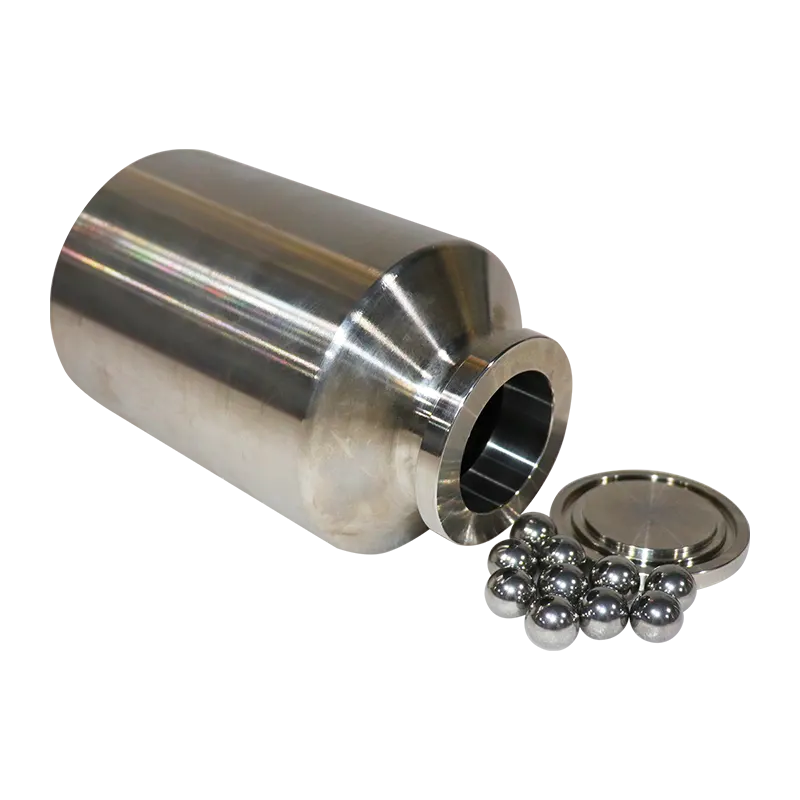
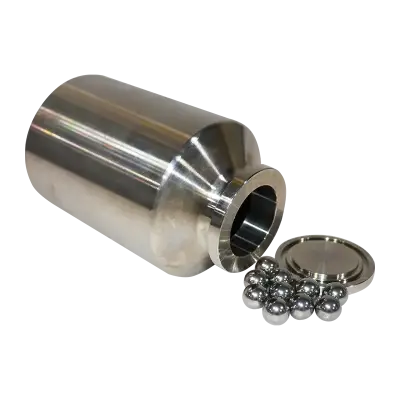
From a practical standpoint, a stainless steel roll mill jar is a cylindrical grinding container made from stainless steel and designed for use on a roller ball mill. Laboratories and production teams use it to hold a sample or batch together with grinding media, then rotate the jar so the contents are reduced, blended, or dispersed. It is not a complete mill on its own; it is the working chamber that converts the mill's rotating action into controlled mechanical treatment of the material.
What Is a Stainless Steel Roll Mill Jar?
The term describes both the material and the mounting method. The phrase “roll mill” refers to the way the jar is supported and turned by rollers, while “jar” means the sealed vessel that holds the charge. Stainless steel distinguishes the construction material from ceramic, agate, nylon, PTFE, and other jar options. In use, the jar body is the grinding chamber, and the lid closes it so that powder, liquid, and media remain contained during rotation.
This product category sits between a simple sample container and a complete milling machine. The jar itself does not contain a motor, drive, or control system; those belong to the roller ball mill. The jar must match the mill’s roller spacing and rotation path. A jar that is too large, too heavy, or poorly balanced may not rotate smoothly and can reduce efficiency or place extra load on the drive. A well-matched jar turns steadily and keeps its contents inside throughout the run.
A stainless steel roll mill jar is therefore best understood as an accessory that defines the working volume and contact surfaces of a milling setup. Its size, mass, interior finish, lid design, and material grade all influence what the mill can do with a given sample. Two jars with similar external dimensions can behave differently if their wall thickness, closure method, or surface condition differs.
Jars are also distinguished by their intended mill family. A jar made for a roll mill may not have the same mounting, balance, or lid requirements as a jar made for a planetary mill. Using the wrong jar can cause poor rotation, leakage, or damage. For this reason, the product name should be read as a description of both the vessel and its intended duty.
How a Roll Mill Jar Works on a Roller Ball Mill
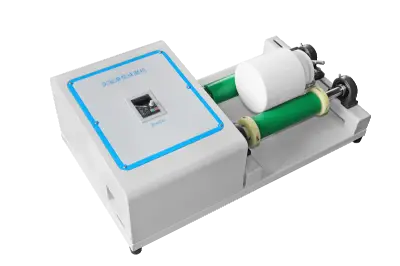
In operation, the jar lies horizontally on a pair of rotating rollers. Friction between the rollers and the outside of the jar causes the jar to rotate. As it turns, the grinding media and the material are lifted along the inner wall, then tumble and fall back. The repeated motion creates collisions, rubbing, and shear inside the jar. The roller mill supplies the energy; the jar and media turn that energy into size reduction and mixing. The jar must be round and balanced enough to maintain steady contact with the rollers. If it slips, wobbles, or bounces, the motion becomes less predictable and the process loses efficiency.
The grinding action comes from three related effects. Impact occurs when media falls onto material or other media. Attrition occurs when particles rub against each other and against the media. Abrasion occurs as material is pressed and dragged along the jar wall and media surfaces. At lower rotation speeds, cascading and rolling motion dominate, favoring mixing and gentle comminution. At higher speeds, impact becomes more important, but excessive speed can pin the media to the wall and reduce useful tumbling. The practical speed window depends on jar diameter, media load, and material, so it should be established by testing rather than assumed.
Performance is a system property rather than a fixed feature of the jar. Rotation speed, media size and density, fill level, material load, run time, and dry or wet processing all interact. The jar’s internal geometry and surface finish also affect how media move and how easily material is discharged. Because stainless steel is strong and rigid, it can tolerate repeated loading, but it still must be operated within the limits of the roller mill and the jar closure. A change in any one variable can alter particle size, blend uniformity, heat build-up, and wear.
The operator should also watch for signs that the process is outside a useful range: media that slide instead of tumble, material that cakes on the wall, excessive heat, or a jar that becomes difficult to control. These observations often matter more than a single speed setting.
From Coarse Feed to Uniform Powder: The Processing Path
A typical run begins with preparation. The feed should be within the size range that the mill and media can handle; very large pieces may need pre-crushing. The jar is charged with material and grinding media, leaving enough free space for motion. The lid is secured, and the jar is placed on the rollers. The operator then sets the rotation speed and running time according to the intended result.
During the run, particle size decreases and the mixture becomes more homogeneous. In dry processing, fine powder may coat the wall and media, so the charge should be observed after the run. In wet processing, a liquid medium suspends the particles and can improve dispersion, but it also increases the importance of sealing. At the end, the jar is removed, the contents are discharged, and the media are separated. The final state may be a fine powder, a slurry, a paste, or a uniform blend, depending on the starting material and the process recipe.
Success is judged by more than average particle size. A useful result also requires acceptable distribution, minimal contamination, good recovery, and repeatability from batch to batch. These outcomes depend on the whole milling system, not on the jar alone. Sampling after milling should be representative. Fine particles may settle or segregate, so the jar contents should be mixed before a sample is taken. If the result is inconsistent, the cause may be feed variation, media wear, insufficient run time, or an unsuitable fill level.
Core Components and Construction Details
Although a roll mill jar appears simple, several details determine whether it is practical for a given process. The list below focuses on the details most likely to affect day-to-day results.
Jar Body
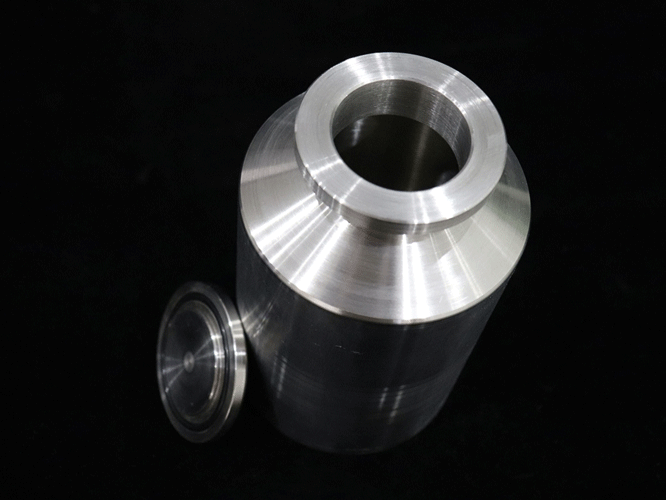
The body is the cylindrical vessel that contains the charge. Its diameter, length, wall thickness, and mass influence capacity, rigidity, and the load placed on the rollers. A round, well-balanced body rolls smoothly; dents or distortion can create dead zones and uneven motion. A smooth interior helps material discharge and cleaning, while a sturdy wall resists deformation under media impact. The body should also be checked for straightness and a clean rim, because a poor rim contact can prevent the lid from seating evenly.
Lid and Closure
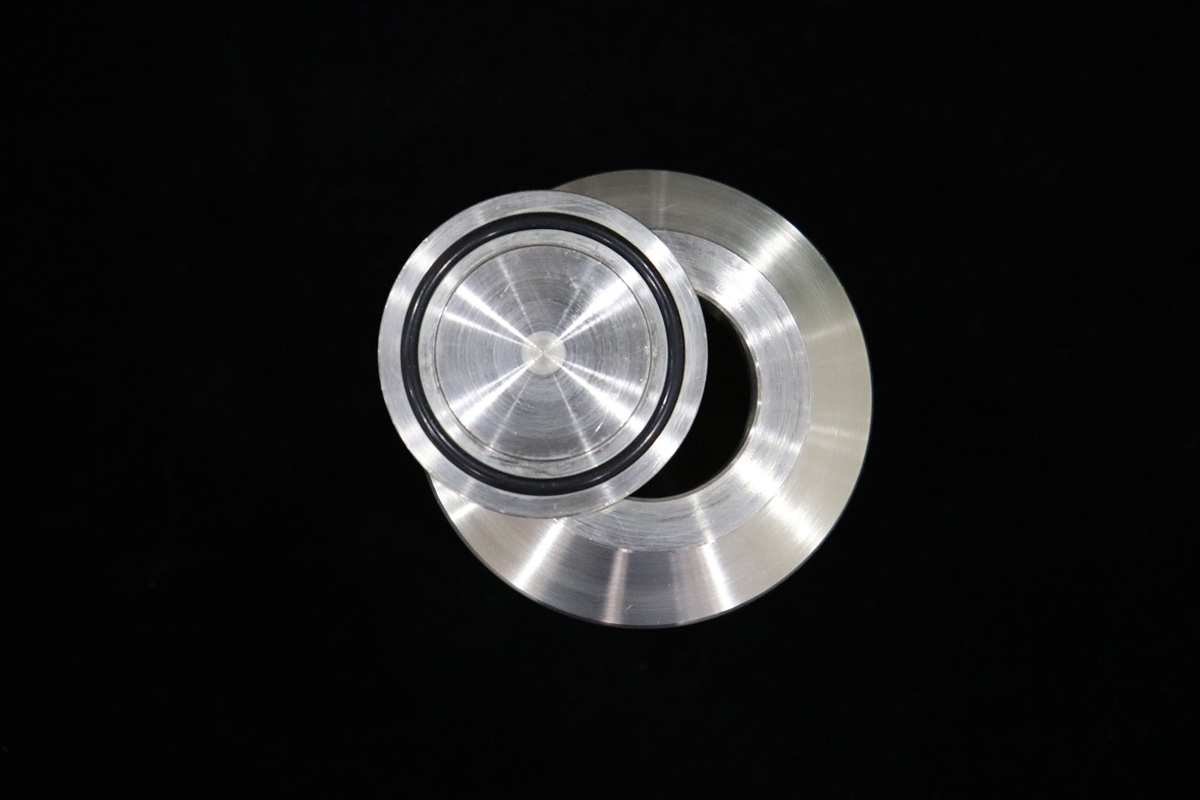
The lid keeps material inside and prevents dust or moisture from entering. The closure must remain secure under rotation and vibration, yet be practical to open for sampling and cleaning. Threads, clamps, or other closing methods may be used depending on the design. The lid should be compatible with the jar body and with the intended cleaning routine. A lid that is hard to tighten evenly can create a leak path or make the jar difficult to handle.
Sealing Interface
A sealing element or close-fitting mating surface limits leakage of fine powder or liquid. For wet milling, this detail is especially important because even a small gap can allow slurry to escape. The seal material must be compatible with the sample and cleaning agents. It should be inspected for cuts, hardening, or loss of elasticity, and replaced when it no longer seals reliably.
Grinding Media and Internal Load
Grinding media are not part of the jar itself, but they are essential to its function. Balls or cylinders may be made from stainless steel, ceramic, zirconia, agate, or other materials. The choice affects impact energy, wear, and contamination. The jar must be compatible with the media size and load. Overloading can prevent free movement, while underloading can reduce collisions and slow the process.
Surface Finish and Cleanability
Interior finish affects how much powder remains after emptying and how easily the jar is cleaned. A smooth, crevice-free surface is easier to recover and clean than a rough one. Abrasive cleaning can scratch the surface and create places for residue to collect. After washing, thorough drying helps prevent moisture-related issues and keeps the next batch clean. For processes with frequent batch changes, cleanability can be as important as grinding performance.
Why Stainless Steel Is Used
Stainless steel is selected for a balance of properties. It offers good mechanical strength, resistance to rust in many environments, thermal conductivity, and cleanability. It can be formed into round bodies and matching lids, and it withstands repeated handling better than many softer materials. These qualities make it a practical choice for general grinding, mixing, and dispersion work.
Stainless steel also has limits. It is heavier than some ceramics and plastics, which can reduce the usable payload of a small mill. Under abrasive conditions, the jar and media can wear, potentially introducing iron or alloy elements into the sample. Depending on the grade, strong acids or certain chemicals may attack the surface. For trace-metal-sensitive analysis or highly corrosive materials, other jar materials or linings may be more appropriate.
The right stainless steel jar is therefore not simply the strongest jar. It is one that fits the mill, tolerates the material and cleaning routine, and offers an acceptable contamination profile for the application. Buyers should compare material compatibility, handling weight, and sealing design rather than relying on the label “stainless steel” alone.
Stainless steel is also a familiar material for many laboratories because it can be washed, handled, and inspected without special care beyond normal good practice. That familiarity is useful, but it should not replace a compatibility check for the specific sample, solvent, and cleaning agent.
Key Performance Indicators and Selection Points
When selecting a stainless steel roll mill jar, the most useful specifications are the ones tied to the actual milling system and sample.
Fit to the Roller Mill
First confirm the jar geometry and mounting. Jar diameter, length, and mass must suit the roller spacing and drive capability. A jar that is too small may not contact both rollers properly; one that is too large or heavy can overload the drive. Check that the jar rotates on a stable axis and that the lid or fittings do not contact the frame.
Usable Capacity and Fill Strategy
Nominal volume is not the same as usable working volume. Space must be left for media and material motion. Overfilling can cushion impacts and reduce grinding efficiency, while underfilling may waste capacity and reduce collisions. Choose a jar size based on the batch size, media load, and required treatment time, not on volume alone.
Media Compatibility and Wear
Media size, density, and material affect both performance and wear. Dense media increase impact energy but also increase load and abrasion. The jar must tolerate the selected media without excessive denting or surface damage. If metal contamination is unacceptable, consider nonmetal media or a different jar material, and verify compatibility before use.
Sealing and Containment
Good containment matters for both operator safety and sample integrity. Dry powders can escape as fine dust if the closure is poor, and slurries can leak through an inadequate seal. Check the closure design, seal condition, and ease of inspection. Decide whether the process needs airtight containment or only dust-tight closure.
Mass, Handling, and Thermal Load
A larger stainless steel jar can be heavy, especially when filled with media and material. Lifting, mounting, emptying, and cleaning must be planned. Weight also affects the mill load. Because stainless steel conducts heat, long runs can warm the sample; if the material is heat-sensitive, use suitable run intervals or another cooling strategy.
Surface Finish and Maintenance Access
Look for a smooth interior, accessible corners, and a closure that can be cleaned thoroughly. A jar that is difficult to clean can carry residue from one batch to the next. Confirm that cleaning agents will not attack the steel or the seal. Replaceable seals and simple inspection points make routine maintenance easier.
Repeatability and Documentation
A jar that produces good results once is not enough for production or regulated work. Note the jar identifier, media, fill level, speed, and run time so that results can be repeated. If a jar is replaced, compare the new jar's mass, interior finish, and closure before assuming the old recipe will transfer directly.
Applications and Selection Advice
Stainless steel roll mill jars are used where a durable, sealed grinding container is needed for batch processing. Typical settings include mineral and rock sample preparation, ceramics and glass, chemical and pigment dispersions, battery and electronic materials research, metallurgical powders, environmental solids, and general laboratory milling. They can handle dry powders, slurries, and some pastes, provided the material and jar are compatible.
Selection should begin with the material: particle size, hardness, moisture, chemical aggressiveness, and contamination tolerance. Then match the jar to the available roller mill, the required batch size, and the cleaning workflow. For routine or abrasive work where some iron contamination is acceptable, stainless steel can be a practical choice. For ultra-low contamination or strongly corrosive materials, compare alternative jar materials before deciding.
The stainless steel roll mill jar product page is the place to confirm the available configuration and contact the supplier about fit, sealing, and material compatibility. A short trial with the actual sample is often the best way to confirm that a jar and media combination meets the required result.
For users comparing several jar options, a simple decision sequence helps. First, rule out materials that cannot tolerate the sample chemistry. Second, confirm that the jar fits the mill and can be handled safely. Third, compare sealing, cleanability, and wear risk. Finally, test the preferred option with a representative sample and check particle size, homogeneity, recovery, and contamination.
Maintenance and Safe Use
Inspect the jar before each use. Check the body for dents or cracks, the lid for closure damage, and the seal for cuts or hardening. Look inside for residue or pitting. A damaged jar can affect rolling, leak, or contaminate the batch. Keep the jar clean and dry when it is not in use.
Load the jar within the mill and jar limits, secure the lid, and start at a moderate speed while watching for unusual noise, vibration, or leakage. Do not open the jar while it is rotating. Allow a warm jar to cool before handling. After use, separate the media, clean all contact surfaces, and dry the jar thoroughly before storage.
Keep simple records of operating conditions, cleaning, and any changes in performance. This makes it easier to identify wear, contamination, or a batch-specific problem. A well-maintained jar lasts longer and gives more repeatable results.
Frequently Asked Questions
Is a roll mill jar the same as a planetary ball mill jar?
No. Both are milling jars, but they are designed for different motion. A roll mill jar is rotated on rollers, while a planetary jar is mounted in a carrier that spins. Fit, wall design, and lid requirements can differ, so use a jar only on the mill type for which it is intended.
Can a stainless steel jar be used for wet milling?
Yes, if the lid and seal are suitable and the material is compatible. Wet milling increases the risk of leakage, so the closure should be checked carefully. Clean and dry the jar after use, and avoid liquids that can attack the steel or seal.
Does stainless steel contaminate the sample?
It can. Wear from the jar and media may introduce iron or alloy elements, especially with hard or abrasive materials. The amount depends on the material, media, speed, and run time. For trace-metal-sensitive work, use an appropriate alternative and run blank tests to check contamination.
How full should the jar be?
Leave free space for the media and material to move. The exact fill depends on the jar, media, and material. Avoid overfilling, which can cushion impacts, and underfilling, which can reduce collisions. Establish a working recipe through small-scale trials.
When should the jar be replaced?
Replace it if there are deep dents, cracks, a deformed rim, unreliable lid fit, a worn seal, interior pitting, or persistent contamination. Any condition that compromises smooth rotation or containment is a reason to stop using the jar.
Related Products
Get In Touch
Our professional team will reply to you within one business day. Please feel free to contact us!