

What Is a Stainless Steel Roll Mill Jar? A Durable Jar for Roller Ball Milling
What Is a Stainless Steel Roll Mill Jar?
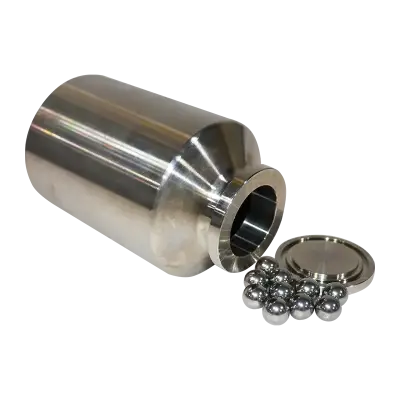
From its core, a stainless steel roll mill jar is a specialized grinding container for roller ball mills and jar mills. Industries such as mining, ceramics, chemicals, battery research, and materials science use it to hold samples and grinding media while the mill rotates the jar on its side. The tumbling action makes the media impact, shear, and mix the material, reducing coarse particles to fine or ultrafine powders. Unlike a planetary ball mill jar, which spins on its own axis, a roll mill jar is designed to roll horizontally on driven rollers. This simple motion makes it effective for batch grinding, mixing, and dispersion.
Stainless steel is the defining feature. It offers strength, resistance to rust and corrosion, and easy cleaning. That makes the jar suitable for many aqueous and solvent-based processes, as well as dry powders. It also tolerates repeated loading and unloading, so it is a practical reusable vessel for laboratories and small production lines. A typical jar is cylindrical, with a lid, a gasket or sealing ring, and a clamp to prevent leakage. It may have internal lifter bars or a smooth inner wall, depending on the grinding duty.
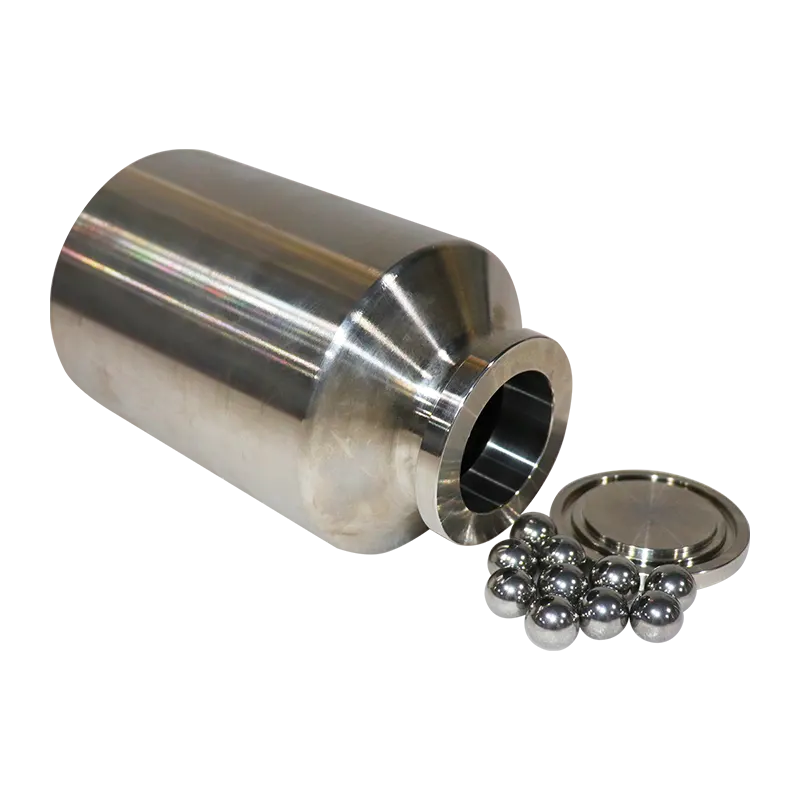
The jar is a vessel, not a complete mill. It is paired with a roller ball mill that provides rotation. The jar determines working volume, contamination risk, sealing quality, and cleaning ease. A well-chosen stainless steel jar can serve many grinding campaigns, while a poor match can cause leakage, wear, or sample contamination.
Core Function and Working Principle
A stainless steel roll mill jar does not grind by itself. It creates a controlled environment where media and powder interact under repeated mechanical forces. As the jar rotates, the media charge is lifted along the inner wall and then cascades back onto the material bed. The main forces are impact, compression, attrition, and shear. Impact occurs when media balls collide with particles or each other. Attrition and shear occur as particles rub against the media and jar wall. Together, these mechanisms break down particles and promote mixing.
From Coarse Feed to Fine Powder
The process begins when the operator loads the jar with feed material and grinding media. The feed may be coarse granules, crystals, ores, clinker, ceramic raw materials, or chemical powders. As the jar rolls, the media repeatedly contact the feed. Coarse particles first fracture along flaws and grain boundaries. With continued grinding, the particle size distribution shifts finer, and the powder becomes more uniformly mixed. If the process runs too long, particles may reagglomerate or contamination may rise, so grinding time is a key control variable.
The final state depends on energy input and the number of media-to-particle contacts. A jar with good traction and a suitable media charge transfers rotational energy efficiently. A jar that is too smooth, too large, or too small for the media may waste energy or produce inconsistent grinding. The inner surface also matters: a polished wall reduces adhesion and eases cleaning, while a rougher wall may increase friction but hold fine powder. For many applications, the goal is not only a smaller average particle size but also a narrow distribution and minimal contamination.
The Role of Grinding Media
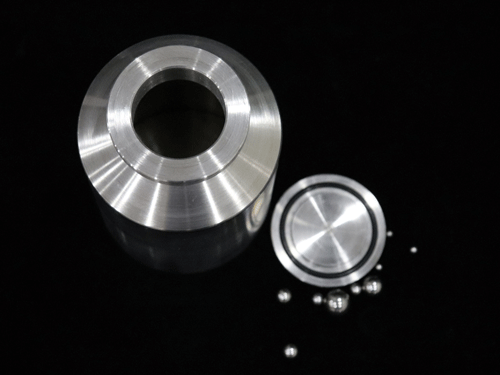
Grinding media are the moving parts that do the size reduction. In a roll mill jar, media are usually spherical balls, though cylinders or mixed shapes can be used. The media material should be harder than the feed and compatible with the sample chemistry. Common choices include stainless steel, zirconia, agate, alumina, and tungsten carbide balls. Mass, size, and number of media determine the frequency and energy of collisions. A larger media charge increases capacity but also load. A smaller charge may produce finer grinding but takes longer.
The media fill ratio is also important. If the jar is underfilled, media may slide rather than cascade, reducing impact energy. If overfilled, there is insufficient free space for motion, and grinding becomes weak. In practice, media often occupy a significant fraction of the jar, and the powder charge is kept lower so media can move freely. The best ratio depends on material, target fineness, and jar geometry, so operators usually determine it through trials.
Key Process Parameters
Several parameters control roll milling. Each interacts with the others, so changing one often requires adjusting another.
- Rotation speed: Too low, media slide and grinding is weak. Too high, media pin to the wall and stop cascading. The practical range is below the critical speed.
- Grinding time: Longer grinding usually produces finer particles, but the rate slows. Excessive grinding can cause contamination, amorphization, or agglomeration.
- Media size: Large media suit coarse grinding; small media suit fine grinding. Mixed charges can balance both.
- Media-to-powder ratio: More media increases collisions per particle but reduces batch size.
- Jar fill level: Leave free space for media motion. Overloading is a common cause of poor grinding.
- Material properties: Hardness, brittleness, moisture, and particle shape all affect grindability.
Because these parameters are interconnected, use a systematic approach. Start with a conservative media charge, moderate speed, and short time. Inspect the particle size, then adjust one variable at a time. Record speed, time, media size, and fill level to reproduce successful results.
In addition to these parameters, jar material and geometry influence the outcome. A jar with a larger diameter may require a different speed than a narrow jar because the critical speed depends on the radius. Internal lifter bars can improve media cascade, but they also make cleaning more difficult. Wall thickness affects total mass and heat generation during grinding. A thicker wall resists wear, but it reduces internal volume for a given outer size. Operators should balance these factors against batch size and target fineness. Regular review helps avoid unnecessary trial-and-error.
Main Types and Classifications of Roll Mill Jars
Roll mill jars come in several materials and configurations. The choice depends on feed material, required purity, grinding environment, and budget. Stainless steel is popular because it balances durability, cost, and chemical resistance. Other materials serve specific needs, especially when metal contamination must be avoided.
Stainless Steel Roll Mill Jars
A stainless steel roll mill jar is made from a stainless alloy, giving it strong mechanical properties and good rust resistance. It can be used for dry and wet grinding if the liquid is compatible with the alloy and seal. Stainless steel withstands repeated impact from hard media and does not chip as easily as ceramic or glass. It is also easy to clean with common detergents and solvents. These traits make it a general-purpose choice for many laboratories and pilot plants.
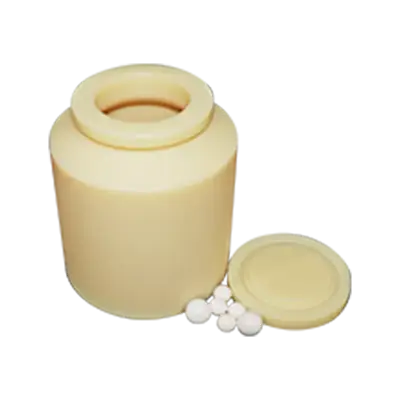
However, stainless steel is not inert to every chemical. Strong acids, chloride-rich solutions, and certain oxidizers can attack the surface over time. For those applications, PTFE, nylon, PU, or ceramic jars may be better. Stainless steel can also introduce trace metal contamination, which matters for battery materials, catalysts, and high-purity electronic powders. In such cases, use a non-metal liner or a different jar material. The stainless steel roll mill jar product page gives a specific example of this category.
Other Material Options
Comparing stainless steel with other materials helps clarify its role.
- Nylon jars: Lightweight and chemical-resistant, but softer and more prone to wear and solvent absorption.
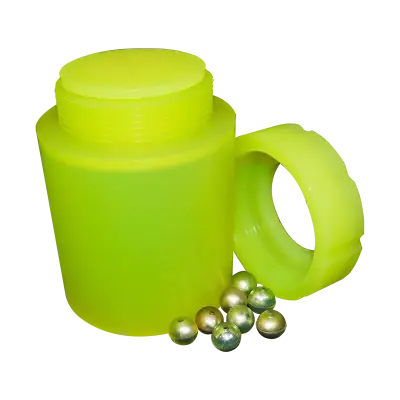
- PU jars: Good abrasion resistance and elasticity, often used for softer materials or lower noise. Not ideal for high temperatures.
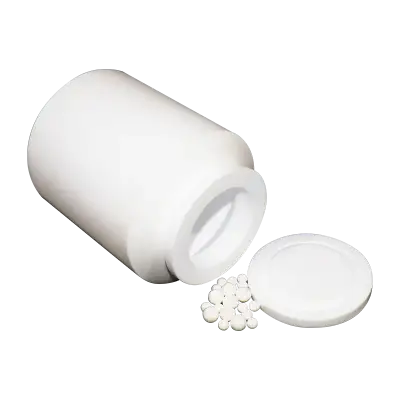
- PTFE jars: Excellent chemical inertness and low friction for aggressive chemicals and high-purity work. Relatively soft and expensive.
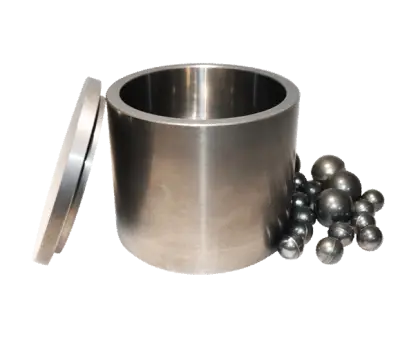
- Corundum jars: Very hard and wear-resistant for abrasive materials. Brittle and sensitive to thermal shock.
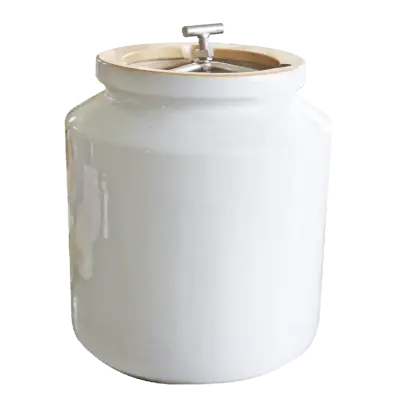
- Zirconia jars: Dense, hard, and wear-resistant for fine grinding and metal-free contamination control. Heavier and require careful handling.
Each material has a different contamination profile, wear rate, and cost. Stainless steel is usually the most robust and economical option for general grinding. Ceramic and polymer jars are selected when purity or chemical compatibility is the priority. Some workflows use stainless steel for coarse grinding and a ceramic or PTFE jar for final fine grinding.
Key Performance Indicators and Selection Points
Selecting a stainless steel roll mill jar is not only about size. The jar must match the mill, media, feed, and target product. The following indicators help buyers compare options and avoid mistakes.
Capacity and Throughput
Nominal jar volume is the first specification to check. Roll mill jars range from small laboratory sizes to larger pilot-scale vessels. Usable capacity is always less than nominal volume because space must be left for media motion. If the jar is too small, batch size is limited and the mill may be underused. If too large, media may not cascade effectively and efficiency drops. The best size allows a representative sample or production batch while maintaining good media dynamics.
Throughput also depends on how many jars the mill can drive. Some roller ball mills hold one jar; others hold two or more. Multi-jar setups increase output but require balanced, securely clamped jars. For scale-up, increasing the number of jars or milling time is often better than using an oversized jar that cannot grind efficiently.
Grinding Efficiency and Energy Use
Grinding efficiency is the amount of fine product per unit of energy and time. A well-matched stainless steel jar can improve efficiency because its mass and surface help transfer rotation into media motion. The jar should be rigid enough not to deform under load, but not so heavy that it overloads the mill. The inner surface should resist fine powder buildup, because a coated wall reduces media slip and energy transfer. If the jar becomes polished or worn, traction may change and performance may decline.
Energy consumption depends on the mill motor, total load, rotation speed, and grinding time. A jar that is too heavy for the mill can cause overheating, belt slippage, or motor strain. A jar that is too light may lack momentum for effective impact. Check the mill maker's recommended jar weight and volume. In general, the lowest speed that still produces good media cascade saves energy and reduces wear.
Contamination Control and Sample Integrity
Contamination is critical in many powder processes. Stainless steel jars can release iron, chromium, and nickel through wear. For ores, cement, ceramics, and some chemicals, this may be acceptable. For battery cathode materials, catalysts, pharmaceuticals, and high-purity electronic powders, even small amounts of metal can change performance. In those cases, use stainless steel for coarse grinding and switch to zirconia, agate, PTFE, or another inert material for final fine grinding.
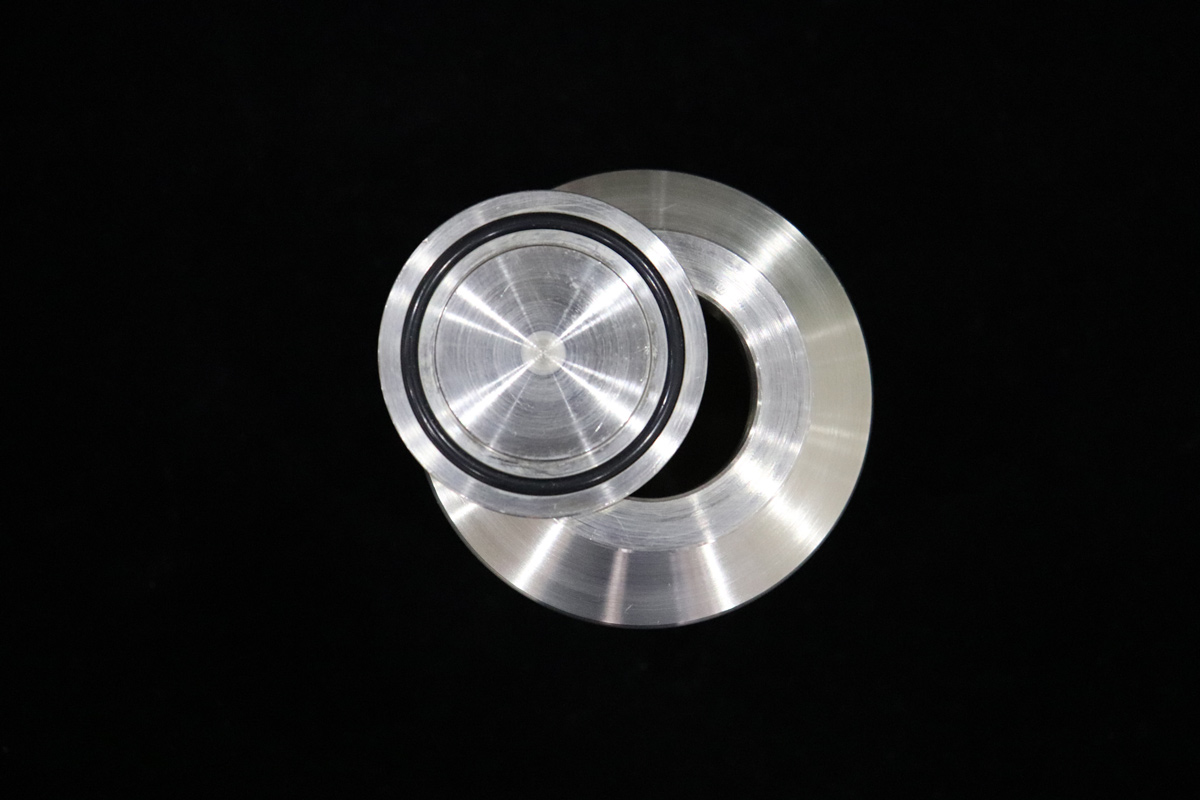
Sample integrity also depends on sealing. A good lid and gasket prevent powder leakage and keep the grinding environment stable. For wet grinding, the seal must hold liquid and resist solvent attack. For dry grinding, it should contain fine dust. If the seal fails, sample can be lost, the mill can become dirty, and operators may be exposed to dust. Inspect gaskets regularly and replace them when hard, cracked, or compressed.
Sealing, Automation, and Maintenance
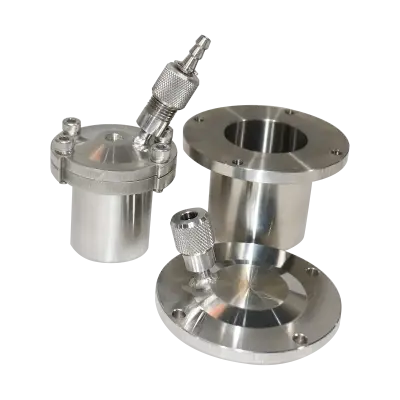
Automation varies by mill, but the jar must be compatible with the mill clamping and drive system. Some jars use a simple clamp lid, others a threaded lid, quick-release band, or bolted flange. The choice affects loading and cleaning speed. A jar that opens and reseals easily saves time in multi-batch workflows and reduces cross-contamination.
Maintenance is straightforward for stainless steel. After each use, empty the jar, remove media, and clean the interior with a suitable detergent. Avoid abrasive brushes that scratch the surface, because scratches trap particles and promote corrosion. Dry the jar thoroughly before storage. Check the lid, gasket, and clamp for wear. For wet grinding, inspect for stains or pitting that indicate chemical attack. With proper care, a stainless steel roll mill jar can provide long service life.
Applications and Selection Advice
Stainless steel roll mill jars are used in many industries and research fields. Their durability, moderate cost, and reasonable chemical resistance make them a practical default for general grinding and mixing.
Typical Industries and Use Cases
- Mining and mineral processing: Grinding ore, rock chips, and concentrates for assay and analysis.
- Ceramics and glass: Milling raw materials, frits, glazes, and cullet, often before finer ceramic-lined milling.
- Chemicals and pigments: Dry chemicals and pigments, with PTFE or ceramic jars for reactive or high-purity products.
- Battery and energy materials: Graphite, silicon, and some precursors, with contamination control and inert jars for final grinding.
- Pharmaceuticals and nutraceuticals: Dry grinding and blending, subject to cleaning validation and metal limits.
- Environmental and agricultural testing: Soil, plant, and waste samples before chemical analysis, where easy cleaning avoids cross-contamination.
- Academic and research labs: Small jars for teaching, method development, and small-batch experiments.
How to Choose the Right Jar
Choosing the right stainless steel roll mill jar means matching it to the material, mill, and objective.
- Define feed and target size: Estimate initial and final particle size. Very fine targets may need small media, longer time, or a different jar material.
- Check chemical compatibility: Confirm the feed, solvent, and cleaning agents are compatible with stainless steel.
- Match the jar to the mill: Verify accepted jar diameter, length, and weight to avoid drive damage.
- Select volume: Allow the desired batch size while leaving free space for media motion.
- Choose sealing: Use a leak-resistant lid for wet grinding and a tight seal for dry grinding.
- Consider contamination limits: Use stainless steel for coarse grinding or switch to ceramic or polymer for final steps.
- Plan for cleaning: Smooth internal surfaces and easy opening reduce cross-contamination.
For a specific example, the stainless steel roll mill jar product page shows a representative jar from this category. Compare its dimensions, sealing design, and construction with your application requirements.
Frequently Asked Questions
Is a stainless steel roll mill jar suitable for every material?
No. Stainless steel is versatile but not chemically inert. It works well for many dry powders, ores, ceramics, and non-corrosive chemicals. It is not ideal for strong acids, chloride-rich solutions, or applications where trace metal contamination is unacceptable. In those cases, use PTFE, nylon, PU, corundum, or zirconia jars. If stainless steel is used, inspect it regularly for wear and corrosion.
How should I clean and maintain it?
Empty the jar and remove media after each use. Clean the interior with mild detergent and water or a compatible solvent. Avoid harsh abrasive cleaners that scratch the surface. Rinse and dry thoroughly before storage. Check the gasket and lid for cracks or deformation, and replace worn parts. Store the jar in a dry place.
Can it be used for wet and dry grinding?
Yes, many stainless steel roll mill jars can handle both. For wet grinding, the lid and gasket must seal reliably, and the liquid must be compatible with stainless steel. For dry grinding, the seal should contain fine dust. Always follow the manufacturer's recommendations for the specific jar and mill.
How do I know when grinding is complete?
Grinding completion is usually determined by particle size analysis, not time alone. Take a small sample and check it with a sieve, laser diffraction analyzer, or microscope. If the target size is reached, stop the mill. If not, adjust time or another parameter and run again. Keep records to reproduce results. Always consult the mill manual for safe operating limits.
Conclusion
A stainless steel roll mill jar is a durable, reusable grinding container for roller ball mills and jar mills. It holds feed and media while the mill rotates, using impact and attrition to reduce particles to fine powders. Stainless steel provides strength, corrosion resistance, and easy cleaning, making it practical for mining, ceramics, chemicals, battery research, and many laboratory applications. However, it is not universally inert, so material compatibility and contamination limits must be considered. By matching jar size, sealing system, and media to the application, users can achieve reliable grinding and long service life. This simple vessel plays a central role in preparing reliable powder samples and products. For more details, visit the stainless steel roll mill jar product page.
Related Products
Get In Touch
Our professional team will reply to you within one business day. Please feel free to contact us!