

What Is a Small Laboratory Screening Machine? A Lab Tool for Powder Separation
From its core, a small laboratory screening machine is a compact size-classification device used in laboratories to separate dry powders, granules, or other particulate samples into fractions according to particle size. It answers two practical questions: what size range does a sample contain, and does it meet a specified sieve cut before further testing or quality release.
Core Function and Working Principle
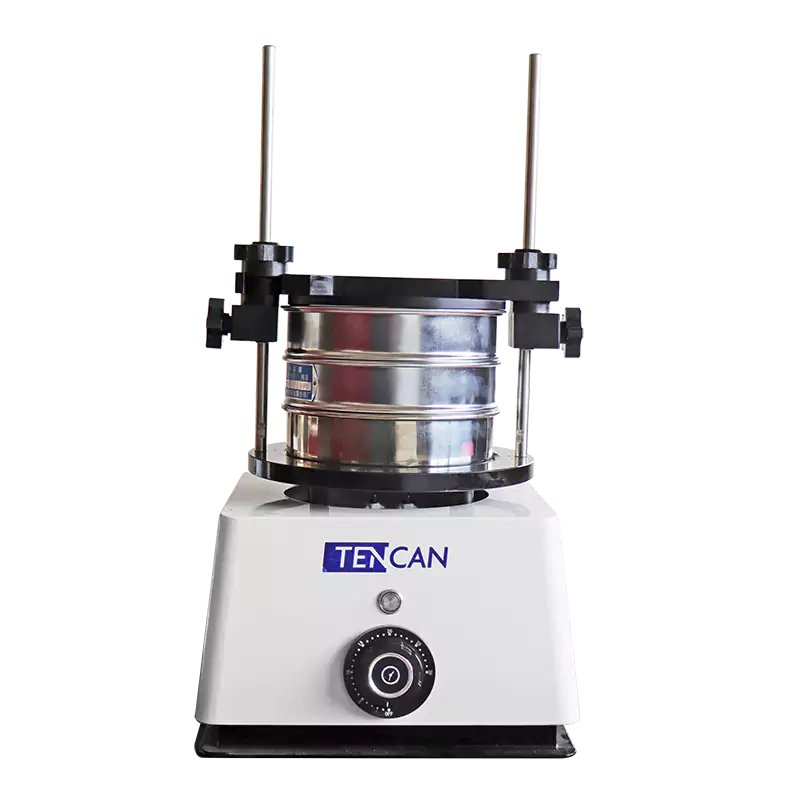
The machine converts a mixed laboratory sample into ordered size fractions. Material is placed on one or more test sieves. A drive produces vibration, oscillation, or three-dimensional motion, so particles smaller than the screen aperture pass through while oversize particles remain on the mesh. Collection pans retain each fraction for weighing or inspection.
In a typical lab-scale setup, the sieve stack, clamping device, and collection pans form the working zone. Screening quality depends on screen aperture, sample load, motion amplitude, frequency, and run time. A suitable amplitude keeps material moving without excessive attrition; overloading a sieve can blind the mesh and reduce efficiency. Screening is physical classification rather than grinding, so each fraction is defined mainly by the selected screens and the feeding routine.
Main Configurations and Core Components
Small laboratory screening machines usually fall into single-sieve, multi-sieve, and vibratory or oscillatory designs. Single-sieve units suit quick pass/fail checks. Multi-sieve stacks allow several size cuts in one run and are useful for particle-size distribution work. Vibratory designs are common for dry powders; oscillatory or gentle-motion versions can be preferable for fragile granules or samples sensitive to breakage.
Screen and clamping system
The screen defines the cut point. The clamp must hold the stack firmly without distorting the mesh. Easy loading and cleaning reduce cross-contamination between samples.
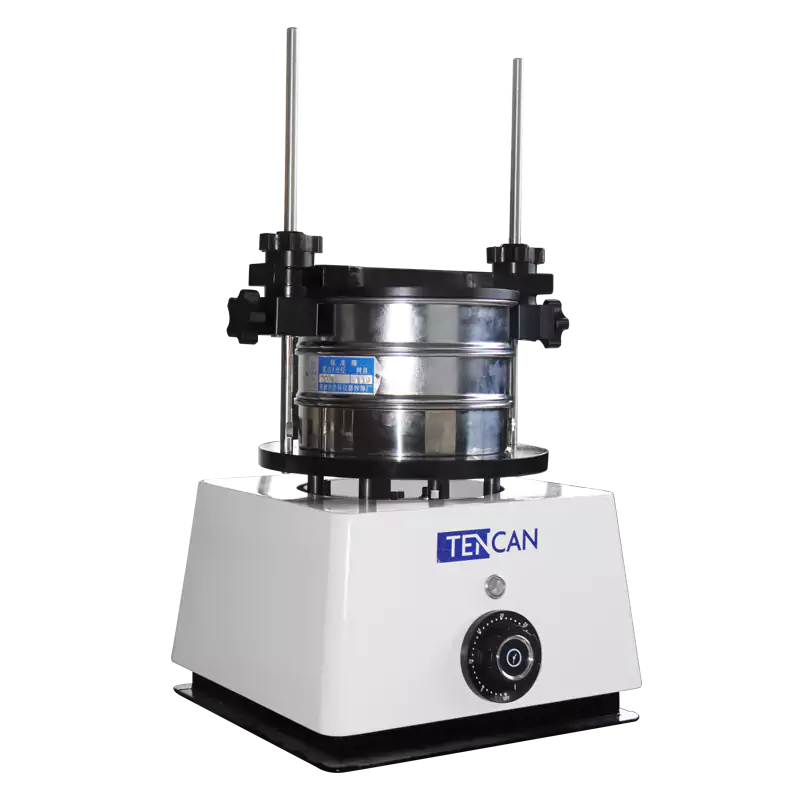
Drive and control
The drive supplies repeatable motion. Adjustable amplitude, frequency, or time helps match different materials. A simple timer and stable controls are often more valuable in a laboratory than high throughput alone.
Key Performance Indicators and Selection Points
Users should compare effective capacity, cut range, repeatability, and sample loss. Capacity is not just machine speed; it also depends on bulk density, moisture, and particle shape. For fine powders, look for mesh support, anti-blinding measures, and easy cleaning.
Noise, vibration isolation, power supply, and bench footprint also matter. Automation should be chosen for repeatability rather than novelty. For many samples, quick-change screens and clear collection pans save time. For fragile material, choose gentler motion and shorter runs.
Applications and Selection Advice
These machines are used in chemical, pharmaceutical, food, ceramic, mineral, soil, and battery-material laboratories for incoming inspection, milling control, and sieve analysis. For routine quality control, choose a robust single- or multi-sieve unit. For research, a flexible model with adjustable motion and interchangeable screens is more useful. Confirm the required sieve diameter and range before ordering.
The product page for the small laboratory screening machine provides a starting point for matching the device to sample type and laboratory workflow.
References
Small laboratory screening machine — product information and images.
Related Products
Get In Touch
Our professional team will reply to you within one business day. Please feel free to contact us!