

What is a Polyurethane Coated Iron Core Grinding Ball? A Durable Grinding Media
What Is a Polyurethane Coated Iron Core Grinding Ball?
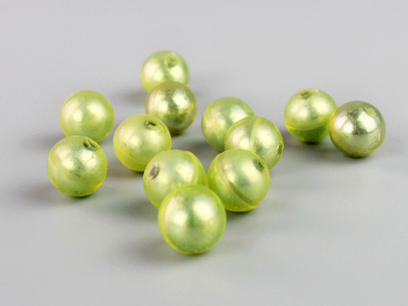
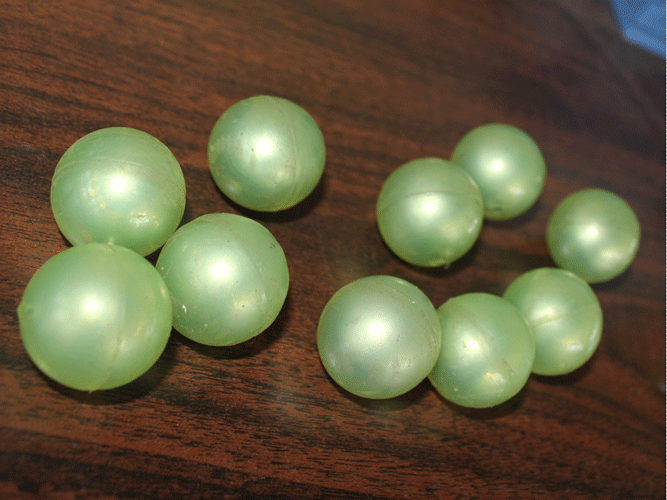
From a functional point of view, a polyurethane coated iron core grinding ball is a composite grinding medium designed for ball mills and stirred mills. The ball has two main parts: a dense iron core and a polyurethane outer jacket. The iron core provides the weight and kinetic energy needed to break particles, while the polyurethane coating creates a resilient surface that cushions impacts, resists abrasion, and limits the amount of iron that can enter the processed material. The product listed as Polyurethane coated iron core grinding ball belongs to this media category. It is used when a conventional steel ball would be too noisy, too abrasive to the mill, or too likely to contaminate the product with metal wear debris.
In many grinding circuits, the choice of grinding media is not a minor detail. The media determines how energy is transferred from the mill shell to the particles, how quickly the feed is reduced, and how much wear the mill liners experience. A polyurethane coated iron core ball is therefore not simply a steel ball with a cosmetic layer. The coating changes the contact mechanics between the media and the material, and it also changes the way the media behaves inside the mill. This article explains what the product is, how it works, what types exist, which performance indicators matter, and how to select the right configuration for a given application.
Core Function and Working Principle
The basic function of the polyurethane coated iron core grinding ball is to convert the rotational energy of a mill into size reduction. In a ball mill, the mill cylinder rotates around a horizontal or slightly inclined axis. Grinding media inside the cylinder are lifted by the liner and by friction against the mill shell. At a certain point, gravity and the geometry of the charge cause the media to fall or roll back down. This motion creates two main breakage mechanisms: impact, where a falling ball strikes a particle or a bed of particles, and attrition, where particles are sheared and rubbed between moving media surfaces. The polyurethane coated iron core ball participates in both mechanisms, but its behavior differs from that of a solid steel ball because the coating deforms on contact.
How the composite ball moves in the mill
When the mill rotates, the media charge is dragged upward along the rising side of the cylinder. Depending on the mill speed, the charge can follow a cascading path, in which balls roll over one another, or a cataracting path, in which balls are thrown some distance before falling. A dense iron core gives the ball enough mass to follow the cataracting motion and to deliver a useful impact. The polyurethane coating, however, increases the effective contact area and reduces the sharpness of the collision. Instead of a hard, metallic impact that may cause excessive liner wear and noisy operation, the coated ball produces a softer contact with a longer duration.
How material is reduced from feed to fine product
Inside the mill, the feed material is progressively reduced from coarse particles to finer particles. Initially, the largest particles are broken by high-energy impacts. As the particle size decreases, impact becomes less effective, and attrition becomes more important. The polyurethane coated iron core ball is particularly useful in the intermediate and fine grinding stages because its surface can transmit shear forces to the particle bed without introducing as much iron contamination as a bare metal ball. In wet grinding, the coating also influences the behavior of the slurry film between the media. In dry grinding, it can reduce the amount of fine dust that adheres to the media and the mill walls. The exact result depends on the mill type, the feed properties, the solids concentration, and the operating speed.
Key process parameters that affect performance
Several parameters control how a polyurethane coated iron core grinding ball performs. The first is mill speed. If the mill turns too slowly, the media may simply slide or roll without enough impact energy. If it turns too quickly, the media may centrifuge against the shell and stop doing useful work. The second parameter is media filling ratio, which is the proportion of the mill volume occupied by the grinding media. Too little media reduces grinding efficiency; too much media restricts movement and increases power draw. The third parameter is ball size. Larger balls provide more impact energy and are suitable for coarser feed, while smaller balls provide more contact points and are better for fine grinding. The fourth parameter is the thickness and hardness of the polyurethane coating. A thicker or softer coating absorbs more impact and reduces noise, but it may also reduce the maximum breakage force. A harder or thinner coating provides a more direct energy transfer but offers less cushioning. Finally, the density and size of the iron core determine the mass of the ball and therefore its momentum. All of these factors must be balanced against the target particle size, throughput, and acceptable contamination level.
Product Types and Classification
Polyurethane coated iron core grinding balls are part of a broader family of composite grinding media. Within this family, products can be classified by core material, coating formulation, ball size, and ball shape. The referenced product is one specific configuration, but understanding the classification helps users evaluate whether it fits their process.
Classification by core material
The core provides the density and mechanical strength of the ball. Most composite balls use iron or steel cores because these materials are dense, readily available, and able to withstand repeated impact. Different core materials or heat treatments can change hardness, toughness, and magnetic properties. A harder core resists deformation, while a tougher core resists fracture. In some applications, the core may also need to be corrosion-resistant, especially in wet grinding where the slurry is acidic or alkaline. The polyurethane coating protects the core from the environment, but the core material still influences the overall durability of the ball.
Classification by coating
The polyurethane coating is the defining feature of this product. Polyurethane is an elastomer, which means it can stretch and recover after deformation. This property allows the coating to absorb impact energy, reduce noise, and protect the mill liner from direct metal-to-metal contact. Coatings can differ in hardness, thickness, tear resistance, and chemical resistance. A softer coating is generally better for noise reduction and impact cushioning, while a harder coating is better for abrasion resistance and dimensional stability. The coating may also be formulated to resist oils, solvents, acids, or alkalis. In food, pharmaceutical, or electronic material processing, the coating can help reduce metallic contamination, although the user must still verify that the specific coating is compatible with the product being processed.
Classification by size and shape
Grinding media are available in different diameters to match the feed size and the target fineness. Larger balls are used for coarse crushing and for mills with a large diameter, while smaller balls are used for fine and ultrafine grinding. The shape of the ball also matters. Spherical balls roll smoothly and distribute impact evenly. Cylindrical or other shapes may be used in specific mills, but the spherical form remains the most common for tumbling ball mills. For a polyurethane coated iron core ball, the size of the iron core and the thickness of the coating together determine the outside diameter and the mass. Users should select the size according to the mill's internal dimensions, the feed particle size, and the desired product fineness.
Key Performance Indicators and Selection Points
When evaluating a polyurethane coated iron core grinding ball, buyers should look beyond the initial price. The total cost of ownership depends on grinding efficiency, wear life, product quality, and maintenance requirements. The following indicators are especially important.
Grinding capacity and throughput
Capacity is the amount of material the mill can process per unit of time while reaching the required particle size. It is influenced by the mass of the grinding media, the number of contact points, and the residence time of the material in the mill. A polyurethane coated iron core ball with a dense core can deliver good impact energy, but its coating may reduce the aggressiveness of the impact compared with a bare steel ball. Therefore, it is often selected for applications where a slightly gentler grind is acceptable or desirable, and where contamination, noise, or liner wear are more critical than maximum throughput. For high-capacity coarse grinding, a larger ball or a higher filling ratio may be needed.
Particle size and contamination control
Particle size distribution is a key quality parameter. The grinding media must reduce the feed to the target size range without creating excessive fines or oversized particles. The polyurethane coating can help produce a more uniform grind because the contact is distributed over a larger area and the impact is less localized. Contamination control is another major advantage. Bare iron or steel media wear gradually, and the wear debris can enter the product. In industries such as ceramics, battery materials, pigments, and pharmaceuticals, even small amounts of iron contamination can affect color, electrical properties, or product purity. The polyurethane coating acts as a barrier between the iron core and the material, reducing the release of iron into the product. However, the coating itself can wear, so users should monitor coating integrity and replace balls when the core becomes exposed.
Energy efficiency and wear life
Grinding is an energy-intensive process. The media should transfer energy to the particles efficiently rather than consuming it in deformation, heat, or noise. Polyurethane is viscoelastic, so some energy is absorbed by the coating. This can reduce noise and liner wear, but it may also lower the energy available for breakage. The optimal balance depends on the application. Wear life is equally important. A long-lasting ball reduces replacement frequency and downtime. The wear rate depends on the abrasiveness of the feed, the mill speed, the slurry chemistry, and the quality of the coating. A well-bonded polyurethane layer with good tear resistance will usually last longer than a poorly bonded or overly soft coating.
Automation and compatibility
Modern mills often use variable-frequency drives, programmable logic controllers, and sensors to monitor speed, power draw, temperature, and feed rate. The grinding media must be compatible with these systems. A polyurethane coated iron core ball can be used in automated mills as long as the mill's control strategy accounts for the media's mass and motion characteristics. In addition, the media should be compatible with the mill liners, the discharge system, and any downstream separation equipment. Magnetic separation may be used to remove tramp metal, but the iron core inside the ball is not normally removed by magnetic separators unless the ball has broken and the core is exposed. This is another reason to inspect the coating regularly.
Maintenance convenience
Maintenance includes inspecting the media, cleaning the mill, and replacing worn balls. Polyurethane coated balls are generally easier to handle than bare steel balls because they are quieter and less likely to damage equipment during loading and unloading. However, they still require care. The coating can be cut or torn by sharp objects, so media should be stored and handled properly. During mill inspections, operators should look for cracks, cuts, embedded material, and exposed core areas.
Applications and Selection Advice
Polyurethane coated iron core grinding balls are used in many industries where controlled grinding, low noise, and reduced metal contamination are important. Common applications include mineral processing, ceramic raw materials, glass, pigments, dyes, paints, coatings, chemical powders, and some food and pharmaceutical products. They are also used in laboratory and pilot-scale mills for testing new formulations and process conditions. The product page for Polyurethane coated iron core grinding ball provides a reference for one commercially available option.
Typical industry uses
In mineral processing, these balls can be used for fine grinding of ores and industrial minerals where the presence of iron in the final concentrate is not desirable. In the ceramics industry, they help grind frits, glazes, and ceramic bodies while limiting iron contamination that could affect whiteness or dielectric properties. In pigment and coating production, they can disperse and mill colorants without introducing dark metal particles. In chemical processing, they may be used for grinding crystalline materials, resins, and other friable solids. In laboratory settings, they are useful for small-scale milling where noise reduction and clean operation are valued. The exact suitability depends on the chemical compatibility of the polyurethane with the process fluid and the temperature of the mill.
How to select the right ball for your process
Selection should begin with the feed material. Hard, abrasive materials require a durable coating and a tough core, while softer materials may allow a softer coating. The feed particle size determines the initial ball size; coarse feed needs larger, heavier balls, while fine feed needs smaller balls with more contact points. The target product size determines the grinding time and the media size distribution. The mill type and dimensions set limits on the maximum ball size and the filling ratio. The process environment, including pH, temperature, and solvent content, determines the coating formulation. Finally, the acceptable contamination level determines how much coating protection is needed. For critical applications, users should request material compatibility information and, if possible, run a pilot test before full-scale production.
Operational and Maintenance Notes
To get the best performance from polyurethane coated iron core grinding balls, operators should follow good milling practice. First, avoid overloading the mill. Excessive media or feed can cause the charge to centrifuge, which reduces grinding efficiency and increases wear. Second, maintain the correct mill speed for the application. The optimum speed depends on the mill diameter and the media size. Third, keep the slurry density and viscosity within the recommended range. A slurry that is too thick can cushion impacts and slow grinding, while a slurry that is too thin can increase media wear and liner wear. Fourth, inspect the media regularly. Polyurethane coatings can be damaged by sharp feed particles, tramp metal, or excessive heat. Remove any ball with a cut, crack, or exposed core. Fifth, store the balls in a clean, dry area away from direct sunlight and chemicals that could degrade the polyurethane. Sixth, follow the manufacturer's instructions for loading, operating, and maintaining the mill.
Safety is also important. Although polyurethane coated media are quieter than steel media, they are still heavy. Use proper lifting equipment and protective footwear when handling them. Do not use damaged balls, because a broken core can damage the mill liner and the discharge system. When replacing media, weigh the charge and record the quantity so that the mill balance can be maintained. If the process involves flammable solvents or dust, follow the relevant safety regulations for the mill and the material being ground.
Frequently Asked Questions
What is the difference between a polyurethane coated iron core ball and a standard steel ball?
A standard steel ball is a solid metal object. It is dense, hard, and provides strong impact energy, but it can be noisy, abrasive to the mill, and a source of iron contamination. A polyurethane coated iron core ball uses a steel or iron core for mass and a polyurethane jacket for cushioning and protection. The result is a grinding medium that is quieter, gentler on the mill liner, and less likely to release metal into the product.
Can it be used in both wet and dry grinding?
Yes, polyurethane coated iron core grinding balls can be used in wet and dry grinding, provided that the coating is compatible with the process conditions. In wet grinding, the coating must resist the slurry chemistry, including acids, alkalis, and solvents. In dry grinding, the coating should resist abrasion and avoid building up static charge or holding fine dust. The user should confirm compatibility with the media supplier and test the balls under actual process conditions before large-scale use.
How do I choose the right ball size?
Ball size depends on the feed size, the mill diameter, and the target product fineness. As a general rule, larger balls are used for coarse feed and smaller balls for fine grinding. The ball size should be large enough to break the largest particles but not so large that it causes excessive wear or leaves unground material. A common approach is to use a media charge with a mix of sizes, so that the mill can handle a range of particle sizes. The mill manufacturer or media supplier can help calculate the optimum size distribution.
How often should the balls be inspected?
Inspection frequency depends on the application, the abrasiveness of the feed, and the operating conditions. In an abrasive or high-temperature process, inspections may be needed more often. At minimum, the media should be checked during regular mill maintenance stops. Look for cuts, tears, flattening, discoloration, and exposed core. Replace any ball that shows significant coating damage. Keeping records of wear rates helps predict when the media charge should be replaced.
Does the polyurethane coating affect grinding efficiency?
The coating can affect grinding efficiency in both positive and negative ways. On the positive side, it reduces noise and liner wear, and it can distribute contact forces more evenly, which may improve particle size uniformity. On the negative side, the elastic deformation of the coating absorbs some energy, so the impact force delivered to the particles may be lower than with a bare steel ball. The net effect depends on the material, the mill speed, and the target fineness.
Conclusion
A polyurethane coated iron core grinding ball is a composite grinding medium that combines a dense iron core with a resilient polyurethane coating. It is designed for ball mills and similar equipment where controlled grinding, low noise, reduced liner wear, and lower metal contamination are important. The ball works through the same impact and attrition mechanisms as other grinding media, but its coating changes the contact mechanics and the wear behavior. When selecting this product, users should consider the feed material, target particle size, mill type, process chemistry, and acceptable contamination level.
Related Products
Get In Touch
Our professional team will reply to you within one business day. Please feel free to contact us!