
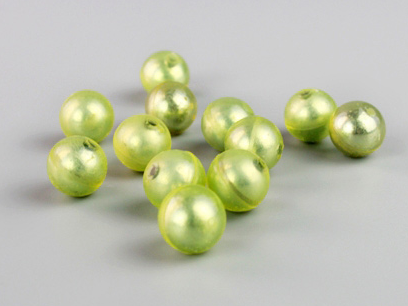
What is a Polyurethane Coated Iron Core Grinding Ball? A Wear-Resistant Grinding Media for Low-Contamination and High-Purity Milling

What is a Polyurethane Coated Iron Core Grinding Ball?
From the core, a polyurethane coated iron core grinding ball is a specialized ball mill grinding media that powder processing laboratories and industries use to achieve high-purity, low-contamination milling of sensitive materials. Unlike conventional steel or ceramic balls, this composite media combines a dense iron core with a tough polyurethane outer shell, delivering both strong impact force and minimal product pollution.
Core Function and Working Principle
How It Works in a Ball Mill
The polyurethane coated iron core grinding ball functions as an energy carrier inside ball mills (planetary, drum, or vibration types). The iron core provides the necessary mass and hardness to generate impact and shear forces during mill rotation, effectively crushing and grinding the feed material. The polyurethane coating, typically 3 mm thick, serves as a resilient buffer that absorbs shock, reduces wear on the mill jar liner, and most importantly, prevents direct metal-to-metal or metal-to-sample contact, thereby eliminating metallic contamination of the powder product.
Key Working Parameters
- Ball size: Common diameters are 15 mm, 20 mm, and 30 mm (with 3 mm polyurethane coating thickness).
- Polyurethane hardness: Ranges from Shore A 10 to Shore D 75, offering flexibility for different grinding intensity requirements.
- Impact resistance: The core provides high density, while the coating provides high elasticity, reducing ball breakage and prolonging service life.
Core Constituents and Key Technology
This grinding media consists of two primary components:
- Iron Core (Steel Ball): Supplies the necessary weight and hardness to generate effective grinding forces. The core is made from high-quality steel, ensuring consistent density and roundness.
- Polyurethane Coating: A high-performance elastomeric material known for its outstanding resistance to wear, tear, and impact. Polyurethane is a “fifth plastic” that can be formulated to have excellent elasticity, high tensile strength, and resistance to oils and chemicals. The coating not only protects the core from corrosion but also provides a gentle grinding surface that minimizes contamination of the sample.
The manufacturing process involves encapsulating a precisely ground steel ball with polyurethane resin, curing it to form a seamless, tightly bonded shell. This design delivers the best of both worlds: the grinding power of steel and the purity advantages of a polymer surface.
Key Performance Indicators and Selection Guide
Critical Selection Parameters
- Contamination Level: Polyurethane is inert and does not react with most materials, making it ideal for grinding high-purity ceramics, pharmaceutical powders, and electronic materials. It leaves minimal trace metal contamination compared to steel or other metallic media.
- Abrasion Resistance: Polyurethane is extremely wear-resistant, often outlasting rubber or plastic linings. The coating can withstand repeated impacts without cracking or peeling, significantly reducing replacement frequency.
- Grinding Efficiency: Due to the high density of the iron core, PU coated balls can effectively grind even hard materials. However, because the coating absorbs some impact energy, they are best suited for medium-hardness materials or where gentle grinding is required.
- Temperature and Chemical Resistance: Standard polyurethane can withstand temperatures up to about 80°C continuously, and some formulations can handle up to 120°C for short periods. It also resists oils, weak acids, and alkalis, broadening its application scope.
- Ball Size and Compatibility: Choose ball diameter based on mill type and target particle size. Smaller balls (15 mm) offer higher surface area for finer grinding, while larger balls (30 mm) provide stronger impact for coarse pre-milling.
Application Fields and Recommendations
Polyurethane coated iron core grinding balls are widely used in:
- Battery Materials: Grinding of cathode and anode materials (e.g., lithium-ion battery powders) where iron contamination must be strictly avoided.
- Ceramics and Refractories: Milling of alumina, zirconia, silicon carbide, and other advanced ceramics.
- Pharmaceuticals and Fine Chemicals: Gentle grinding of active pharmaceutical ingredients (APIs) and sensitive chemical compounds.
- Mining and Mineral Processing: When processing ores that require low-metal contamination for downstream flotation or leaching.
- Pigments and Dyes: Achieving uniform color dispersion without introducing metallic impurities.
Selection Advice: For laboratories and small-scale production, 15–20 mm balls are suitable for planetary and roller ball mills. For larger drum mills or heavy-duty applications, 30 mm balls are recommended. Always verify the polyurethane hardness grade with your mill’s operating conditions and material characteristics to optimize grinding performance and media life.
References
- TENCAN Product Page: Polyurethane Coated Iron Core Grinding Ball
- Related product: 304 Stainless Steel Grinding Ball
- Related product: Zirconia Grinding Ball
Related Products
Get In Touch
Our professional team will reply to you within one business day. Please feel free to contact us!