

What is an Oblique Mixer? A High-Efficiency Mixing Equipment for Homogeneous Blending of Powders and Granules
What is an Oblique Mixer?
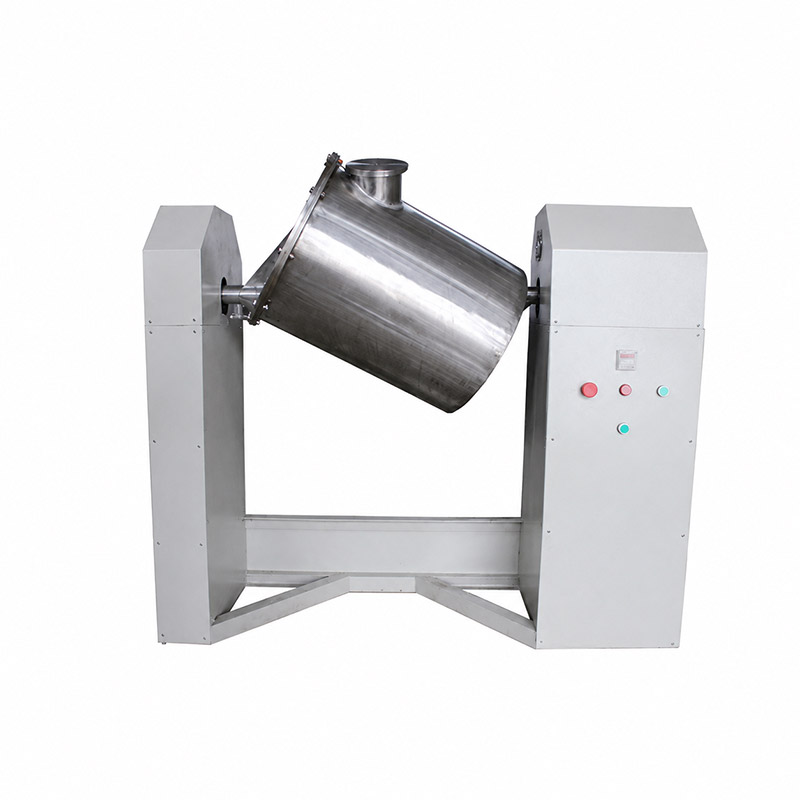
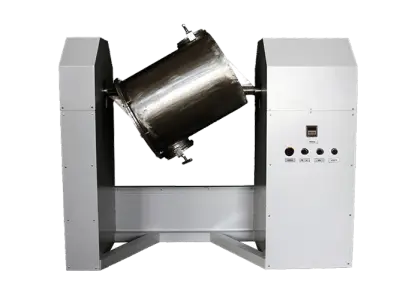
At its core, an oblique mixer is a specialized blending equipment designed for the homogeneous mixing of powders and granules. Industries such as pharmaceuticals, chemicals, food processing, and materials research use it to achieve a uniform mixture of dry particulate materials without causing significant particle degradation or heat generation. The oblique mixer works by rotating a mixing container at an inclined angle, allowing materials to tumble and fold repeatedly under gravity, ensuring thorough blending.
Core Function and Working Principle
The primary function of an oblique mixer is to transform separate batches of powders or granules into a homogeneous mixture with a high degree of uniformity. The equipment consists of a cylindrical or V-shaped container mounted on a rotating shaft at an oblique angle. As the container rotates, the material inside is lifted by the container walls and then falls back down due to gravity, creating a continuous tumbling and folding motion. This gentle yet effective mixing action ensures that particles of different sizes, densities, and shapes are evenly distributed.
Key parameters affecting the mixing performance include the rotation speed (typically adjustable via a variable frequency drive), the tilt angle of the container, the filling volume (usually 30% to 60% of the total capacity), and the mixing time. The oblique design minimizes the dead zones often found in horizontal mixers, while the absence of internal agitators reduces the risk of contamination and makes cleaning straightforward. For applications requiring high purity, the oblique mixer is often made of 304 or 316L stainless steel, with a polished interior surface to meet GMP standards.
Core Components and Key Technologies
While the oblique mixer is a relatively simple machine, its performance depends on several critical components:
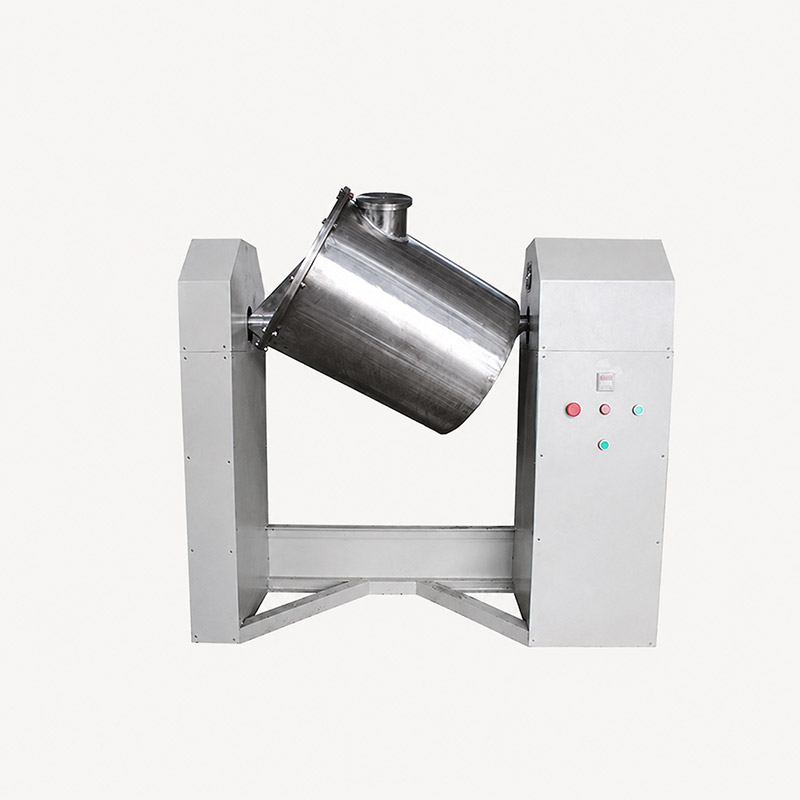
- Mixing Container: Typically made of stainless steel, with a smooth interior finish to prevent material adhesion. Available in volumes from 1 liter for laboratory use to hundreds of liters for industrial production.
- Rotating Mechanism: An electric motor coupled with a gearbox or belt drive, often equipped with a variable frequency drive (VFD) for precise speed control. The rotation speed is generally between 10 and 60 rpm.
- Sealing System: High-quality seals at the container openings prevent dust leakage and ensure the machine can handle fine powders safely.
- Discharge Valve: A manually or pneumatically operated valve at the bottom of the container allows for easy and complete emptying of the mixed product.
Key Performance Indicators and Selection Criteria
When selecting an oblique mixer, buyers should evaluate the following critical parameters:
- Mixing Uniformity: Measured by the coefficient of variation (CV%). High-quality oblique mixers can achieve a CV% below 5% for most dry powders, and even below 2% for well-characterized materials.
- Processing Capacity: Determined by the container volume and the filling ratio. Typical lab-scale models handle 1-5 liters, while pilot and production units range from 10 to 500 liters.
- Material Compatibility: The mixer must be constructed from materials that are non-reactive and easy to clean. For abrasive or corrosive powders, special coatings or alloys may be required.
- Cleanability: For pharmaceutical and food applications, the design should allow quick disassembly and cleaning, with no hidden crevices.
- Automation: Modern oblique mixers can be integrated with PLC controls for recipe management, data logging, and remote operation.
- Safety Features: Emergency stop, interlock switches, and compliance with ATEX or other explosion-proof standards if handling flammable powders.
Application Areas and Selection Advice
Oblique mixers are widely used in:
- Pharmaceutical Industry: Blending active pharmaceutical ingredients (APIs) with excipients, mixing dry powder formulations for capsules or tablets.
- Chemical Industry: Mixing pigments, catalysts, plastic additives, and fine chemicals.
- Food Industry: Blending seasonings, spices, instant drink powders, and nutritional supplements.
- Materials Science: Preparing powder mixtures for ceramics, battery materials, and advanced composites.
- Laboratory R&D: Small-scale mixing for process development and quality control.
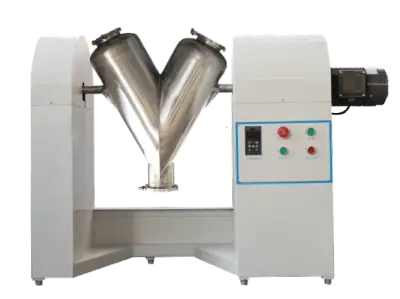
For users who need gentle mixing without particle breakage, the oblique mixer is an excellent choice. If higher throughput is required, consider a V-type mixer or double cone mixer. For applications requiring intensive mixing of cohesive powders, a 3D mixer may be more suitable. Always consult the manufacturer’s technical team to match the equipment to your specific material properties and process requirements.
References
Related Products
Get In Touch
Our professional team will reply to you within one business day. Please feel free to contact us!