
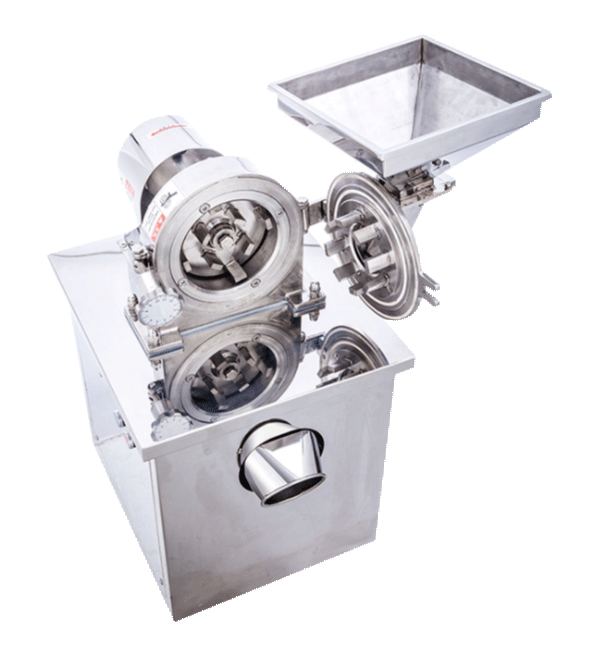
What is a Multi Functional Crusher? A Versatile Size Reduction Machine for Chemical, Pharmaceutical, and Food Industries

What is a Multi Functional Crusher? A Versatile Size Reduction Machine for Chemical, Pharmaceutical, and Food Industries
At its core, a multi functional crusher is a highly adaptable size reduction machine used across the chemical, pharmaceutical, and food industries to break down solid materials into smaller, more uniform particles. Whether you're grinding herbs, pulverizing chemical reagents, or crushing food ingredients, this equipment combines several crushing mechanisms into one compact design, offering flexibility for both laboratory and small-scale production environments.
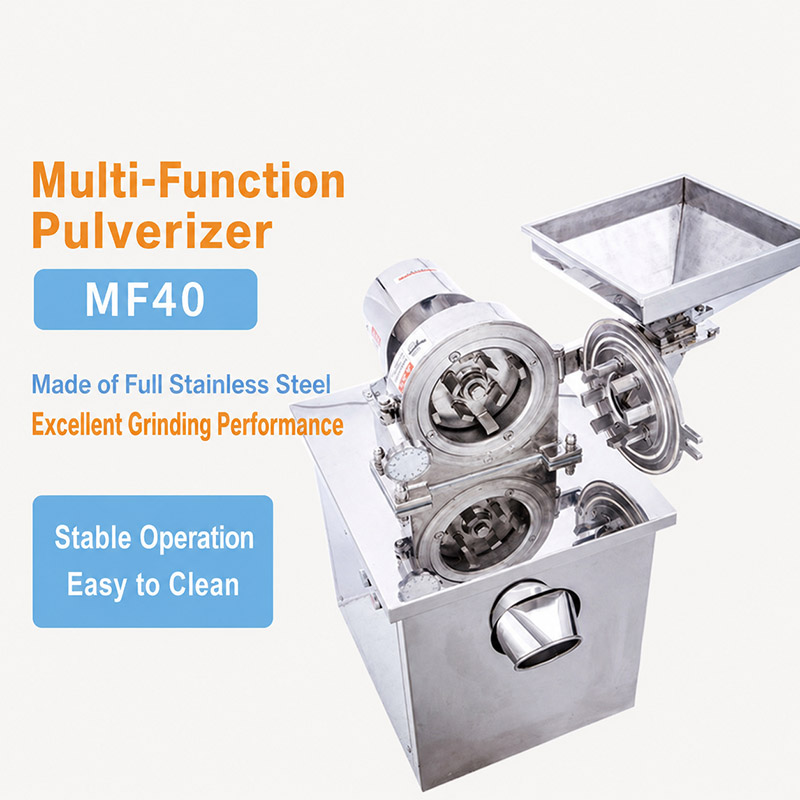
Core Function and Working Principle
The primary function of a multi functional crusher is to reduce the particle size of bulk materials from coarse lumps (typically 5–20 mm) to fine powders (down to 40–120 mesh or even finer). It achieves this through a combination of high-speed impact, shearing, and grinding actions. The material is fed into a central crushing chamber where rotating blades or hammers, driven by a powerful motor, collide with the material repeatedly. Simultaneously, the stationary liners or screens create additional friction and shear forces, breaking the particles until they pass through a mesh screen of desired aperture.
Key operational parameters include rotor speed (typically 2000–8000 rpm depending on model), screen mesh size, and feed rate. Higher rotor speeds generate more impacts and are suitable for brittle materials, while lower speeds with sharper blades are better for fibrous or elastic substances. The adjustable screen allows precise control over final particle size, making it easy to switch between different product specifications.
Main Types / Core Components
Multi functional crushers generally come in two main configurations based on the cutting mechanism:
1. Hammer-Type Crusher
This design uses a set of swinging hammers attached to a rotating shaft. It is ideal for medium-hard, brittle materials such as minerals, coal, and chemical salts. The hammers impact the material against a breaker plate, providing high throughput and coarse to medium grinds. It is commonly used in chemical and mineral processing applications.
2. Blade-Type (Knife) Crusher
This type employs sharp, fixed or rotating blades that cut and shear the material. It excels with fibrous, elastic, or heat-sensitive materials like herbs, spices, plant roots, pharmaceutical tablets, and food products. The chopping action generates less heat, preserving heat-sensitive compounds. Many models offer interchangeable blade sets for different materials.
Core components common to both types include a stainless steel crushing chamber (for hygiene and corrosion resistance), a high-torque motor, a replaceable screen mesh, and a collection bin. Some advanced models feature a dust-free design with a sealed collection system to minimize airborne particles.
Key Performance Indicators and Selection Criteria
When selecting a multi functional crusher, engineers and purchasers should evaluate the following parameters:
- Processing Capacity: Typically ranges from 5 to 50 kg/h for laboratory units, up to 500 kg/h for production models. Match the capacity to your batch size and throughput requirements.
- Particle Size Range: Look for adjustable screen meshes (e.g., 20–120 mesh) to achieve the target fineness. The ability to change screens quickly is a key advantage.
- Motor Power and Speed Control: Higher power (0.75–5 kW) enables processing of harder materials. Variable speed drives allow optimization for different materials.
- Material of Construction: Stainless steel (304 or 316) is standard for food and pharmaceutical applications. For chemical applications, check compatibility with corrosive substances.
- Noise Level and Dust Containment: Closed-loop grinding systems reduce noise and dust emission, essential for laboratory environments.
- Ease of Cleaning: Quick-release chambers and detachable screens simplify changeover between batches, preventing cross-contamination.
Application Areas and Selection Advice
Multi functional crushers are widely used in:
- Chemical Industry: Grinding of pigments, dyes, catalysts, and fine chemicals.
- Pharmaceutical Industry: Pulverizing of tablets, herbs, and active pharmaceutical ingredients (APIs).
- Food Industry: Crushing of spices, grains, sugar, dried fruits, and tea leaves.
- Laboratory R&D: Sample preparation for analysis, small-scale formulation studies.
For labs and small-scale production, a multi functional crusher with a 1–2 kg batch capacity and variable speed blade system is recommended. For continuous processing, consider a hammer-type model with higher throughput. Always verify the material's hardness, moisture content, and heat sensitivity before purchase.
References
- Multi functional crusher: https://www.planetaryballmills.com/products/broken-series/multi-functional-crusher.html
- Double Roll Crusher: https://www.planetaryballmills.com/products/broken-series/double-roll-crusher.html
- Teeth Roll Crusher: https://www.planetaryballmills.com/products/broken-series/teeth-roll-crusher.html
- Lab Jaw Crusher: https://www.planetaryballmills.com/products/broken-series/lab-jaw-crusher-2025.html
- Small Shredder: https://www.planetaryballmills.com/products/broken-series/small-shredder.html
- Stainless Steel Vibration Crusher: https://www.planetaryballmills.com/products/broken-series/stainless-steel-vibration-crusher.html
Related Products
Get In Touch
Our professional team will reply to you within one business day. Please feel free to contact us!