

What is a Microwave Vacuum Drying Oven? A Low-Temperature Drying Equipment for Heat-Sensitive Materials
What is a Microwave Vacuum Drying Oven?
At its core, a microwave vacuum drying oven is a specialized drying system that integrates microwave heating technology with a vacuum environment. It is used by industries such as pharmaceuticals, food processing, chemicals, and biotechnology to gently remove moisture from heat-sensitive materials at low temperatures, typically between 30°C and 100°C. By combining the penetrating power of microwaves with the reduced boiling point of water under vacuum, this equipment achieves rapid, uniform drying without compromising the product's color, aroma, nutrients, or bioactive components.
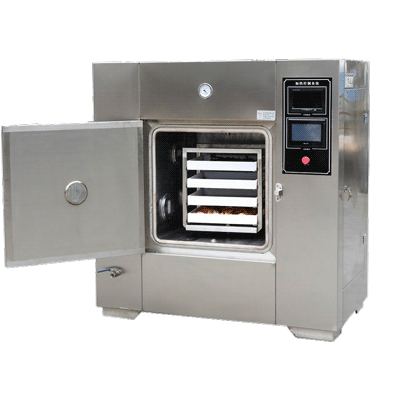
Core Function and Working Principle
The fundamental function of a microwave vacuum drying oven is to transform a wet material (liquid, paste, powder, granules, flakes, or pieces) into a dry product with controlled moisture content. Unlike conventional drying methods that rely on convection or conduction to transfer heat from the surface inward, microwave heating directly interacts with the material's polar molecules—such as water—causing them to vibrate billions of times per second. This molecular friction generates heat instantaneously throughout the entire volume of the material.
When combined with a vacuum environment, the boiling point of water is significantly lowered, allowing moisture to evaporate at much lower temperatures without the need for high heat. The vacuum chamber also removes air, preventing oxidation and preserving the material's chemical stability. A typical system includes a microwave generator (magnetron), a vacuum chamber with a rotating tray or shelf system, a vacuum pump, and a control unit that regulates temperature, microwave power, and drying time. Advanced models feature PLC touch-screen control, infrared temperature measurement, and programmable logic to ensure repeatable results.
Key Components and Technologies
Microwave Generation and Distribution
High-quality ovens use industrial-grade magnetrons (e.g., Panasonic) with continuous power adjustment, ensuring uniform energy distribution. Some designs employ multiple microwave sources and rotating trays to eliminate hot spots and achieve consistent drying across all trays.
Vacuum System and Chamber Design
The vacuum chamber is typically constructed from stainless steel with rounded corners to facilitate cleaning and prevent condensation buildup. A robust vacuum pump capable of reaching -0.098 MPa is used, along with check valves to prevent oil backflow. The chamber may include a condensation collection system to improve drying efficiency.
Temperature and Power Control
Precise temperature control is critical for heat-sensitive materials. Modern units use infrared sensors to measure the actual material temperature (not just the air) and adjust microwave output in real-time. This prevents overheating and ensures that the drying process remains within the desired range, typically 40–120°C.
Key Performance Indicators and Selection Criteria
When selecting a microwave vacuum drying oven, consider the following parameters:
- Processing Capacity: From laboratory-scale units (0.8 kg/batch) to production-scale models handling hundreds of kilograms per batch. Choose based on your throughput needs.
- Temperature Range: Most units operate between 40°C and 120°C. For extremely heat-sensitive materials, look for models capable of maintaining 30–40°C.
- Vacuum Level: A deeper vacuum (e.g., -0.098 MPa) allows lower drying temperatures and faster evaporation.
- Power and Efficiency: Microwave power typically ranges from 0.8 kW to 20 kW. Higher power reduces drying time but must be balanced with material sensitivity.
- Automation: PLC-based systems with touchscreens, data logging, and recipe storage improve repeatability and ease of use.
- Material Compatibility: Ensure the unit can handle your specific material form (liquid, paste, powder, etc.) and any explosive or flammable solvents if required.
Applications and Selection Advice
Microwave vacuum drying ovens are widely used in:
- Pharmaceuticals: Drying of Chinese herbal extracts, active pharmaceutical ingredients (APIs), and biological products.
- Food Processing: Dehydration of fruits, vegetables, meat, seafood, and instant soup mixes while retaining flavor and nutrients.
- Chemical Industry: Drying of catalysts, pigments, and fine chemicals, including those with flammable solvents.
- Laboratory Research: Universities and R&D centers use them for process development and scale-up studies.
For small-scale research, a compact benchtop model with manual control is sufficient. For production, consider a larger unit with automatic door operation, multi-layer trays, and explosion-proof features if handling volatile solvents. Always consult the manufacturer to test your specific material before purchase.
References
For more details, visit the product page: Microwave vacuum drying oven
Related Products
Get In Touch
Our professional team will reply to you within one business day. Please feel free to contact us!