

What is a Microwave Vacuum Drying Oven? A Low-Temperature Drying Equipment for Heat-Sensitive Materials
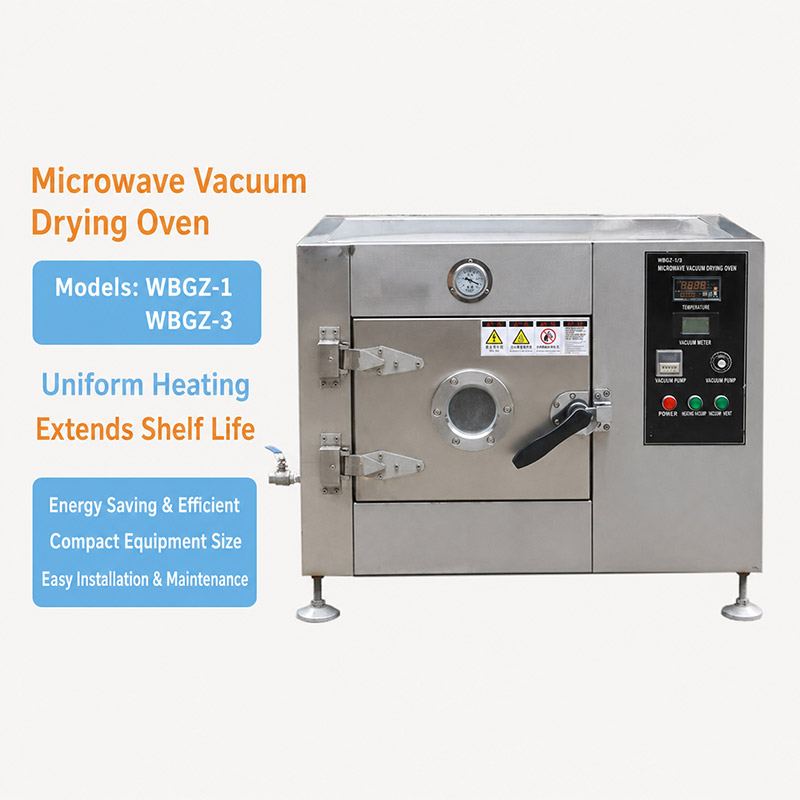
At its core, a microwave vacuum drying oven is a specialized drying apparatus that combines microwave heating with vacuum technology to remove moisture from heat-sensitive materials at significantly lower temperatures than conventional drying methods. Industries such as pharmaceuticals, food processing, chemical engineering, and biotechnology use it to achieve rapid, uniform drying while preserving the original physicochemical properties and nutritional content of the product.
Core Function and Working Principle
The fundamental function of a microwave vacuum drying oven is to convert wet materials (liquids, pastes, powders, granules, or solids) into a dry, stable state. The process works by placing the material inside a sealed chamber where a vacuum pump reduces the pressure, thereby lowering the boiling point of water. Simultaneously, microwave energy penetrates the material directly, causing water molecules to vibrate at high frequencies and generate heat through dielectric friction. This internal heating eliminates the need for thermal conduction, resulting in extremely fast and uniform drying.
Key parameters that influence drying performance include microwave power (typically adjustable from 0 to 800W in lab models), vacuum level (down to -0.098 MPa), temperature range (40–120°C), and processing time. The combination of vacuum and microwave allows drying to occur at 30–60°C, which is ideal for thermolabile substances that would degrade under conventional heating.
Main Types and Classifications
Laboratory-Scale Microwave Vacuum Drying Ovens
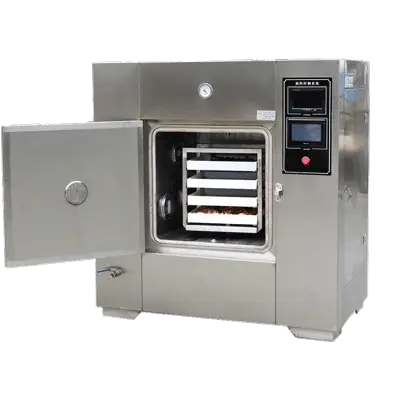
Designed for research institutes, universities, and small-scale trials, these units offer precise control of power and temperature. They typically feature a single material tray, manual or PLC control, and are suitable for process development, formulation optimization, and small-batch production.
Industrial Microwave Vacuum Drying Systems
For continuous or large-batch production, industrial models incorporate rotating shelves, conveyor belts, or tray systems to handle larger volumes. They are often equipped with advanced automation, programmable logic controllers (PLC), and touch-screen interfaces to ensure consistent quality across batches.
Specialized Configurations
Some units are designed for specific applications, such as drying of organic solvents (e.g., ethanol, methanol), explosive materials, or delicate biological products. These may include explosion-proof modifications, enhanced vacuum systems, or inert gas purging options.
Key Performance Indicators and Selection Criteria
When selecting a microwave vacuum drying oven, the following factors should be considered:
- Drying Capacity: Measured in kilograms of water removal per hour (e.g., 0.8 kg/h for lab units, up to 30 kg/h for industrial models). Choose based on your throughput requirements.
- Power and Temperature Control: Look for adjustable microwave power and precise temperature control (±0.5°C). Continuous power regulation ensures uniform energy delivery and avoids overheating.
- Vacuum Level: A deeper vacuum (e.g., -0.098 MPa) allows drying at lower temperatures, which is critical for heat-sensitive materials.
- Automation and User Interface: PLC-based systems with touch-screen operation, recipe storage, and data logging improve repeatability and ease of use.
- Material Compatibility: Ensure the chamber construction (e.g., stainless steel) and sealing materials are compatible with your product (e.g., acidic, alkaline, or solvent-containing).
- Safety Features: Over-temperature protection, vacuum leak detection, and microwave leakage monitoring are essential for safe operation.
Application Fields and Selection Recommendations
Microwave vacuum drying ovens are widely used in:
- Pharmaceutical Industry: Drying of active pharmaceutical ingredients (APIs), herbal extracts, and biological products that require gentle processing.
- Food Industry: Dehydration of fruits, vegetables, meat, seafood, and instant beverages while retaining color, flavor, and nutrients.
- Chemical Industry: Drying of heat-sensitive chemicals, catalysts, and fine powders.
- Biotechnology: Preparation of freeze-dried samples, vaccines, and enzymes.
- Academic Research: Process development and material characterization.
For laboratory or pilot-scale needs, a compact microwave vacuum drying oven with adjustable power and a single tray is ideal. For production, industrial models with higher capacity and automation are recommended. Always consult the manufacturer to tailor the equipment to your specific material characteristics.
References
For more details, please visit the product page: Microwave Vacuum Drying Oven.
Related Products
Get In Touch
Our professional team will reply to you within one business day. Please feel free to contact us!