
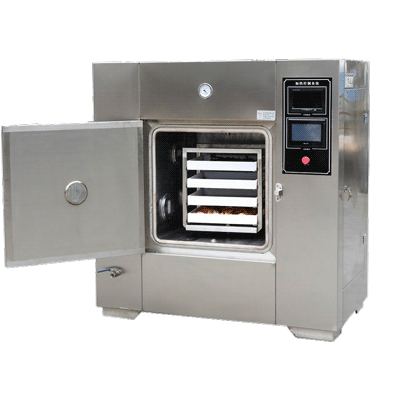
What is a Microwave Vacuum Drying Oven? A High-Efficiency Drying Equipment for Heat-Sensitive Materials

What is a Microwave Vacuum Drying Oven?
At its core, a microwave vacuum drying oven is a specialized drying system that combines microwave heating technology with vacuum conditions to remove moisture from materials at low temperatures. Industries such as pharmaceuticals, food processing, chemical engineering, and biotechnology use it to dry heat-sensitive substances—like herbal extracts, active pharmaceutical ingredients, and biological products—without degrading their quality. Unlike conventional hot-air ovens, this equipment achieves rapid, uniform drying while preserving the original color, aroma, and activity of the product.
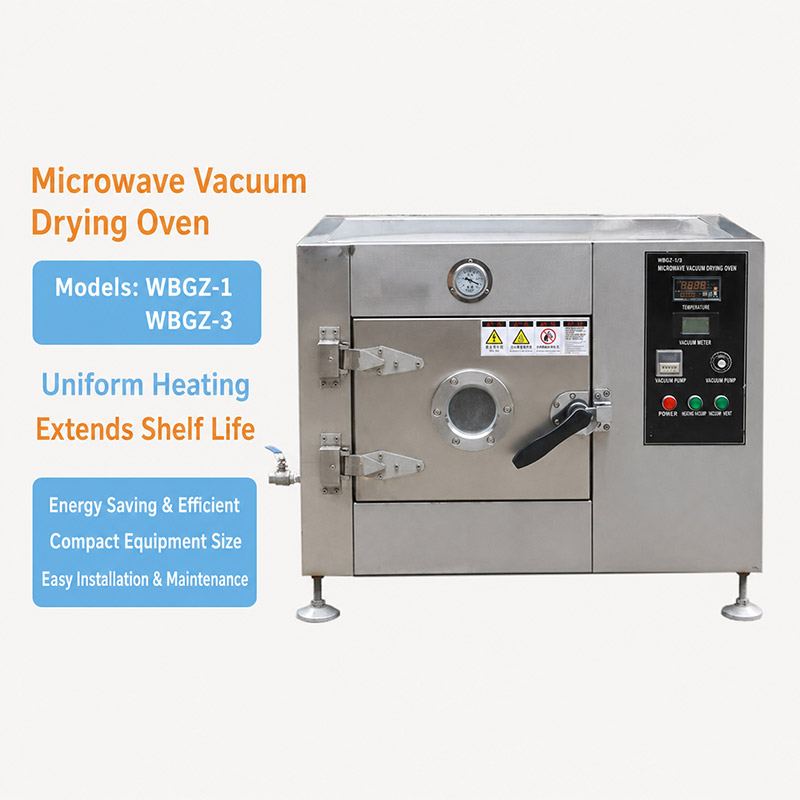
Core Function and Working Principle
The primary function of a microwave vacuum drying oven is to transform wet materials from a high-moisture state into a dry, stable powder or solid with precisely controlled residual moisture. The working principle integrates two key technologies: microwave volumetric heating and vacuum pressure reduction.
Microwaves (typically 2450 MHz) penetrate the material directly, causing polar molecules—especially water—to oscillate 2.45 billion times per second. This molecular friction generates heat from within the material, eliminating the need for thermal conduction from the surface. As a result, heating is instantaneous and uniform, avoiding the "outer dry, inner wet" problem common in conventional drying. Meanwhile, the vacuum chamber reduces the boiling point of water significantly, allowing moisture to evaporate at temperatures as low as 35–60°C. This low-temperature environment is crucial for heat-sensitive materials that would otherwise degrade or discolor under high heat.
Key process parameters that affect final product quality include microwave power density, vacuum level, drying time, and temperature profile. By precisely controlling these variables, operators can achieve desired residual moisture levels (e.g., from 40% down to 0.5%) while maintaining material integrity.
Core Components and Key Technologies
Although the basic design of a microwave vacuum drying oven is a single equipment type, understanding its core components helps users appreciate its capabilities:
- Microwave Generator and Waveguide: Usually magnetrons (e.g., Panasonic brand) that produce microwaves; the waveguide distributes energy evenly into the chamber. Advanced systems use continuous power adjustment to ensure consistent dose per batch.
- Vacuum System: Comprising a vacuum pump and chamber, it creates the low-pressure environment essential for low-temperature drying. The vacuum level directly affects the boiling point of water and drying speed.
- Temperature and Pressure Control: PLC-based touchscreen controllers allow multi-stage programming of temperature and vacuum, enabling customized drying curves for different materials. Some models include dynamic vacuum regulation and adaptive power control.
- Chamber and Material Handling: The chamber is typically made of stainless steel (medical grade) for hygiene and easy cleaning. Material trays may be stationary or rotating (e.g., horizontal or vertical turntables) to improve uniformity.
- Cooling and Safety Systems: Self-cooling transformers, over-temperature alarms, and microwave leakage shielding ensure safe 24/7 operation. Leakage levels are kept well below international standards.
Key Performance Indicators and Selection Criteria
When selecting a microwave vacuum drying oven, users should evaluate the following critical parameters:
- Processing Capacity: Ranges from small benchtop units (e.g., 5 kW, 300 kg weight) to large industrial systems. The required capacity depends on batch size and production throughput.
- Drying Uniformity and Precision: Look for systems with continuous microwave power control and multi-point temperature sensing to ensure every batch meets specifications. Rotating trays and advanced cavity designs enhance uniformity.
- Energy Efficiency: Microwave drying typically consumes 30–50% less electricity than conventional hot-air drying due to direct heating and reduced heat loss. Vacuum pumps add some energy cost but overall efficiency is high.
- Automation and Programmability: A PLC-based touchscreen interface with recipe storage allows easy switching between materials. Features like automatic vacuum, drying, and shutdown cycles reduce labor requirements.
- Maintenance and Cleanability: Stainless steel interiors, smooth surfaces, and easy access for cleaning are essential for GMP and food-grade applications. Modular designs (e.g., removable cold traps) simplify maintenance.
Application Areas and Selection Advice
Microwave vacuum drying ovens are widely used in:
- Pharmaceutical and Biotech: Drying of herbal extracts, active pharmaceutical ingredients (APIs), enzymes, and probiotics requiring low-temperature, oxygen-free conditions.
- Food and Nutraceuticals: Dehydration of fruits, vegetables, tea, coffee, and functional food powders while preserving color, flavor, and nutrients.
- Chemical Industry: Drying of heat-sensitive fine chemicals, catalysts, and battery materials (e.g., lithium hydroxide, cobalt oxalate) to very low moisture levels.
- Laboratory R&D: Small-scale trials for process development, formulation optimization, and feasibility studies.
For users new to this technology, it is strongly recommended to conduct free material testing with the equipment supplier before purchase. Different materials (paste, powder, granules, liquid) require tailored microwave applicator designs and drying protocols. A reputable manufacturer will provide customized solutions based on initial moisture content, heat sensitivity, production scale, and cleanroom requirements.
References
Related Products
Get In Touch
Our professional team will reply to you within one business day. Please feel free to contact us!