

What is a Lab Jaw Crusher? A Professional Pre-crushing Equipment for Hard and Brittle Materials in Laboratories
What is a Lab Jaw Crusher?
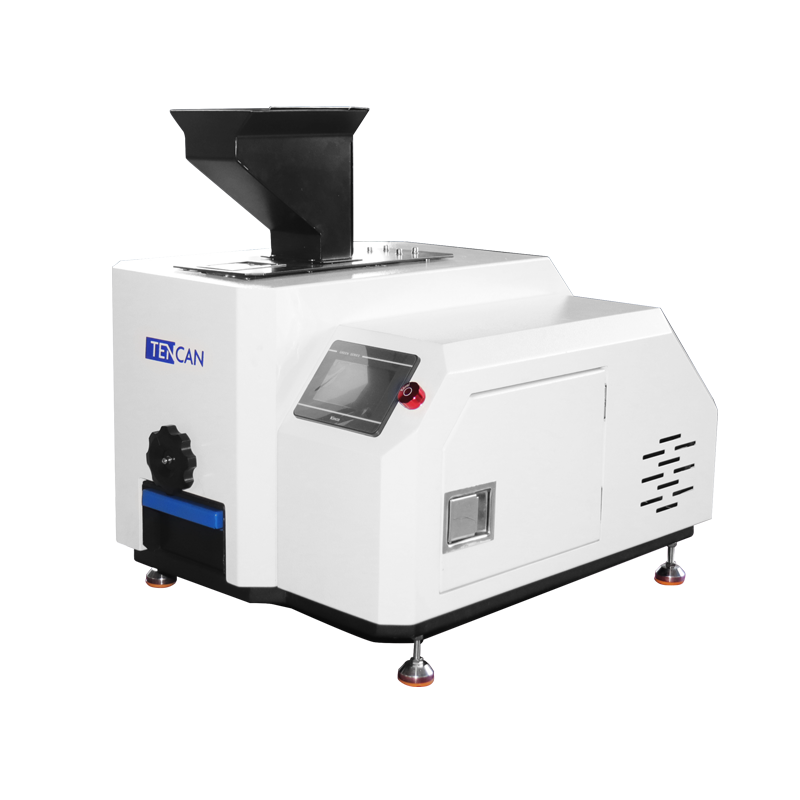
From the core, a lab jaw crusher is a specialized pre-crushing device used in laboratories to reduce hard and brittle bulk materials – such as ores, rocks, ceramics, and glass – into smaller, uniform particles typically ranging from a few millimeters down to sub-millimeter sizes. It serves as the first step in sample preparation workflows, enabling subsequent fine grinding, milling, or chemical analysis. Unlike large industrial crushers, laboratory jaw crushers are compact, easy to clean, and designed for small batch processing with high precision.
Core Function and Working Principle
The fundamental function of a lab jaw crusher is to transform coarse feed material (e.g., rocks up to 50–100 mm) into a finer, more manageable product (e.g., < 5 mm) through mechanical compression. The core working mechanism involves two opposing jaw plates: one fixed and one movable. The movable jaw reciprocates in a cyclic motion, driven by an eccentric shaft, creating a crushing chamber that narrows toward the outlet. As the movable jaw approaches the fixed jaw, the material is crushed by compression, shear, and impact forces. When the movable jaw retreats, the crushed material falls by gravity through the discharge opening.
Key parameters that influence the final product size include the gap width (closed side setting), the swing speed (rpm), and the profile of the jaw plates. Modern lab jaw crushers, such as those from TENCAN's lab jaw crusher series, often feature adjustable zero-point compensation to maintain consistent product fineness even as jaw plates wear. The crushing process is typically dry and continuous, with throughput ranging from a few kilograms to several tens of kilograms per hour, depending on the model.
Key Components and Design Features
Although lab jaw crushers come in various designs, they share several critical components:
Jaw Plates
Jaw plates are the primary wear parts. They are usually made of high-manganese steel, tungsten carbide, or ceramic materials to resist abrasion and contamination. Some models offer interchangeable plates for different material hardnesses. For example, tungsten carbide plates are ideal for crushing hard, brittle samples where metal contamination must be minimized.
Eccentric Shaft and Bearings
The eccentric shaft converts rotational motion from the motor into the reciprocating movement of the moving jaw. Heavy-duty bearings ensure smooth operation and long service life. In advanced models, the shaft is supported by double-row spherical roller bearings to handle high loads.
Discharge Opening Adjustment
Most lab jaw crushers allow the user to adjust the gap between the jaws, either manually or via a hydraulic system. This adjustment directly controls the final particle size. A typical range is from 0.5 mm to 10 mm, enabling versatile applications.
Safety and Cleanliness
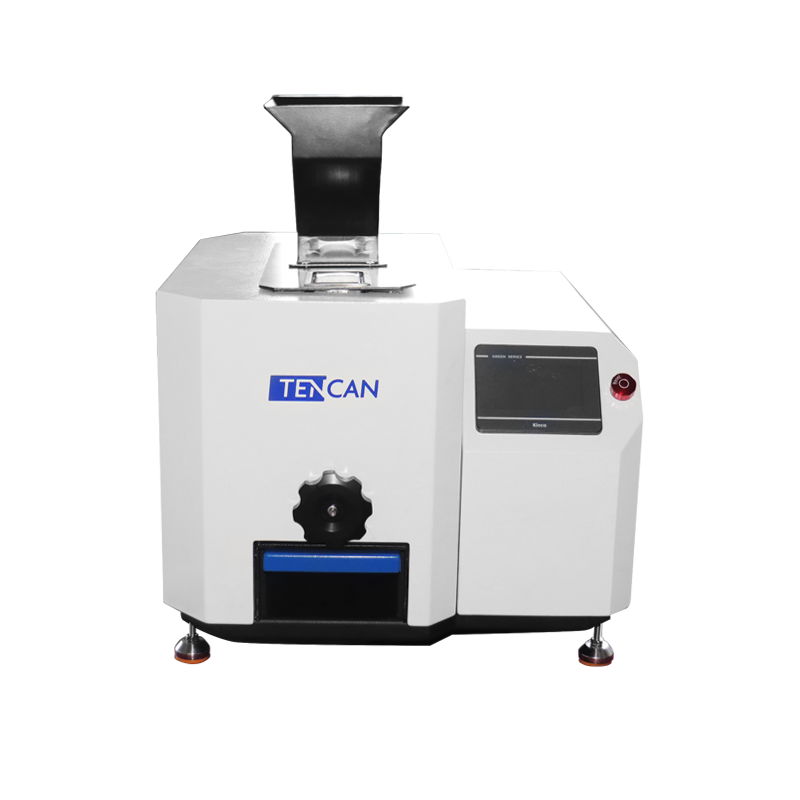
Laboratory environments demand easy cleaning and safe operation. Features like fold-back feeding hoppers, dust extraction ports, and emergency stop buttons are common. The 2025 model of TENCAN's lab jaw crusher incorporates a dust-proof design and removable crushing jaws for rapid cleaning between batches.
Key Performance Indicators and Selection Criteria
When selecting a lab jaw crusher, users should evaluate the following parameters:
Feed Size and Capacity
The maximum feed size determines the size of the crusher. Typical lab models accept feed sizes up to 50–100 mm, with throughput capacities of 5–200 kg/h. Choose a model that matches your typical sample volume and particle size requirements.
Final Fineness and Adjustability
The smallest achievable discharge size is crucial. Look for a crusher that can produce a final product of 1–5 mm with a narrow particle size distribution. Continuous adjustment of the gap width provides flexibility.
Material of Construction
For contamination-sensitive applications (e.g., trace element analysis), jaw plates made of agate, zirconia, or tungsten carbide are preferred. For general purpose, manganese steel is cost-effective.
Ease of Cleaning and Maintenance
Quick-release mechanisms, tool-free access to crushing chamber, and removable jaw plates significantly reduce downtime. Models with integrated dust collection ports improve laboratory air quality.
Automation and Safety
Some advanced crushers offer programmable speed control, overload protection, and automatic zero-point adjustment. Safety features like interlock switches and emergency stop buttons are mandatory.
Application Areas and Selection Advice
Lab jaw crushers are widely used in:
- Geology and Mining: Crushing core samples, rocks, and ores for mineralogical analysis.
- Materials Science: Preparing ceramics, glass, cement, and refractory materials for particle size analysis.
- Metallurgy: Breaking down alloys, slags, and ferroalloys for chemical composition testing.
- Environmental Testing: Crushing soil, sediments, and building materials for pollutant analysis.
- Pharmaceutical & Food: Pre-crushing hard tablets, dried herbs, or grains.
For routine laboratory use with moderate throughput, a compact model like the standard lab jaw crusher is sufficient. For high-volume or demanding applications (e.g., crushing very hard alloys), consider a heavy-duty version with reinforced frame and larger motor. Always verify the compatibility of jaw plate materials with your sample to avoid contamination.
References
Related Products
Get In Touch
Our professional team will reply to you within one business day. Please feel free to contact us!