

What Is a Hydraulic Single-Axis Disperser? A High-Shear Mixer for Slurry Wetting
What It Is and What It Does
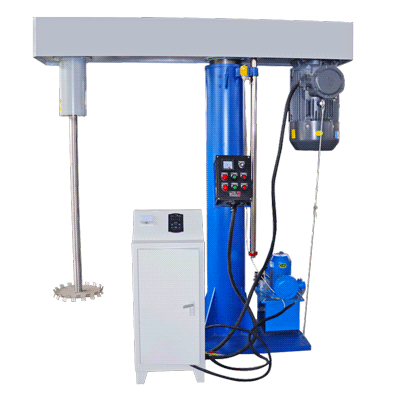
In simple terms, a hydraulic single-axis disperser is a high-shear mixing machine that wets powders into liquids to form a uniform slurry. One vertical shaft carries a dispersion impeller, while a hydraulic unit raises and lowers the shaft for loading, mixing, and cleaning. Coatings, inks, adhesives, ceramic slips, and battery pastes use it to break agglomerates and stabilize solids. The machine combines strong wetting action with a simple single-shaft layout that is easier to clean than multi-shaft designs. Details are on the hydraulic single-axis disperser page.
Working Principle
The process starts with liquid in a tank. The hydraulic lift sets the shaft so the impeller sits at the correct depth. As the impeller rotates, it creates circulation and localized shear. Powder is added gradually; the liquid wets the particles, and the shear zone breaks clusters.
Key settings include tip speed, blade diameter, immersion depth, solids loading, and viscosity. Too little shear may leave agglomerates; excessive shear or poor immersion can pull air into the slurry, create foam, or add heat.
Core Components
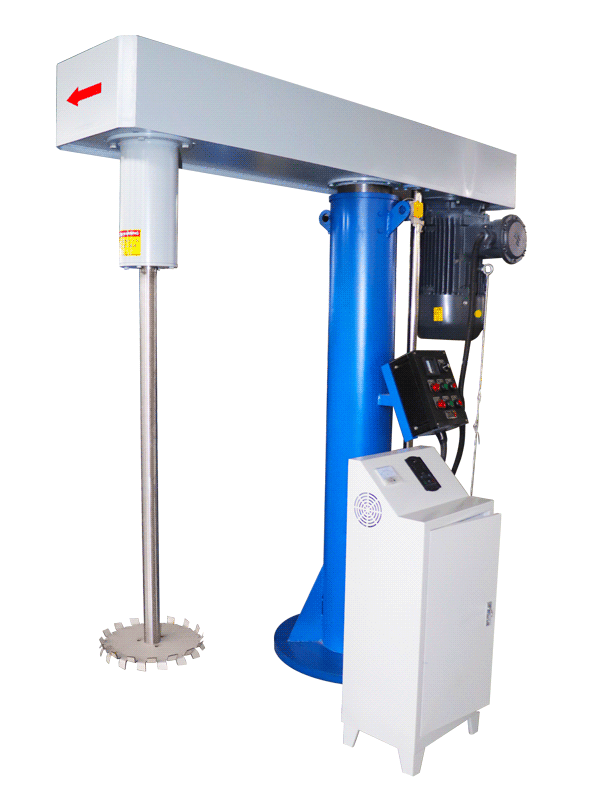
The main parts are a hydraulic lifting column, drive motor and gearbox, dispersion shaft, impeller, tank, and control panel. The hydraulic lift changes shaft height without manual lifting and supports safe access during cleaning.
Impeller choice matters. Saw-tooth discs create high shear for fine dispersion, while paddle styles provide stronger bulk flow for higher-viscosity products. Tank geometry and baffles also affect circulation and dead zones.
Selection Points
When comparing units, look beyond motor power. Ask what batch volume and viscosity range the machine must handle, what tip speed is needed, and how much lift stroke the tank requires. Check whether control is manual, variable-speed, or recipe-based.
Energy use, foam control, and powder feeding also matter. An oversized disperser may generate excess heat; an undersized one may run too long and still leave agglomerates. Flexible speed control and quick lift adjustment often matter more than maximum power.
Applications
Hydraulic single-axis dispersers are common in coatings, printing inks, adhesives, sealants, and ceramics. Laboratory users should prioritize adjustable speed, manageable batch size, and easy cleaning. Production users should focus on batch consistency, hydraulic reliability, dust control, and impeller fit.
Before choosing a model, test the formulation if possible. Confirm solids loading, viscosity, and dispersion quality, then match the impeller, tank size, and lift stroke. Pilot-scale trials help confirm whether the selected impeller and tank produce the target fineness without excessive air entrapment.
Further Reading
For specifications and configuration details, visit the Hydraulic single-axis disperser product page. Confirm final performance with material trials.
Related Products
Get In Touch
Our professional team will reply to you within one business day. Please feel free to contact us!