

What Is a Horizontal Tube Furnace? A Controlled-Atmosphere Heat Treatment System
What Is a Horizontal Tube Furnace?
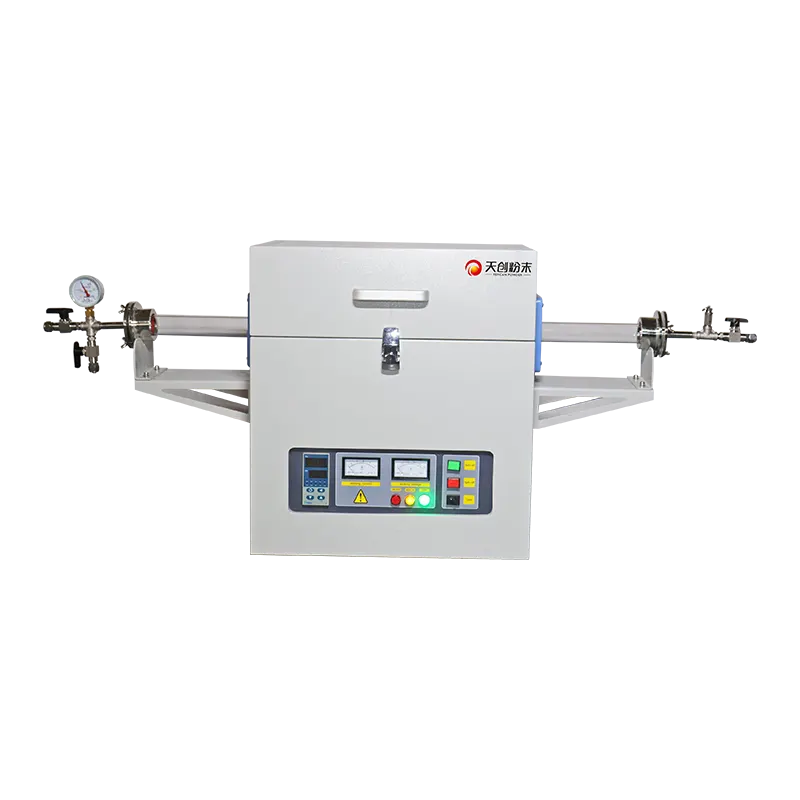
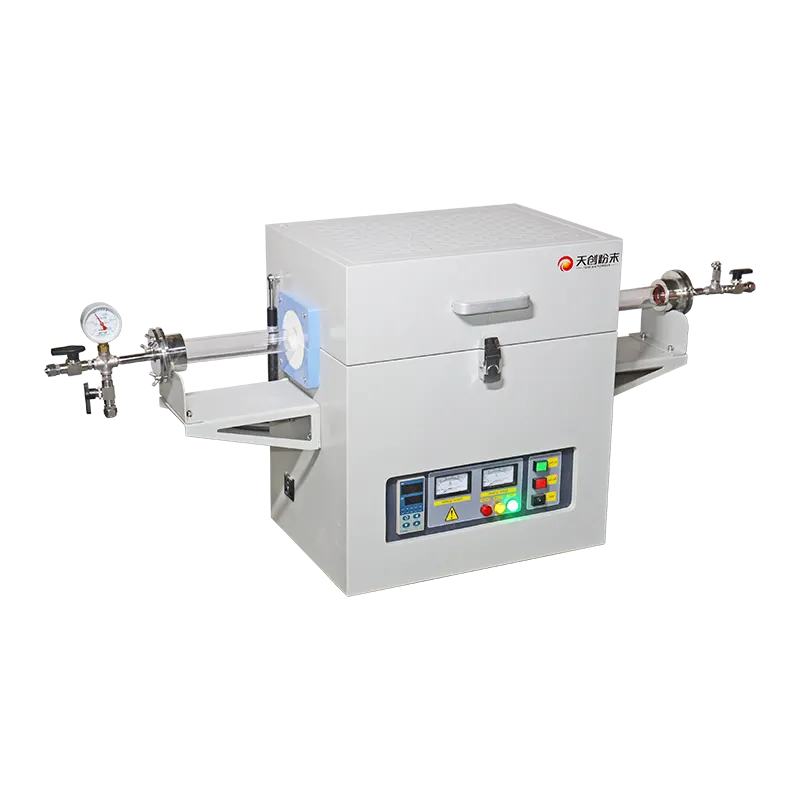
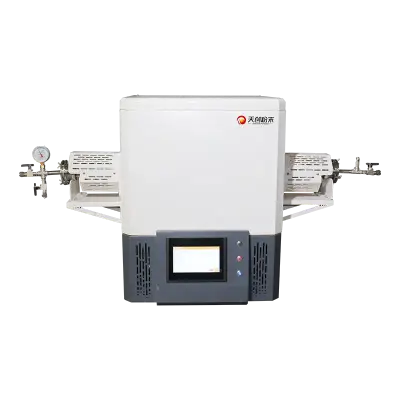
A horizontal tube furnace is a thermal processing system that heats samples inside a horizontal tube under controlled atmosphere or vacuum. Laboratories and pilot lines use it to sinter, anneal, calcine, reduce, or modify materials while managing temperature and gas chemistry. The TENCAN horizontal tube furnace is one example.
Core Functions and Working Principle
A horizontal tube furnace changes a sample from its initial powder, compact, film, or bulk state into a denser, purer, crystallized, or stress-relieved state. The sample rests in a crucible or boat inside a refractory tube. Heating elements raise the tube temperature, while the tube isolates the workload and provides a channel for process gas.
The mechanism is controlled heat transfer followed by a physical or chemical change. At the set temperature, diffusion, phase transformation, binder removal, or reaction proceeds according to temperature, time, and atmosphere. Gas control maintains inert, reducing, or oxidizing conditions, while vacuum removes air or by-products. Programmable controllers make each stage repeatable.
Key parameters are peak temperature, ramp rate, holding time, gas flow, and loading; they influence density, grain size, oxidation, and uniformity.
Main Configurations and Key Components
Horizontal tube furnaces differ by tube material, heated-zone length, maximum temperature, atmosphere capability, and control design. Single-zone models suit simple holds and small samples. Multi-zone models create a temperature gradient for diffusion, CVD, or separate evaporation and reaction zones. Alumina tubes suit higher-temperature neutral or oxidizing work; quartz offers transparency and faster cooling. Confirm chemical compatibility with the supplier.
The main parts are the frame, insulated heating chamber, process tube, heating elements, end seals, gas fittings, and temperature controller. Vacuum and gas-mixing modules are optional. Long samples load from one end, but seals and thermal expansion need care.
Key Performance Indicators and Selection Points
Selection begins with the process window: sample size, required temperature, atmosphere, heating rate, and cooling time. The heated zone must suit the sample and its uniformity needs. Temperature uniformity, controller accuracy, and overshoot matter more than a maximum-temperature figure. Check leak-tightness, vacuum level, gas connections, and tube compatibility.
Also compare insulation, power demand, maintenance access, and recipe control. Multi-step programming and data logging improve repeatability. A single-zone furnace may be enough for teaching and basic annealing; multi-zone control and vacuum hardware suit research or pilot production.
Applications and Selection Advice
Typical uses include ceramic and powder sintering, metal annealing, calcination, reduction, thin-film experiments, battery-material synthesis, and small-batch testing. Universities prioritize flexibility; industrial labs prioritize repeatability.
Define the sample, atmosphere, maximum temperature, and cooling profile. Then confirm tube dimensions, heated-zone length, controller features, and safety devices. The Horizontal Tube Furnace product page is a useful reference. Select the furnace as a complete process system, not as a heater alone.
Related Products
Get In Touch
Our professional team will reply to you within one business day. Please feel free to contact us!