

What is a Hanging Tank Flotation Machine? A Laboratory Flotation Device for Mineral Separation
What is a Hanging Tank Flotation Machine?
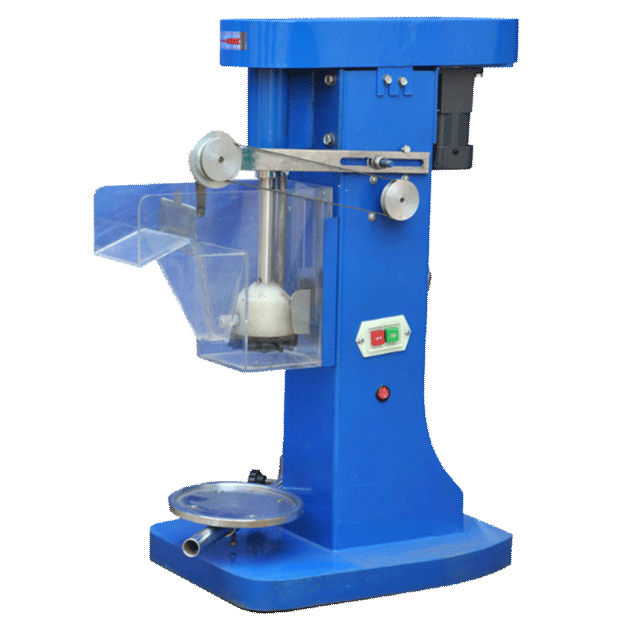
At its core, a hanging tank flotation machine is a specialized laboratory flotation device used by researchers, mineral processing engineers, and educational institutions to separate valuable minerals from gangue based on differences in their surface hydrophobicity. It is a key tool in froth flotation experiments, enabling the evaluation of ore floatability, reagent optimization, and process development on a small scale before scaling up to industrial production.
Core Function and Working Principle
The fundamental function of a hanging tank flotation machine is to separate mineral particles from a slurry by selectively attaching hydrophobic particles to air bubbles. The machine consists of a removable flotation cell (tank) that hangs from a support frame, an impeller-stator mechanism, an air intake system, and a scraping device.
During operation, the impeller rotates at high speed, creating a negative pressure that draws air into the slurry through the hollow shaft. The air is dispersed into fine bubbles, while the impeller also agitates the slurry to keep particles in suspension. Reagents previously added to the slurry render the target mineral particles hydrophobic, causing them to attach to the rising bubbles. The froth laden with mineralized bubbles overflows the cell lip or is scraped off by the rotating scraper, while the hydrophilic gangue remains in the slurry and is discharged as tailings.
Key parameters affecting separation performance include impeller speed (typically 1000–2000 rpm depending on model), slurry density, reagent dosage, and aeration rate. Adjusting these parameters allows the operator to optimize recovery and grade for different ore types.
Main Types and Classifications
Hanging tank flotation machines are commonly categorized by the volume of the flotation cell, which determines the sample capacity. The XFG series is a typical example, with the following standard models:
- XFG 5-35 gram: Cell capacities of 20, 60, 100, and 140 mL, suitable for small-scale batch tests with feed size ≤0.2 mm. Impeller diameters range from Φ20 to Φ30 mm, with speeds up to 1850 rpm.
- XFG 50-100 gram: Cell volumes of 200 and 400 mL, equipped with larger impellers (Φ36–Φ48 mm) for processing moderate sample amounts.
- XFG 250-500 gram: Cell capacities of 1000 and 2000 mL, with impeller diameters up to Φ64 mm and speeds of 1500–2000 rpm, ideal for bulk flotation tests.
- XFG 1000 gram: A 4000 mL cell with a Φ80 mm impeller, designed for large-scale laboratory flotation studies.
Each model shares the same hanging tank design, allowing quick cell interchangeability. The choice of model depends on the sample quantity: for scouting tests, smaller cells (5-35 g) are sufficient; for locked-cycle tests or sufficient sample preparation, larger cells (250-1000 g) are recommended.
Key Performance Indicators and Selection Criteria
When selecting a hanging tank flotation machine, consider the following factors:
- Processing Capacity: The cell volume directly determines the maximum sample mass per test. Choose a model that matches your typical sample size to avoid excessive scale-up adjustments.
- Impeller Speed Range: A wider speed range (e.g., 1000–2000 rpm) provides greater flexibility for different mineral types and particle sizes. Higher speeds generate finer bubbles but may increase turbulence.
- Material Compatibility: Cells and impellers are typically made of stainless steel or acrylic. For corrosive slurries, opt for models with acid-resistant coatings or replaceable components.
- Automation and Control: Advanced models may feature digital speed control, timer, and automatic froth scraping. Manual units are simpler and more cost-effective for basic research.
- Ease of Maintenance: Quick-release tanks and impeller designs simplify cleaning between tests. Removable scrapers and easy-access shafts reduce downtime.
Additionally, the power consumption (typically 90–250 W) and weight (15–27 kg) affect portability and bench space requirements.
Application Areas and Selection Advice
Hanging tank flotation machines are primarily used in geological surveys, mineral processing laboratories, metallurgical research institutes, universities, and coal preparation plants. They are essential for:
- Ore Floatability Testing: Determining the optimal reagent scheme and flotation conditions for a given ore.
- Process Development: Simulating industrial flotation circuits on a small scale to predict recovery and grade.
- Teaching and Training: Demonstrating froth flotation principles in academic settings.
For researchers who process a wide variety of ores, a set of multiple cell sizes (e.g., 5-35 g, 50-100 g, and 250-500 g) is recommended to cover different sample volumes. For dedicated mineral processing labs focusing on a single ore type, a single mid-range model (e.g., 250-500 g) often suffices. Ensure the machine is compatible with the available reagents and slurry pH.
References
Related Products
Get In Touch
Our professional team will reply to you within one business day. Please feel free to contact us!