

What is a Hanging Tank Flotation Machine? A Lab Device for Ore Froth Flotation
Introduction: What Is a Hanging Tank Flotation Machine?
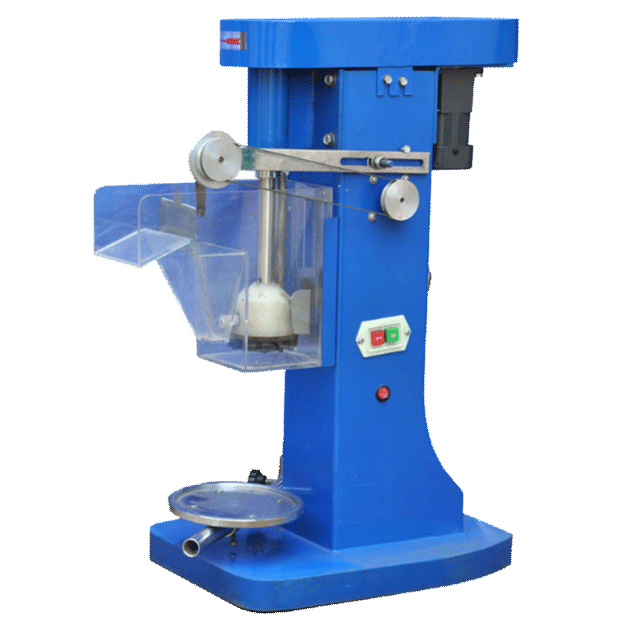
From its core, a hanging tank flotation machine is a specialized laboratory-scale flotation apparatus that mineral processing engineers, geologists, and materials researchers use to separate valuable minerals from waste rock by froth flotation. In one compact unit, it combines a suspended or hanging flotation tank, a mechanical agitation system, an air supply, and a froth collection launder. The machine tests how a given ore, concentrate, tailings, or recycled material responds to flotation under controlled conditions. Unlike large industrial flotation cells, this laboratory device works with small sample masses, making it suitable for bench-scale test work, reagent screening, flowsheet development, and academic teaching. The hanging tank design simplifies pulp level control, froth observation, and tank cleaning, which matters when many small tests must be completed in a day. You can see the official configuration on the Hanging Tank Flotation Machine product page.
Core Functions and Working Principle
From Pulp to Concentrate: The Basic Transformation
The fundamental job of a hanging tank flotation machine is to convert a conditioned ore pulp into two or more streams: a mineral-rich froth concentrate and a mineral-poor tailing. The feed is first mixed with water and reagents to create a pulp of controlled density. Reagents include collectors that make target minerals hydrophobic, frothers that stabilize air bubbles, and modifiers that suppress unwanted minerals or adjust pH. When the pulp is agitated and aerated, hydrophobic particles attach to rising air bubbles. The bubbles carry these particles to the surface, where a froth layer forms. The froth is then scraped or overflowed into a launder, while hydrophilic particles remain in the tank and are discharged as tailings. This separation is the heart of froth flotation, and the hanging tank machine is built to reproduce it reliably at small scale.
How the Hanging Tank and Agitation System Work
The hanging tank is a flotation cell that is suspended or mounted in a frame rather than fully enclosed in a large steel shell. This design gives the operator clear visibility of the pulp and froth, easy access for sampling, and simple removal of the tank for cleaning. Inside the tank, a motor-driven impeller or rotor creates intense turbulence. The impeller disperses air into small bubbles and keeps solids in suspension. A stator or draft tube may surround the impeller to direct the pulp flow and improve bubble-particle contacting. Air can be supplied by a blower, compressor, or self-aeration through the impeller. The froth overflows a lip into a collection launder. Because the tank hangs in a frame, its height and pulp level can be adjusted, which helps control froth depth and residence time. The result is a flexible bench tool that mimics the essential hydrodynamics of an industrial flotation cell while using only a few kilograms of sample.
Key Process Parameters and Their Effects
Several parameters determine whether a flotation test succeeds. Particle size is critical: flotation typically works best when the target mineral is liberated from the gangue, often in the range of tens to hundreds of micrometers. Too coarse, and particles are too heavy for bubbles to lift; too fine, and slime coatings can reduce selectivity. Pulp density affects residence time, reagent concentration, and froth stability. Agitation speed controls bubble dispersion, particle suspension, and the risk of entrainment. Air flow rate influences bubble size distribution and carrying capacity. Reagent dosage and conditioning time determine the surface chemistry. pH and water quality also matter because they affect reagent activity and mineral surface charge. By adjusting these variables on a hanging tank flotation machine, operators can find the conditions that give the best grade and recovery for a particular ore.
Conditioning and Reagent Preparation
Before flotation begins, the ore pulp must be conditioned with reagents. Conditioning is a period of agitation without air, allowing collectors, frothers, and modifiers to react with mineral surfaces. In a hanging tank flotation machine, conditioning can often be done in the same tank by closing the air valve and running the impeller. The order of reagent addition matters: pH modifiers are usually added first, then collectors, then frothers. Conditioning time may range from a few minutes to half an hour, depending on the ore and reagent. Proper conditioning is essential because it determines whether target minerals become hydrophobic enough to attach to bubbles. If conditioning is too short, recovery may be low; if it is too long, selectivity may suffer. The hanging tank design makes it easy to observe pulp color, froth formation, and reagent effects during this stage.
Froth Formation and Collection
Once air is introduced, the impeller disperses it into fine bubbles. Hydrophobic particles collide with bubbles and attach, forming bubble-particle aggregates. These aggregates rise to the pulp surface and create a froth layer. The froth must be stable enough to carry minerals over the launder lip but not so stable that it cannot be broken for collection. Froth depth is controlled by pulp level, air flow, and froth scraping rate. In a hanging tank machine, the operator can adjust the tank height to change froth depth, or use a mechanical scraper to remove froth at a constant rate. The froth product is collected in a launder, filtered, dried, and weighed for grade and recovery calculations. Observing froth texture, color, and bubble size gives immediate feedback about reagent dosage and operating conditions.
Main Types and Configurations
Single-Cell and Multi-Cell Bench Machines
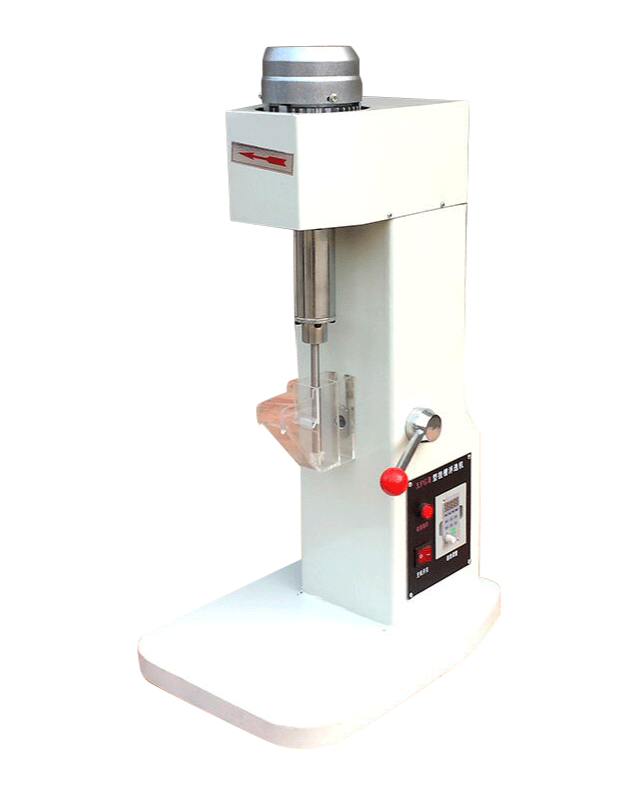
Hanging tank flotation machines are available as single-cell units and as multi-cell benches. A single-cell machine is ideal for exploratory tests, reagent screening, and teaching because it is compact and easy to operate. Multi-cell configurations consist of several hanging tanks arranged in series, allowing rougher, scavenger, and cleaner stages to be simulated in one continuous flowsheet. Multi-cell benches are useful when a project moves from scoping tests to locked-cycle tests that require recirculating intermediate products. The choice depends on the number of separation stages needed and the available bench space.
Manual, Semi-Automated, and Automated Control
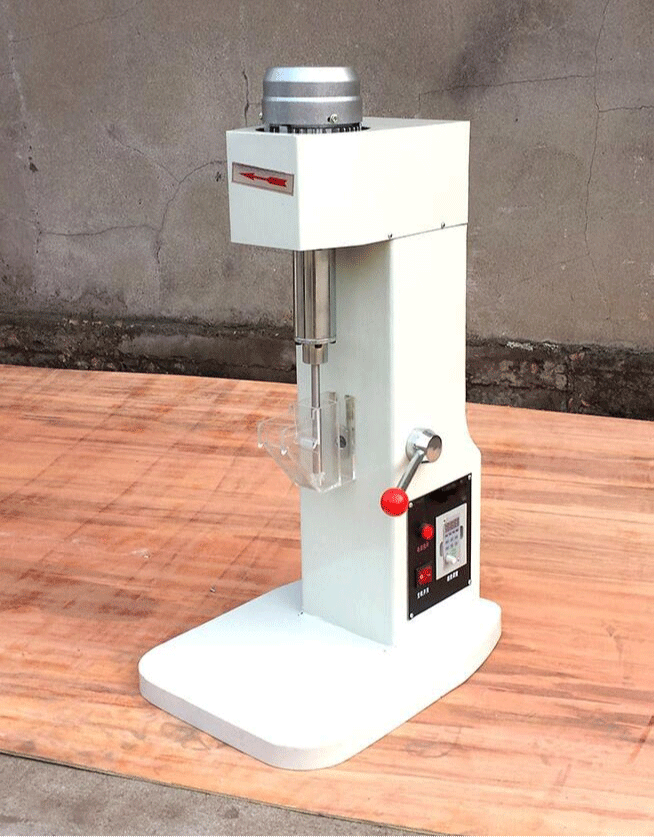
Entry-level hanging tank flotation machines use manual controls for impeller speed, air flow, and froth scraping. Semi-automated versions add digital readouts, variable-frequency drives, and programmable reagent pumps. Fully automated systems can control pulp level, air flow, froth depth, and scraping rate while logging data for statistical analysis. Automation improves repeatability, which is especially valuable in commercial laboratories where many samples are processed daily. However, manual machines remain popular in academic and small-scale settings because they help students and researchers directly observe the flotation process.
Tank Materials and Impeller Designs
Wetted parts are commonly made from stainless steel, acrylic, PVC, or coated metals to resist abrasion and corrosion. Tank volume can range from a few liters for micro-flotation to tens of liters for pilot-scale bench work. Impeller designs vary from simple axial-flow propellers to radial-flow rotors with stators. The impeller must provide enough shear to disperse air but not so much that it destroys the froth or causes excessive entrainment. Some machines also offer interchangeable tanks and impellers, making one base unit adaptable to different sample types and test protocols.
Laboratory vs Pilot-Scale Hanging Tank Machines
Hanging tank flotation machines come in laboratory and pilot-scale sizes. Laboratory units typically have tank volumes from one to ten liters and handle samples of a few hundred grams to a few kilograms. They are used for exploratory tests, reagent screening, and teaching. Pilot-scale hanging tank machines have larger tanks, often tens of liters, and can process tens of kilograms per hour. They are used to generate scale-up data and to test continuous flowsheets before industrial design. Pilot units may include multiple cells, automatic level control, and continuous feed and discharge systems. The main differences are capacity, instrumentation, and cost. A laboratory machine is sufficient for most research questions, while a pilot machine is needed when the goal is to predict industrial performance.
Key Performance Indicators and Selection Points
Capacity and Sample Size
When selecting a hanging tank flotation machine, begin with the sample mass and pulp volume. Laboratory machines usually handle from a few hundred grams to several kilograms of solids. The tank volume, pulp density, and number of cells determine the practical capacity. For early-stage exploration, a small single-cell unit may be sufficient. For flowsheet development, a multi-cell bench with larger tanks is more appropriate. Always match the machine capacity to the amount of sample available, because flotation tests consume material and require replicate runs for confidence.
Particle Size, Liberation, and Froth Control
The machine must be able to keep the target particle size fraction in suspension and produce a stable but manageable froth. Look for adjustable impeller speed, controllable air flow, and a froth launder that can handle the expected froth volume. If the ore contains coarse or dense minerals, a higher-torque drive and a robust impeller may be needed. For fine or slimy ores, precise reagent dosing and the ability to adjust pulp density become more important. The ability to change tank geometry or impeller type can also improve performance when testing different materials.
Energy, Efficiency, and Reagent Consumption
Although laboratory flotation machines are small, energy efficiency still matters. A well-designed impeller and air dispersion system can achieve good bubble-particle contact with lower power draw. Efficient reagent use is another indicator: the machine should allow small, accurate additions of collectors, frothers, and modifiers. Some models include peristaltic pumps or syringe pumps for precise dosing. Reduced reagent consumption not only lowers operating cost but also makes it easier to scale up results to industrial circuits.
Automation, Data Logging, and Repeatability
Automation is a major selection factor for laboratories that run many tests. Programmable logic controllers can maintain constant pulp level, air flow, and froth depth, while data logging records recovery, grade, and reagent addition over time. This improves repeatability and reduces operator bias. If the machine will be used for research, open communication protocols and easy export of data are desirable. If it will be used for teaching, simple manual controls may be more appropriate.
Maintenance, Cleaning, and Safety
Flotation tests require frequent cleaning between samples to avoid cross-contamination. A hanging tank design makes this easier because the tank can be lifted out and rinsed. Look for smooth internal surfaces, removable launder trays, and corrosion-resistant materials. Safety features such as splash guards, emergency stops, and covered belts or couplings are important. Also consider the availability of spare parts, impellers, and seals, because downtime can delay projects. A machine that is easy to maintain will be used more often and will produce more reliable data.
Scale-Up and Reproducibility
Scale-up from a hanging tank flotation machine to an industrial cell is not simply a matter of increasing volume. Key scale-up parameters include air flow rate per unit pulp volume, impeller tip speed, froth residence time, and pulp residence time. The laboratory machine should allow these parameters to be measured and controlled. Reproducibility is also critical: replicate tests must give similar results. Factors that improve reproducibility include precise reagent dosing, stable air supply, constant impeller speed, and consistent froth scraping. Data logging helps identify drift. When selecting a machine, ask whether it can maintain constant operating conditions over long test campaigns and whether spare parts are available to keep it running.
Applications and Selection Advice
Mining, Metallurgy, and Mineral Processing
Hanging tank flotation machines are widely used in base metal, precious metal, industrial mineral, and rare earth projects. They help determine whether an ore can be upgraded by flotation, what reagents work best, and what concentrate grade and recovery are achievable. During exploration, a small hanging tank machine can test drill core samples. During process design, multi-cell benches simulate rougher, cleaner, and scavenger circuits. During operation, they support troubleshooting and optimization when plant performance changes.
Coal, Recycling, and Environmental Applications
Flotation is not limited to metal ores. Coal preparation uses froth flotation to remove ash and sulfur. Recycling industries use it to separate plastics, glass, and metals. Environmental laboratories use flotation to treat contaminated soil, sediments, and industrial residues. A hanging tank flotation machine provides a flexible platform for these diverse applications because its operating parameters can be adjusted for different materials and objectives.
Academic Research and Teaching
Universities and research institutes value hanging tank flotation machines for their transparency and controllability. Students can observe bubble generation, froth formation, and particle attachment in real time. Researchers can study surface chemistry, reagent mechanisms, and hydrodynamic effects. The small sample requirement also makes the machine suitable for expensive or rare materials.
Example: Testing a Copper Sulfide Ore
Consider a copper sulfide ore containing chalcopyrite and pyrite. A hanging tank flotation machine can be used to find the best reagent scheme. First, the ore is ground to liberation size and mixed with water. Lime is added to raise pH and depress pyrite. A collector such as xanthate is added and conditioned. A frother is then added, and air is introduced. The froth, rich in chalcopyrite, is collected, while pyrite remains in the tailings. By varying pH, collector dosage, and air flow, the operator can optimize copper grade and recovery. The same procedure can be adapted for lead, zinc, gold, and other ores. This example shows how a small hanging tank machine provides valuable data before a full-scale plant is built.
How to Choose the Right Machine for Your Needs
For a teaching laboratory, choose a manual single-cell machine with clear visibility and easy cleaning. For a commercial testing laboratory, choose a semi-automated or automated multi-cell bench with data logging. For a research group studying fundamental flotation, look for adjustable impeller speed, interchangeable tanks, and precise reagent dosing. For a mine site laboratory, prioritize rugged construction, corrosion resistance, and readily available spare parts. In all cases, confirm that the machine can handle your expected particle size range and pulp density. Review the official Hanging Tank Flotation Machine specifications and contact the supplier with your sample details.
Troubleshooting Common Flotation Issues
Low Recovery
If recovery is lower than expected, check particle size and liberation first. Coarse particles may not attach to bubbles, while very fine particles may be lost in the tailings. Increase conditioning time or adjust collector dosage. Verify that air flow is sufficient and that the impeller speed is high enough to suspend solids. Sometimes the problem is pH: if pH is outside the optimal range, the collector may not work. In a hanging tank machine, you can run a series of tests with different conditions to isolate the cause. Always inspect the froth: weak, watery froth often indicates insufficient frother or too low air flow.
Poor Grade or Selectivity
Poor concentrate grade usually means unwanted minerals are reporting to the froth. Check for entrainment of fine gangue, which can be reduced by lowering froth depth or reducing air flow. If pyrite or other sulfides are floating, increase pH or add a depressant. Reagent overdosing can also reduce selectivity. In some cases, the ore contains slimes that coat mineral surfaces; dispersants or staged addition may help. Use the hanging tank machine to test different reagent schemes and froth depths. Because the tank is visible, you can observe whether the froth is carrying too much gangue and adjust immediately.
Unstable Froth or Excessive Froth
Froth that collapses too quickly may need more frother or a different frother type. Froth that overflows uncontrollably may indicate too much frother, too high air flow, or too low pulp level. Adjust the tank height to control froth depth. If the froth is too persistent, it may be difficult to break for collection; a different frother or a higher pH may help. Mechanical scraping rate should match froth production. A hanging tank machine allows quick changes to air flow and impeller speed, so operators can stabilize the froth within a single test.
Frequently Asked Questions
What is the difference between a hanging tank flotation machine and a standard laboratory flotation cell?
A standard laboratory flotation cell often has a fixed tank integrated into a bench. A hanging tank flotation machine suspends the tank in a frame, which improves access, cleaning, and pulp level adjustment. The hanging design also makes it easier to change tanks or scale between cell volumes. Both types use agitation and air to create froth, but the hanging tank is more flexible for multi-stage test work.
How much sample do I need for a flotation test?
Sample requirements depend on tank volume and the number of tests. A small single-cell machine may need only a few hundred grams per test, while a larger multi-cell bench may require several kilograms. Always plan for replicate tests and variability. A good rule is to have at least three to five times the amount needed for one test, so you can repeat and optimize conditions.
Can a hanging tank flotation machine be automated?
Yes. Many modern machines offer variable-speed drives, programmable air flow, automatic froth scraping, and digital data logging. Automation improves reproducibility and reduces operator workload. However, automated systems cost more and may require more maintenance. The right level of automation depends on your test volume, budget, and the experience of your operators.
What maintenance does a hanging tank flotation machine require?
Regular maintenance includes cleaning the tank, impeller, and launder after each test, checking seals and bearings, inspecting air lines, and calibrating reagent pumps. The impeller may wear over time, especially with abrasive ores, so keep spare parts on hand. Follow the manufacturer's lubrication and inspection schedule. A clean, well-maintained machine produces more consistent flotation results.
What materials can be tested in a hanging tank flotation machine?
Almost any finely ground material that can be suspended in water can be tested, including metallic ores, industrial minerals, coal, plastics, contaminated soil, and recycled materials. The machine is most effective when the target material has a different surface chemistry from the gangue. Reagent selection is usually the key to success. For unusual materials, preliminary wettability tests or small-scale batch flotation can indicate whether flotation is feasible.
How do I clean the machine between tests?
Clean the tank, impeller, stator, and launder with water and a mild detergent. Remove all visible solids and rinse thoroughly. If reagents such as collectors or frothers leave films, use a solvent recommended by the manufacturer, then rinse again. Allow parts to dry before reassembly. Consistent cleaning prevents cross-contamination that can distort results. A hanging tank design makes cleaning faster because the tank can be lifted out of the frame.
Can I use the machine for continuous flotation tests?
Some pilot-scale hanging tank flotation machines are designed for continuous operation, with feed and discharge systems. Laboratory single-cell units are usually batch machines. For continuous testing, you need multiple cells in series and pumps to transfer pulp. If your goal is to simulate a full-scale circuit, choose a multi-cell bench or pilot unit with continuous capability. Otherwise, batch tests are sufficient for reagent screening and flowsheet development.
Reference
Product information and images in this article are based on the Hanging Tank Flotation Machine page from the supplier's research equipment catalog.
Related Products
Get In Touch
Our professional team will reply to you within one business day. Please feel free to contact us!