
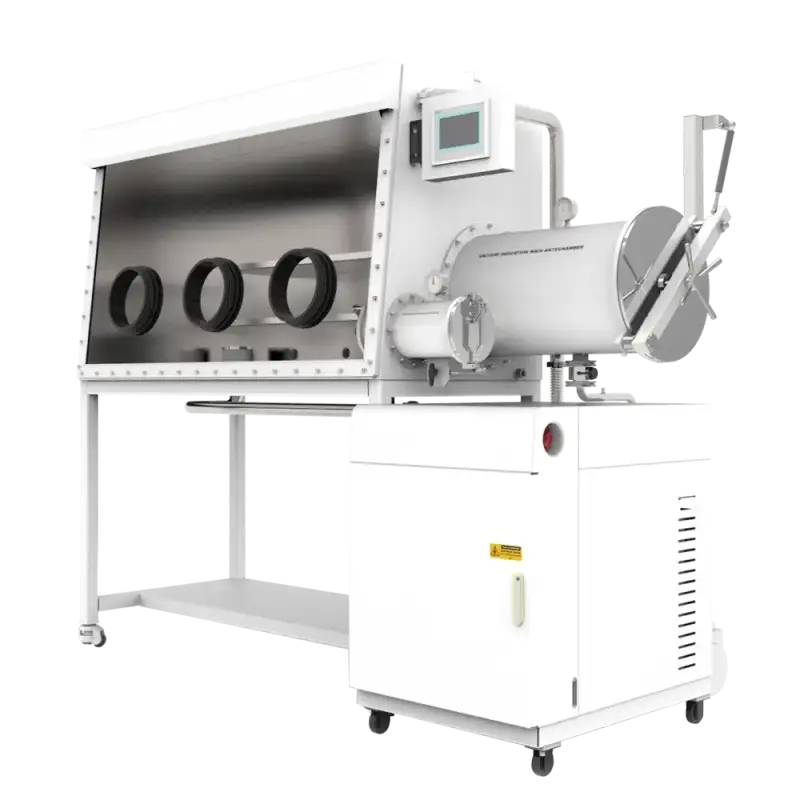
What is a Glove Box with Purification System? A Hermetic Enclosure for Ultra-Low Oxygen and Moisture Environments

What is a Glove Box with Purification System?
At its core, a glove box with purification system is a sealed enclosure that provides a controlled inert atmosphere, typically filled with argon or nitrogen, where oxygen and moisture levels are reduced to below 1 ppm. Researchers and manufacturers use it to handle air-sensitive materials such as lithium metal, catalysts, and battery electrolytes without contamination. The integrated purification system continuously circulates the internal gas through a purifier column, adsorbing water and oxygen, and can be regenerated automatically to maintain long-term stability.
Core Function and Working Principle
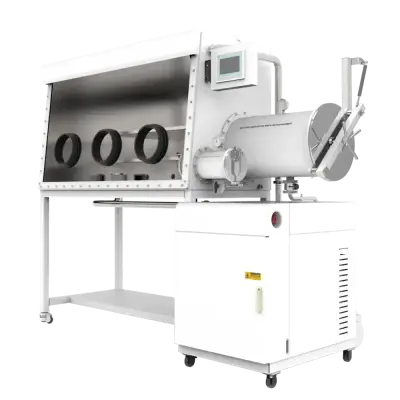
The primary function of a glove box with purification system is to transform a normal ambient environment into an ultra-low H₂O and O₂ workspace. The system consists of a sealed main box, a transfer chamber (antechamber), gas purification unit, blower, and control system.
Here is the typical working cycle:
- Initial Purge: The box is first evacuated and then refilled with inert gas several times to remove residual air.
- Closed-Loop Circulation: A blower drives the internal gas through a purification column filled with a molecular sieve (for water) and a copper catalyst (for oxygen). The purifier chemically adsorbs H₂O and O₂, returning clean gas into the box.
- Regeneration: When the purifier is saturated, the system automatically heats it while purging with a small amount of process gas (e.g., forming gas) to desorb and vent the captured impurities, restoring the purifier's capacity.
- Continuous Monitoring: An integrated moisture and oxygen analyzer provides real-time readings, allowing the PLC controller to maintain setpoints automatically.
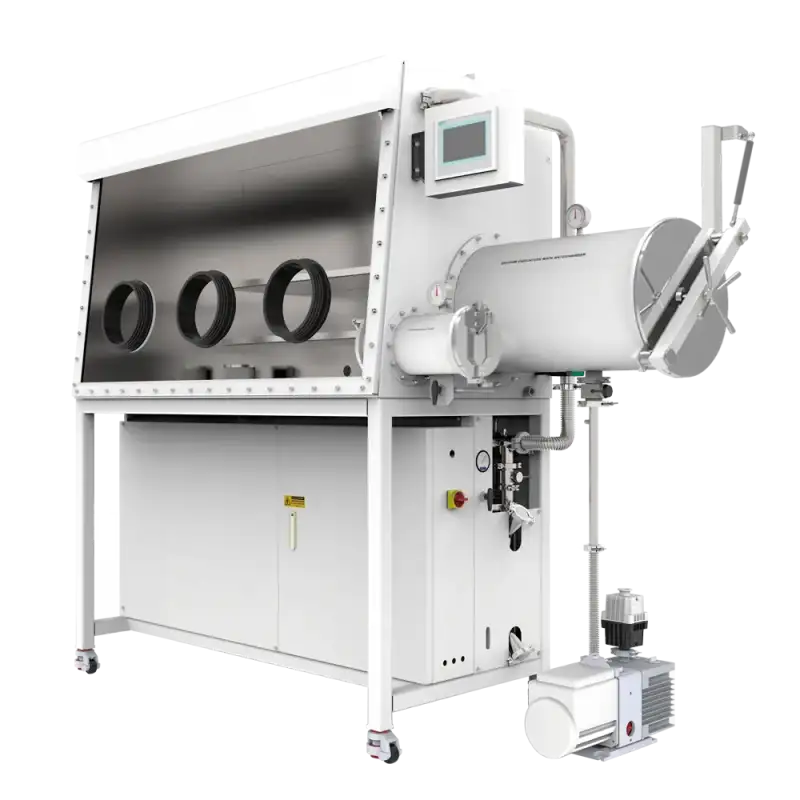
Key parameters that affect performance include the gas circulation flow rate, purifier capacity, regeneration temperature, and the initial quality of the inert gas supply. A well-designed system can maintain H₂O < 1 ppm and O₂ < 1 ppm for months of continuous operation.
Core Components and Key Technologies
1. Sealed Main Box
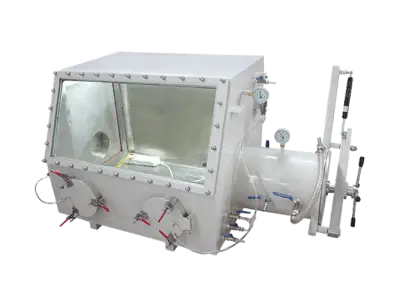
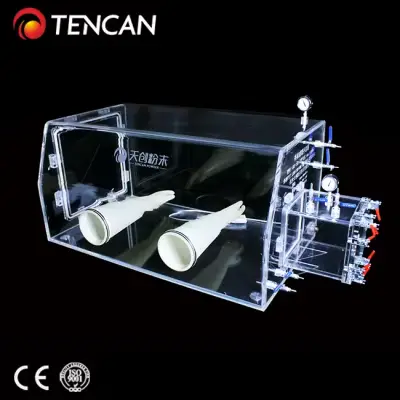
Usually constructed from stainless steel or acrylic, the box features multiple glove ports, windows, and feedthroughs. Stainless steel versions offer superior gas tightness and durability, while acrylic versions provide better visibility and lower cost.
2. Gas Purification Unit
This is the heart of the system. It contains two columns: one for moisture removal using molecular sieves (e.g., 3A or 4A zeolite) and one for oxygen removal using a reduced copper catalyst. Modern units are designed as a single cartridge for easy replacement.
3. Regeneration System
The purification unit includes a heater and a gas control valve. During regeneration, the heater raises the temperature of the purifier to 200–350°C while a small flow of argon/hydrogen mixture carries away the desorbed impurities. This process is fully automated by the PLC.
4. PLC and HMI
Programmable logic controller with a touchscreen interface manages all functions: automatic purging, circulation, regeneration, alarms, and data logging. Some advanced systems allow remote monitoring via Ethernet.
5. Transfer Chamber (Antechamber)
An auxiliary chamber with two doors that allows samples and tools to be introduced into the main box without contaminating the atmosphere. It is typically evacuated and purged separately.
Key Performance Indicators and Selection Criteria
When selecting a glove box with purification system, consider the following metrics:
- Purity Level: The most critical specification. Look for systems that guarantee H₂O < 1 ppm and O₂ < 1 ppm. Some high-end models achieve < 0.1 ppm.
- Purifier Capacity: Measured in liters of gas that can be purified before regeneration. A larger capacity reduces regeneration frequency, increasing uptime.
- Gas Consumption: During regeneration and purging, inert gas is consumed. Systems with efficient regeneration loops minimize gas waste.
- Working Volume: From single-station (0.5–1 m³) to multi-station (2–3 m³) for different scale operations.
- Automation: Fully automatic regeneration and data logging are essential for continuous research or production.
- Material Compatibility: Stainless steel is preferred for corrosive chemicals; acrylic is sufficient for dry handling of powders.
- Accessories: Options like integrated solvent removal filters, vacuum ovens, or cooling stages can expand functionality.
Application Fields and Selection Advice
Glove boxes with purification systems are indispensable in:
- Lithium-ion Battery R&D: Handling electrolyte, lithium metal, and electrode materials that are sensitive to moisture and oxygen.
- Catalysis and Organometallic Chemistry: Working with air-sensitive catalysts under inert atmosphere.
- Semiconductor and LED Manufacturing: Encapsulation and assembly in ultra-dry environments.
- Materials Science: Synthesis of nanoparticles, perovskites, and other hygroscopic compounds.
For a small laboratory with occasional use, an acrylic glove box with a manual purification system may be sufficient. For continuous production or high-purity requirements, a stainless steel model with a fully automatic purification system, such as the stainless steel vacuum glove box, is recommended. Always verify the compatibility of the purifier material with the specific chemicals you will use.
References
Related Products
Get In Touch
Our professional team will reply to you within one business day. Please feel free to contact us!