

What Is a Desktop Air Blower Dryer? A Compact Device for Quick Lab Sample Drying
What Is a Desktop Air Blower Dryer?
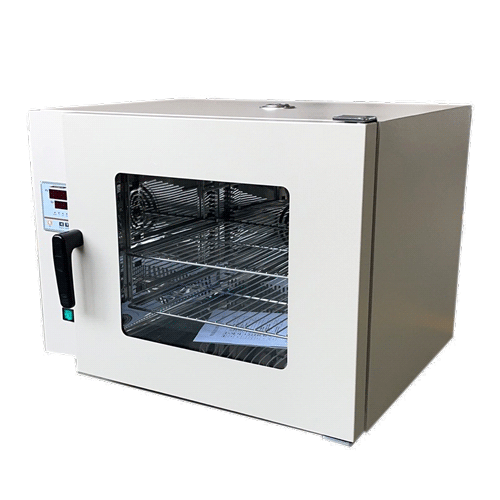
From its core, a desktop air blower dryer is a compact drying device that uses forced air movement to remove moisture from laboratory samples, small components, and containers. It is used in benchtop workflows where a repeatable drying step is needed without the footprint of a large drying cabinet or the complexity of a production-scale system. In powder engineering, materials science, chemistry, biology, and quality control, the device supports the change from a wet or damp condition to a dry, handleable state before weighing, milling, mixing, sieving, packaging, or testing. The term desktop describes the format, not a limitation in purpose: the unit is intended to sit on a laboratory bench and serve small batches under controlled conditions.
A desktop air blower dryer should be understood as part of a method, not just a box that blows air. Its usefulness depends on how the airflow is distributed, how the sample is presented, and how the drying endpoint is judged. For a buyer, the practical question is whether the unit can deliver a consistent air environment for the materials and batch sizes that matter. For a technician, the daily question is how to load the sample, set the controls, and confirm that drying is complete without over-drying or contaminating the material.
Core Function: How Forced Air Removes Moisture
The basic function is simple: a blower generates an air stream, directs it across the sample or into a drying zone, and carries moisture away. Unlike passive air drying, which depends on still-room conditions, forced-air drying continuously replaces humid air near the sample with drier air. That exchange increases the driving force for evaporation and makes the drying step less dependent on where the unit is placed in the room. The result is a more active and usually more repeatable drying environment.
At the process level, the dryer converts a wet sample into a drier solid, concentrate, or residue by transferring water or another volatile liquid from the material into the moving air. The blower provides flow; the sample holder positions the material; the drying zone contains the airflow; and the user controls the duration and, where available, the air temperature or flow setting. Because the mechanism is convective, moisture is carried away by the air rather than drawn out through a hot surface. The air itself supplies the exchange medium and, in heated designs, part of the sensible heat.
Three principles matter in practice. First, airflow reduces the layer of humid air that clings to the sample surface. Second, air temperature increases the amount of moisture the air can hold and generally speeds evaporation, but the acceptable temperature depends on the material. Third, sample geometry and loading affect resistance to moisture movement inside the sample. A thin, spread-out layer dries faster than a thick, packed bed. These principles explain why a desktop air blower dryer should be matched to the sample and why operating procedure matters as much as the hardware.
From Wet Sample to Dry Sample: The Drying Process
Surface moisture removal
When forced air passes over a wet sample, moisture at the surface evaporates into the air stream. The blower continually supplies air with a lower vapor pressure than the air immediately above the sample, so the vapor gradient remains favorable. If the air becomes saturated or recirculates without exchange, drying slows. Good airflow distribution prevents dead zones and local wet patches. This is why the position of the sample in the air path and the design of the outlet matter.
Internal moisture movement
As surface moisture leaves, moisture from deeper in the sample moves outward by diffusion and capillary action. In powders, granules, filter cakes, and porous solids, this internal movement can become the rate-limiting step. Agglomerated powders may form a dry crust while remaining wet inside. Gentle turning, thin layering, or a suitable sample holder can help as much as higher blower power. The dryer provides a steady airflow, but the operator still needs a sample preparation method that exposes fresh surface.
Equalization and endpoint control
Drying does not end when the surface looks dry. The sample needs time for internal moisture to redistribute and for the final moisture content to stabilize. In a laboratory, the endpoint may be defined by time, weight change, visual appearance, or a separate moisture test. A desktop unit is useful because it can provide a repeatable airflow environment for that holding period. Operators should record the setting, load, and drying time so results can be compared across batches.
Core Components and Key Technologies
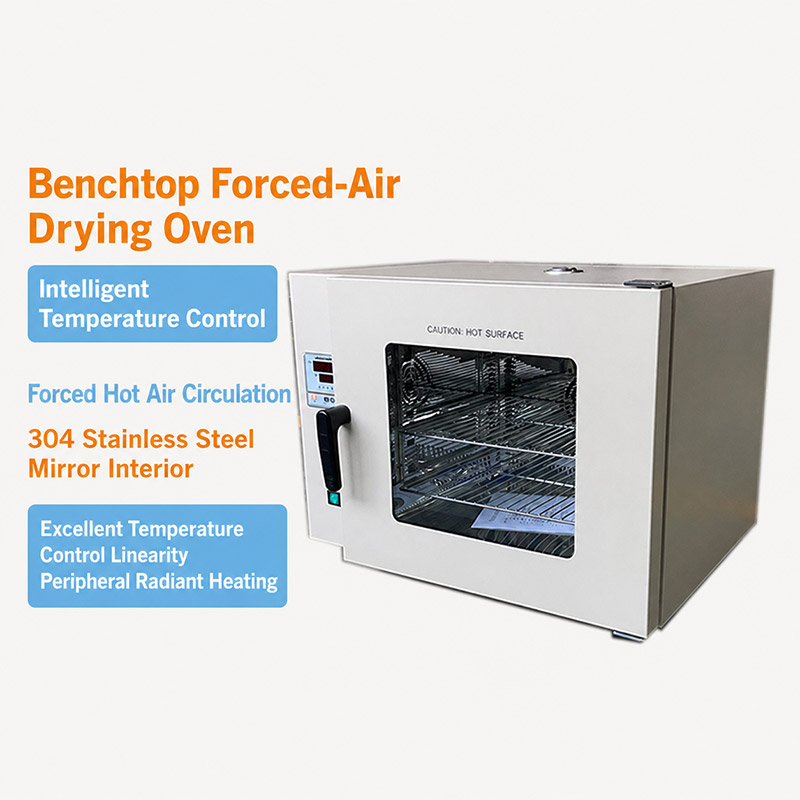
Although a desktop air blower dryer is compact, its performance depends on several functional elements working together. The exact configuration varies by model, so buyers should confirm details on the product page rather than assuming a particular feature set.
Air movement system
The blower is the heart of the device. It creates the pressure and flow needed to move air through the drying zone. A well-designed air path distributes flow across the sample area instead of concentrating it at one point. Uniform flow helps avoid over-drying at the center and under-drying at the edges. When comparing units, users should ask how the air is distributed, whether the flow is adjustable, and how the blower is protected from dust and moisture.
Drying zone and sample positioning
The drying zone may be an open bench area, a tray, a chamber, or a holder designed for small samples. The sample position relative to the air outlet strongly affects drying rate. A tray that spreads material thinly and keeps it stable in the air stream is generally easier to use than a deep container. For powders, containment is important: excessive airflow can blow fine particles out of the tray, causing sample loss and cross-contamination. Users should check whether the product page describes suitable holders, trays, or containment features.
Controls and monitoring
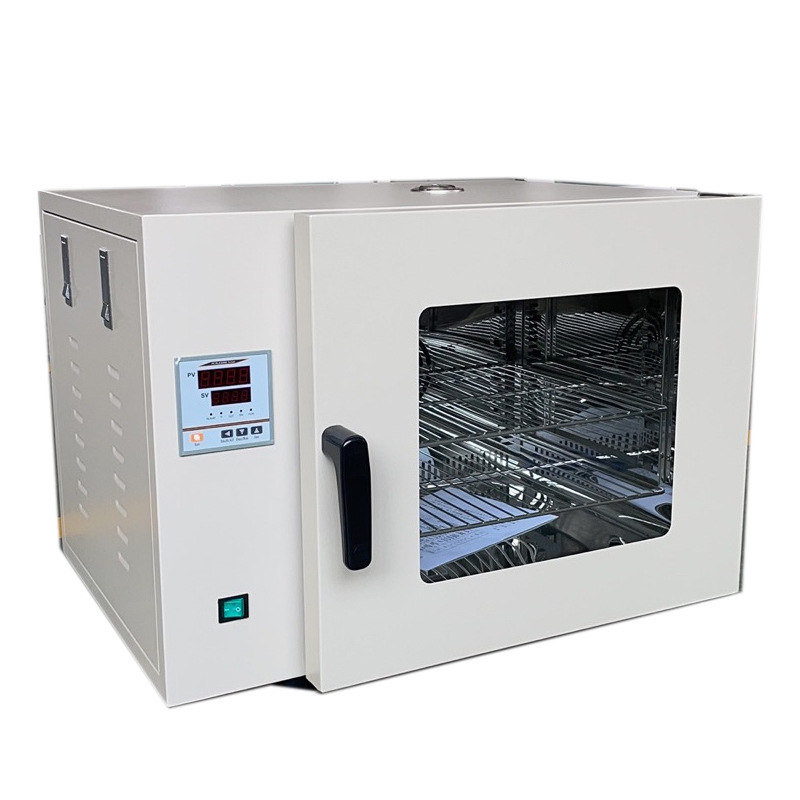
Even a simple dryer benefits from clear controls. Switches, timers, and any available temperature or flow adjustments should be easy to read and set. If the unit is used in a regulated laboratory, the ability to record settings and reproduce a drying protocol is valuable. A digital display is not automatically better than a simple control, but it can reduce setting errors. Users should also consider whether the unit needs a timer, an over-temperature cutout, or an alarm.
Materials, cleaning, and lab compatibility
Surfaces that contact samples or collect dust should be easy to clean. Smooth, corrosion-resistant materials are preferred when the dryer will be used with aqueous samples, mild solvents, or powders that cling to surfaces. The unit should fit the available bench space and electrical service. Noise level and heat release into the room are also practical concerns in a shared laboratory. These points are not marketing extras; they determine whether the dryer can be used comfortably every day.
Key Performance Indicators and Selection Points
Selecting a desktop air blower dryer is mostly a matter of matching the device to the sample, the workflow, and the required documentation. Because drying is a rate process, no single number tells the whole story. Buyers should look at the following factors together.
Drying capacity and sample format
Capacity should be defined in the units that matter for the application: number of trays or sample holders, the size of the drying area, and the maximum sample load that can be exposed to airflow without spilling or blocking flow. A unit that is too small forces multiple runs; a unit that is too large may be awkward on a benchtop. The best choice is usually the smallest unit that comfortably handles the routine batch while leaving room for reasonable variation.
Airflow and drying uniformity
Airflow is the primary driver of convective drying. However, more airflow is not always better. Strong flow can disturb light powders, create dust, or dry the surface too quickly while leaving moisture inside. Uniform, adjustable flow is often more useful than a single high-speed setting. Ask how the air is distributed across the drying zone and whether the sample can be placed at different distances from the outlet.
Temperature control and sample safety
If the dryer provides heated air, temperature control becomes a critical selection point. The acceptable temperature depends on the material: heat-sensitive biological samples, volatile compounds, and some polymers may require gentle conditions, while robust inorganic powders may tolerate more. Even when a unit is described as an air blower dryer, buyers should confirm whether heating is part of the design and how temperature is controlled. If no temperature control is provided, the user must rely on room conditions and airflow, which may be adequate for simple drying but less repeatable for sensitive work.
Controllability and reproducibility
Reproducibility is the ability to run the same drying step again and get a comparable result. It depends on stable airflow, consistent sample loading, controlled room conditions, and a clear operating procedure. Timers, marked settings, and simple record sheets help more than elaborate features that are never used. For research and quality control, a dryer that can be set and documented simply may be more valuable than one with many untested functions.
Energy use, noise, and maintenance
A blower-based dryer generally consumes energy mainly through the blower motor and any heating element. The right question is not only power rating but also drying time: a slightly more efficient air path can shorten a run and reduce total energy use. Noise and vibration should be acceptable for the room. Maintenance usually centers on dust removal, filter cleaning if a filter is present, and checking the blower and controls. Easy access to these items reduces downtime.
Applications and Selection Advice
Desktop air blower dryers are used in laboratories and small-scale operations where a compact, repeatable drying step is needed. Typical settings include sample preparation for powder analysis, drying of washed powders and granules, preparation of ceramic or battery materials, drying of small components after cleaning, and general bench work in chemistry, biology, and materials science. In powder engineering, the device is often part of a chain that includes weighing, milling, mixing, sieving, and testing. Drying is not glamorous, but it affects flowability, agglomeration, and the accuracy of later measurements.
For a research laboratory with varied samples, choose a unit that is easy to clean and flexible enough for different holders. For a quality-control laboratory that runs the same sample type repeatedly, prioritize repeatable settings, clear controls, and simple documentation. For heat-sensitive work, confirm the actual temperature behavior and avoid assuming that an air dryer is gentle simply because it is small. For dusty powders, plan containment and avoid airflow that fluidizes fine particles. When capacity is uncertain, compare the routine batch size with the usable drying area rather than with a broad maximum rating.
Before purchasing, request the product page details and check the available images for layout, controls, and sample area. The Desktop air blower dryer page is the appropriate starting point for model-specific information. Users should also confirm electrical requirements, bench footprint, and available accessories with the supplier. A short trial with the actual sample is the most reliable way to set a drying time and compare uniformity.
FAQ: Practical Questions About Desktop Air Blower Dryers
Is a desktop air blower dryer the same as an oven?
No. An oven relies mainly on elevated temperature in an enclosed chamber. A desktop air blower dryer emphasizes forced air movement, and it may or may not include heating. The two can overlap in function, but they are different tools. The choice depends on whether the sample needs gentle airflow, controlled temperature, containment, or a combination of these.
How should a sample be loaded?
Spread the sample in a thin, even layer and keep it stable in the airflow. Avoid filling a deep container to the top, because the lower material may receive little air. If the sample is a fine powder, use a suitable tray or containment to prevent dust loss. Record the loading pattern, because changing it changes the drying rate.
Why does drying sometimes slow down near the end?
As surface moisture decreases, moisture must move from inside the sample to the surface. That internal movement can be slow in dense or agglomerated materials. Reducing the layer thickness, breaking up large lumps before drying, or allowing more time can help. Raising airflow may not solve an internal-diffusion problem and can even create a hard surface crust.
Can the dryer be used for solvents other than water?
Only with appropriate care and confirmed compatibility. Solvent drying involves safety questions such as flammability, vapor handling, and material compatibility. The product page and supplier should be consulted before using the unit with any solvent. A dryer intended for aqueous samples should not be assumed to be suitable for flammable or corrosive vapors.
What maintenance is required?
Keep the air path and sample area clean. Remove dust and spills before they harden. If the unit has a filter, follow the supplier's cleaning or replacement guidance. Check the blower and controls for unusual noise or vibration. A simple log of cleaning and use helps identify drift.
Drying, Conditioning, and Sample Stability
Drying is often followed by a conditioning period in which the sample equilibrates with the surrounding air. A sample that is removed from the dryer while still warm may continue to lose moisture or may absorb moisture from the room, especially if the material is hygroscopic. Allowing the sample to cool in a covered or controlled container can reduce this effect. For powders, the way the sample is stored after drying can matter as much as the drying step itself. Moisture uptake during weighing or transfer can change the result of the next analysis.
It is also useful to distinguish between removing visible moisture and reaching a defined moisture content. Many laboratory procedures require the latter, and that requires a measurement method. The desktop air blower dryer provides the air environment; the balance, moisture analyzer, or loss-on-drying test provides the evidence. When the target moisture is critical, run a small validation set at different times and compare the results. Record the room humidity if it varies significantly, because ambient air is part of the drying system. This approach turns the dryer from a general-purpose blower into a controlled part of the sample preparation chain.
How to Build a Reliable Drying Procedure
A good drying procedure starts with a defined sample mass or layer thickness, a fixed holder position, and a recorded airflow setting. Run the dryer for a set time, then check the sample by a consistent method. If the sample is still wet, extend the time in increments rather than making a large jump. Compare the center and edge of the tray to detect non-uniformity. For powders, watch for agglomeration or caking, which can indicate that the surface dried too quickly. For heat-sensitive materials, check appearance, color, and any other quality attributes after drying.
The procedure should also include a stopping rule. Visual dryness is convenient but subjective. Weight loss measured on a separate balance can provide a simple check, provided the sample is cooled and handled consistently. In some laboratories, a moisture analyzer or loss-on-drying test is used for confirmation. The desktop air blower dryer does not replace those measurements; it provides the controlled airflow environment in which they are applied.
Limitations and Good Practice
No drying method is universal. A desktop air blower dryer is not a substitute for a vacuum oven, freeze dryer, or solvent-rated enclosure when the application demands those conditions. It works best when the sample is compatible with air exposure, when the batch is small enough for the drying area, and when the required endpoint can be checked reliably. Users should avoid overloading the unit, placing heat-sensitive materials too close to a warm air outlet, or assuming that a higher setting will always shorten the run. In many cases, moderate airflow and a thinner sample layer give better results than maximum blower power.
Cleanliness is part of good practice. Powder residues can block airflow, contaminate the next sample, or become airborne. Establish a cleaning routine after each material change, especially when working with fine or hazardous powders. Keep the bench area around the unit organized so that sample trays, tools, and records are not exposed to unnecessary dust. If the dryer is used in a shared laboratory, label the operating settings and keep a log of use. These simple habits improve reproducibility and reduce the risk of cross-contamination.
Conclusion
A desktop air blower dryer is a practical benchtop tool for removing moisture through forced air. Its value lies in repeatability, compact size, and a design that can fit into a laboratory workflow. The most important selection questions are not about a single impressive number but about fit: Does the airflow suit the sample? Is the drying area appropriate? Are the controls understandable? Can the unit be cleaned and maintained? By answering these questions and validating the procedure with the real material, users can turn a simple drying step into a reliable part of powder and sample preparation. For model-specific details, refer to the Desktop air blower dryer product page.
Related Products
Get In Touch
Our professional team will reply to you within one business day. Please feel free to contact us!