

What Is a Corundum Roll Mill Jar? A Wear-Resistant Jar for Roller Ball Mills
What Is a Corundum Roll Mill Jar?
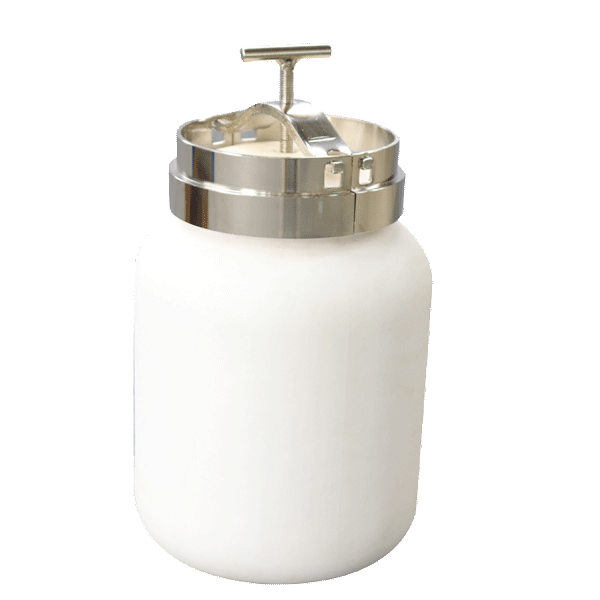
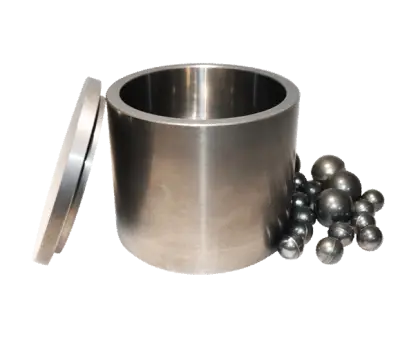
From a practical standpoint, a corundum roll mill jar is a dedicated ceramic grinding container used on roller ball mills to hold samples, grinding media, and sometimes a liquid medium during size reduction. It is not the mill itself; it is the working chamber in which the material is enclosed while the mill rotates the jar on powered rollers. The jar is made from corundum, a crystalline form of aluminum oxide, and is chosen when a user needs a wear-resistant, chemically stable grinding environment that can tolerate abrasive powders without rapid degradation of the container surface. A corundum roll mill jar therefore sits at the intersection of sample preparation, contamination control, and long-term wear management.
The basic purpose of the jar is simple: it provides a closed, rotating vessel in which loose grinding media tumble against the sample. As the jar turns, the media repeatedly fall, slide, and roll over the material, breaking down particles through impact and attrition. The corundum body gives this process a hard, smooth, and relatively inert inner surface. That makes the jar useful for laboratories and production environments that process hard, abrasive, or chemically sensitive materials and want to avoid the rapid wear associated with softer jar materials.
Core Function and Working Principle
The Jar as the Working Chamber of a Roller Ball Mill
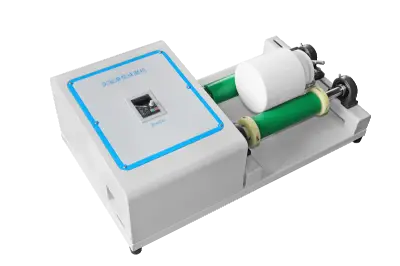
A roller ball mill operates by supporting one or more cylindrical jars on rotating rollers. The jar rotates around its horizontal axis, and the grinding media inside are lifted by friction against the inner wall. When the media reach a certain height, they fall or cascade back onto the sample bed. This repeated motion creates a combination of impact, compression, and shear. The jar does not generate power itself; it is the interface between the mill drive and the material being processed. Its geometry, surface condition, sealing quality, and material of construction all influence how efficiently that energy is transferred to the sample.
In a corundum roll mill jar, the inner surface is ceramic rather than steel or polymer. Corundum is known for high hardness and good wear resistance, so the jar can withstand the sliding and impacting action of grinding media better than many softer materials. At the same time, ceramic surfaces are brittle compared with metal. The jar therefore needs to be handled with care, kept free of deep cracks or chips, and used within the mechanical limits of the mill and the jar design. The goal is not to crush large rocks by direct impact but to provide a controlled grinding environment for powders, slurries, and small-particle feed materials.
From Coarse Feed to Fine Powder
The conversion from coarse feed to fine powder happens through several simultaneous mechanisms. First, media falling onto the sample bed deliver impact energy that fractures brittle particles. Second, media sliding and rolling against one another create attrition, which rubs material away from particle surfaces and reduces particle size more gradually. Third, in wet milling, the liquid medium helps disperse particles, prevents agglomeration, and carries heat away from the grinding zone. The jar wall also participates indirectly: a smooth, hard wall allows media to tumble consistently, while a worn or rough wall can change the media motion and introduce unwanted contamination.
The final particle size depends on the balance between breakage and agglomeration. Fine particles tend to stick together as their surface area increases, so milling does not continue indefinitely at the same rate. After a certain point, the rate of size reduction slows, and further milling mainly changes particle shape or distribution. This is why jar selection is only one part of the process. The operator also needs to consider media size, media density, fill level, rotation speed, milling time, and the choice of dry or wet processing. A corundum jar provides a durable container for this work, but it cannot compensate for an unsuitable media charge or an excessive feed load.
Key Process Parameters and Their Influence
Rotation speed controls the energy and motion pattern inside the jar. At low speed, media tend to slide and roll, producing more attrition and less impact. At higher speed, media are lifted farther before falling, which increases impact energy but also increases wear on the jar and media. If the speed is too high, media may press against the jar wall and rotate with it instead of cascading, which reduces grinding efficiency. The practical speed depends on jar diameter, media size, and the mill design, so it should be adjusted by observation rather than assumed from a single setting.
Media size and density are equally important. Larger or denser media deliver stronger impacts, which helps break coarse particles, but they also create more wear and may overgrind fragile materials. Smaller media provide more contact points and are often better for fine grinding, although they may lack the energy to break tough feed particles. The fill ratio of media, sample, and free space affects the cascade pattern. An overfilled jar leaves little room for media motion, while an underfilled jar wastes capacity and may produce inconsistent contact. In wet milling, slurry viscosity and solids loading also matter: a thick slurry can cushion impacts and slow grinding, while a thin slurry may improve dispersion but reduce the frequency of media-particle collisions.
Core Components and Key Technologies
The Corundum Jar Body
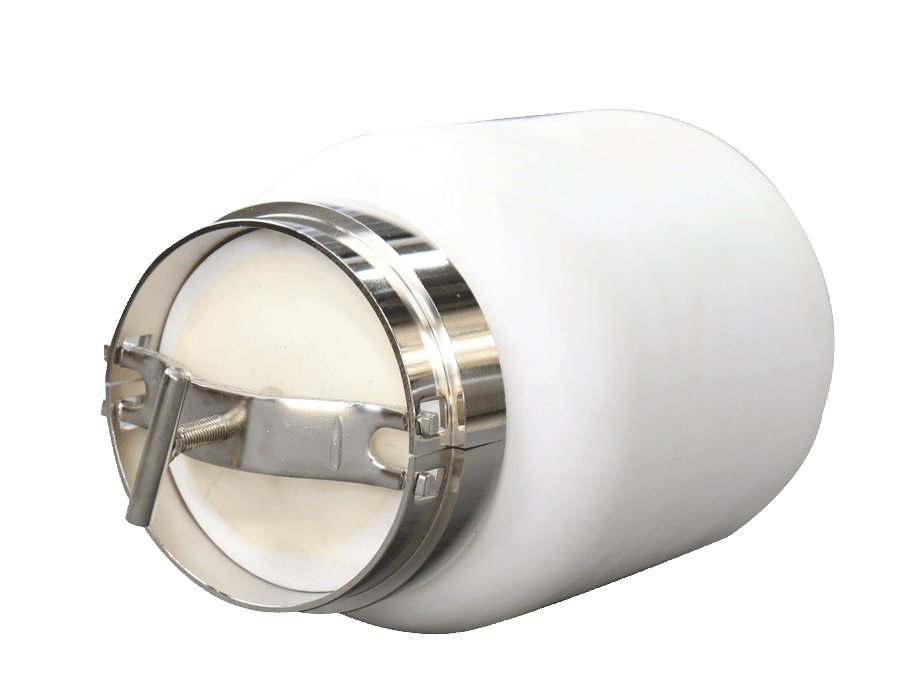
The jar body is the main structural and wear-facing component. In a corundum roll mill jar, the ceramic body provides a hard inner surface that resists scratching and gradual material loss during media motion. Corundum, or crystalline aluminum oxide, is chemically stable under many processing conditions and can be used with a range of dry powders and liquid carriers. Its hardness is the main reason it appears in wear-sensitive grinding applications. However, hardness is not the same as toughness. Corundum is a ceramic, so it can chip or crack if dropped, struck, or subjected to sudden temperature changes. Users should inspect the jar for chips, hairline cracks, and severe wear before each use.
The inside surface condition is important for both grinding performance and contamination control. A smooth, intact surface allows media to move predictably and makes cleaning easier. A worn surface may develop pits or grooves that trap material and alter media motion. Because corundum is an oxide ceramic, wear of the jar can introduce aluminum oxide into the sample. In many ceramic, mineral, glass, and catalyst applications this is acceptable or even compatible with the feed. In applications where alumina is an unwanted contaminant, the same jar may not be the best choice. This is a key selection point: the jar material must be evaluated against the chemistry of the sample, not only against its hardness.
Lid, Sealing, and Gasket System
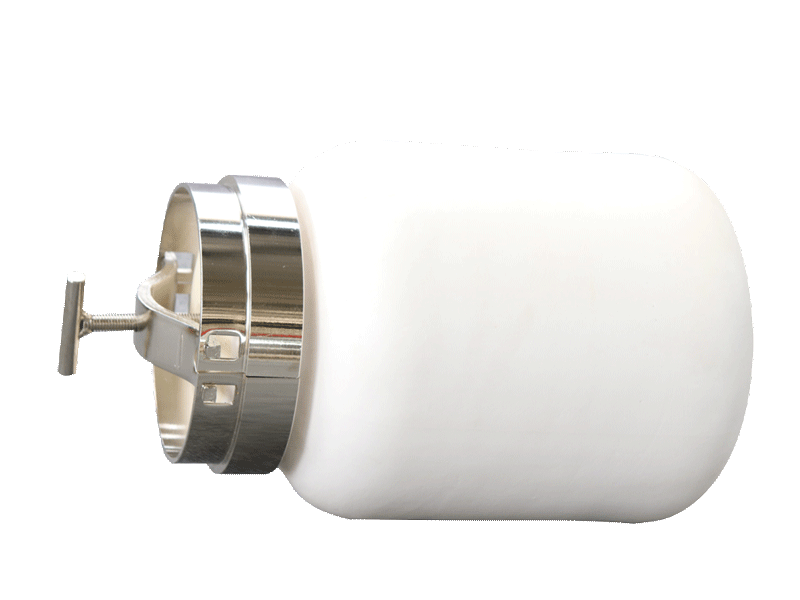
A roll mill jar needs a secure lid because the jar rotates and may contain fine powder or liquid. The lid and sealing system keep the sample inside, limit dust exposure, and reduce the loss of liquid during wet milling. The exact sealing design varies by product, but the functional requirements are consistent: the lid must locate correctly, the gasket must fit without twisting, and the clamping or retaining method must hold the assembly firmly during rotation. A poor seal can cause leakage, sample loss, and inconsistent results. It can also allow abrasive slurry to migrate into the sealing area and accelerate wear.
Before each run, the sealing surfaces should be clean and free of dried powder or grit. The gasket should be inspected for hardening, cuts, or deformation. The lid should sit evenly rather than being forced into place. If the jar uses a clamp, band, or threaded retaining ring, the user should confirm that it is fully engaged and that the jar is balanced on the rollers. These checks are simple but important. A corundum jar is a durable ceramic component, yet the sealing system often determines whether the jar can be used reliably for wet processing or fine dry powders.
Grinding Media and Fill Ratio
The grinding media are the active tools inside the jar. Common media include ceramic, zirconia, agate, stainless steel, and other materials selected for density, hardness, and contamination tolerance. The media must be compatible with the jar. Very hard or dense media can increase grinding energy, but they also increase wear on the corundum surface. In a ceramic jar, the operator should avoid excessive media loading, violent impact, or media that are too large for the jar diameter. A sensible media charge leaves enough free space for the cascade to develop and avoids continuous sliding against the wall.
The fill ratio is usually established through trial runs. As a general guide, the jar should not be packed so tightly that media cannot move, and it should not be so empty that the media simply slide without effective contact. The sample load should also be moderate. Overloading with feed material cushions media impacts and reduces grinding efficiency, while underloading may cause excessive media-to-media contact and jar wear. The best combination depends on the feed hardness, target fineness, and whether the process is dry or wet. Keeping records of media type, charge, sample mass, speed, and time helps make the process repeatable.
Roller Interface and Rotation Stability
The outside of the jar must run smoothly on the rollers. A cylindrical jar with a consistent outer surface tracks better than an uneven or damaged one. If the jar wobbles, the media motion becomes irregular and the sealing system experiences additional stress. The rollers, jar supports, and any retaining guides should be clean and in good condition. The jar should be positioned according to the mill instructions so that it rotates on its intended axis. Heavy jars and large media charges require particular attention to balance and speed limits.
Rotation stability also affects noise and wear. A jar that slips or vibrates may polish the outer surface, loosen the lid, or produce inconsistent grinding. Operators should stop the mill if they hear unusual impact, see leakage, or notice a sudden change in motion. Because corundum is brittle, mechanical shocks from poor roller alignment or dropped jars should be avoided. The roller mill interface is therefore not a minor detail; it is part of the jar's operating environment and should be maintained with the same care as the jar itself.
Key Performance Indicators and Selection Points
Working Volume and Throughput
The first selection question is usually working volume. The jar must hold the sample, the media, and enough free space for motion. A jar that is too small will be overloaded, while an oversized jar may require more media and longer running times to achieve the same result. Users should think in terms of useful batch size rather than nominal jar volume alone. The amount of sample that can be processed efficiently depends on feed density, target fineness, media size, and whether the process is dry or wet. For laboratories with varied work, a mid-size jar may offer more flexibility than a very small or very large one.
Throughput is not simply a matter of jar size. It also depends on how quickly the mill can reduce the sample to the target fineness and how easily the jar can be emptied, cleaned, and reloaded. A jar that is difficult to handle may slow the workflow even if its nominal capacity looks attractive. For production or repeated laboratory runs, consistency between batches is often more valuable than maximum capacity. The user should confirm that the jar fits the available roller mill, that the loaded weight is acceptable, and that the lid can be handled safely during routine operation.
Wear Resistance and Contamination Control
Wear resistance is a central reason to choose corundum. The ceramic surface can tolerate abrasive media and hard powders better than many softer materials, which helps maintain a stable grinding chamber over time. However, wear resistance does not mean zero wear. Abrasive service gradually changes the surface, and the jar material can appear in the sample as contamination. The key question is whether that contamination matters. For alumina-based ceramics, catalysts, and some mineral samples, aluminum oxide wear may be acceptable. For samples that require strict control of aluminum content, a different jar material may be more appropriate.
Contamination control also involves the lid, gasket, and media. A worn gasket can shed material, and low-quality media can wear faster than the jar. The operator should use media that are compatible with the jar and replace damaged components promptly. Cleaning between samples is important because fine powder can lodge in surface pits or sealing grooves. If cross-contamination is a concern, a dedicated jar for each material family may be preferable to repeated cleaning of a single jar. These practices support the main advantage of a corundum jar: a hard, stable grinding surface that can be kept clean and used repeatedly.
Particle Size Control and Reproducibility
Particle size control comes from the combined effect of media, speed, time, and jar surface. A corundum jar does not set the final particle size by itself, but it provides a consistent wear-resistant environment in which the media can act. Reproducibility depends on keeping the other variables stable. If the media charge, sample mass, rotation speed, and milling time change from run to run, the particle size distribution will change as well. Users should establish a standard procedure and record the variables that matter. A jar with a smooth, unworn interior helps reduce unexplained variation.
It is also important to avoid overmilling. Once the sample reaches a fine size, additional milling may not reduce the median particle size much, but it can increase wear, change particle shape, or promote agglomeration. In wet milling, settling and re-agglomeration can occur after the jar is removed from the mill. The operator should consider how the slurry will be handled after grinding. In dry milling, fine powder may cling to the jar and lid, which affects recovery and cleaning. These practical details are part of particle size control, even though they happen after the grinding step.
Speed, Energy, and Process Efficiency
Energy efficiency in a roll mill jar is influenced by media motion, fill level, and running time. The most efficient setting is not always the highest speed. At excessive speed, media may centrifuge against the wall and stop doing useful work, while wear and heat generation increase. At too low a speed, media may slide without enough impact energy. The operator should look for a stable cascade pattern and adjust speed gradually. The jar should be matched to the mill's speed range and mechanical capacity. A heavy jar filled with dense media requires more torque and may not be suitable for every roller mill.
Process efficiency also includes downtime for cleaning and inspection. A jar that is easy to open, empty, and inspect encourages regular maintenance. A jar that is difficult to handle may be run longer than necessary or cleaned incompletely. The cost of a grinding jar should therefore be judged over its service life, not only at purchase. Wear life, replacement frequency, cleaning time, and the cost of contamination-related rejects all contribute to the real cost of ownership.
Cleaning and Maintenance
Corundum jars should be cleaned with methods that do not chip or scratch the ceramic. Abrasive scouring is best avoided because it can damage the surface finish. Gentle brushing, appropriate solvents, and thorough drying are generally preferred, depending on the sample and the jar manufacturer's guidance. The lid and gasket need special attention because powder can accumulate in grooves and sealing areas. After cleaning, the jar should be inspected under good light for chips, cracks, stains, and areas of unusual roughness. Any jar with structural damage should be removed from service.
Maintenance records are useful. Tracking the number of runs, sample types, media used, and observed wear helps predict when a jar should be replaced. A sudden increase in contamination, a change in grinding time, or visible surface damage may indicate that the jar is no longer performing as it should. Because corundum is brittle, handling is part of maintenance. Jars should be stored securely, kept from impacts, and moved with appropriate support. These simple habits extend service life and protect the quality of the sample.
Applications and Selection Advice
Typical Applications
Corundum roll mill jars are used in laboratories and small-scale processing where hard, abrasive, or chemically sensitive materials must be reduced in size. Typical settings include ceramic raw materials, glass and frit, mineral samples, catalysts, pigments, and other inorganic powders. The jar is also useful for general sample preparation when a durable ceramic chamber is preferred over a softer container. In these applications, the jar provides a wear-resistant grinding environment and helps protect the sample from metallic contact. The exact suitability depends on the feed chemistry, target fineness, and acceptable contamination level.
The jar should not be treated as a universal container. Strong impact, very large feed particles, and aggressive mechanical shock are not ideal for ceramic jars. Wet milling is possible when the lid and sealing system are suitable, but the user should confirm compatibility with the mill and the jar design. If the process requires high-impact coarse crushing, a different type of mill or jar may be more appropriate. A corundum jar is best understood as a precision grinding container for fine-particle work, not as a rugged rock-crushing vessel.
Matching the Jar to the Mill and the Method
The jar must fit the roller mill in diameter, length, and support geometry. It should rotate smoothly without wobbling, and the loaded weight should be within the mill's capacity. The user should also consider the grinding method. Dry milling is simpler and avoids liquid handling, but fine dust can be harder to contain and recover. Wet milling improves dispersion and can reduce dust, but it requires a reliable seal and a compatible liquid. The jar material, gasket, and media must all be suitable for the chosen method.
Selection should begin with the sample, not the catalog. Ask what the feed material is, how hard and abrasive it is, what contamination is unacceptable, and what particle size is required. Then consider batch size, available mill, media type, and cleaning needs. If alumina contamination is acceptable, a corundum jar can be a strong candidate because of its wear resistance. If alumina contamination is prohibited, another jar material should be evaluated. If the sample is fragile or heat-sensitive, lower speed and shorter milling times may be needed. The right jar is the one that fits the whole process, not just the mill.
Practical Selection Checklist
- Confirm that the jar dimensions and loaded weight fit the roller mill.
- Check that the feed chemistry is compatible with aluminum oxide wear.
- Select media that are hard enough for the feed but not excessively aggressive toward the jar.
- Choose a working volume that leaves free space for media motion.
- Verify that the lid and gasket are suitable for dry or wet processing.
- Plan a cleaning and inspection routine before the first production run.
- Record speed, time, media charge, and sample mass to support reproducibility.
FAQ: Common Questions About Corundum Roll Mill Jars
Is corundum the same as alumina?
Corundum is a crystalline form of aluminum oxide, so it belongs to the alumina family. In grinding jar descriptions, the term corundum emphasizes the hard, ceramic nature of the material. Users should still confirm the exact grade and compatibility with their process, because alumina-based ceramics can vary in density, porosity, and surface finish. The important practical point is that the jar is an oxide ceramic, not a metal or polymer.
Can I use a corundum jar for metal powders?
It depends on the metal, the particle shape, and the acceptable contamination level. Metal powders can be abrasive and may react with the ceramic surface under some conditions. A corundum jar may be suitable for certain brittle or oxide-coated powders, but it may not be the first choice for ductile metals that smear or for processes that require metallic media. The user should evaluate the feed chemistry and the risk of ceramic chips before running the mill.
How do I know when the jar is worn?
Look for loss of surface gloss, shallow grooves, pits, dark stains that do not clean off, chips at the rim, and hairline cracks. A gradual increase in grinding time or an unexpected rise in contamination can also indicate wear. Any jar with a crack or chip should be removed from service. Regular inspection under good light is the simplest way to catch problems early.
Can a corundum jar be used for wet milling?
Wet milling can be used when the jar, lid, and gasket are suitable for liquid service. The seal must be in good condition, and the jar should not be filled so high that liquid reaches the sealing area during rotation. The slurry should be compatible with aluminum oxide and with the grinding media. After wet milling, the jar should be cleaned promptly to prevent dried material from lodging in the sealing grooves.
Is a larger jar always better?
No. A larger jar may increase batch size, but it also requires more media, more space on the mill, and more careful handling. If the jar is too large for the available sample or mill, the media motion may be inefficient and the results less consistent. The best choice is the smallest jar that comfortably holds the required sample and media charge while fitting the mill and leaving enough free space for grinding.
Final Selection Notes
A corundum roll mill jar is a practical choice when a hard, wear-resistant ceramic grinding chamber is needed for roller ball milling. It supports dry and wet size reduction, provides good chemical stability for many inorganic materials, and helps maintain a clean grinding environment when handled and maintained properly. The main limitation is ceramic brittleness, and the main selection question is alumina contamination. Users who evaluate the sample chemistry, mill fit, media charge, and cleaning routine before purchase are more likely to obtain consistent results. For detailed product information, refer to the corundum roll mill jar product page and confirm the jar dimensions, sealing design, and recommended operating conditions with the supplier.
Related Products
Get In Touch
Our professional team will reply to you within one business day. Please feel free to contact us!