
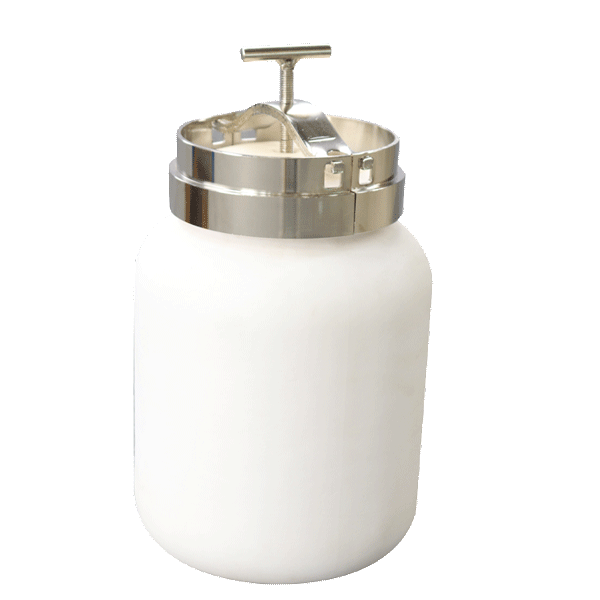
What is a Corundum Roll Mill Jar? A High-Purity Grinding Container for Roller Ball Mills

What is a Corundum Roll Mill Jar?
At its core, a corundum roll mill jar is a specialized grinding container made from high-purity alumina (Al₂O₃, typically ≥99%) designed for use with roller ball mills. It serves as the vessel that holds the material to be ground along with grinding media (such as zirconia or corundum balls). The jar rotates on a set of rollers, causing the media to cascade and impact the powder, achieving fine grinding. Its core value lies in providing an extremely hard, wear-resistant, and chemically inert environment, effectively eliminating metal contamination—a critical requirement for advanced ceramics, electronic materials, battery powders, and pharmaceutical ingredients.
Core Function and Working Principle
The fundamental function of a corundum roll mill jar is to transform coarse particles into fine powders (from millimeters down to micrometers or sub-micrometers) through a combined action of impact and attrition. When the jar is placed on the rollers of a roller ball mill, the rotation lifts the grinding media and material to a certain height before they tumble down. The kinetic energy from the falling media crushes the particles, while the sliding and rolling motion provides continuous attrition. The high density and hardness of corundum (Mohs hardness 9, just below diamond) ensure the jar itself resists wear, maintaining dimensional stability and preventing the release of impurities into the product. Key process parameters include rotation speed, media-to-material ratio, and grinding time. Proper selection ensures optimal energy transfer and uniform particle size distribution.
Key Characteristics and Types
While the corundum jar itself is a distinct type based on material, it is available in various capacities and design variations:
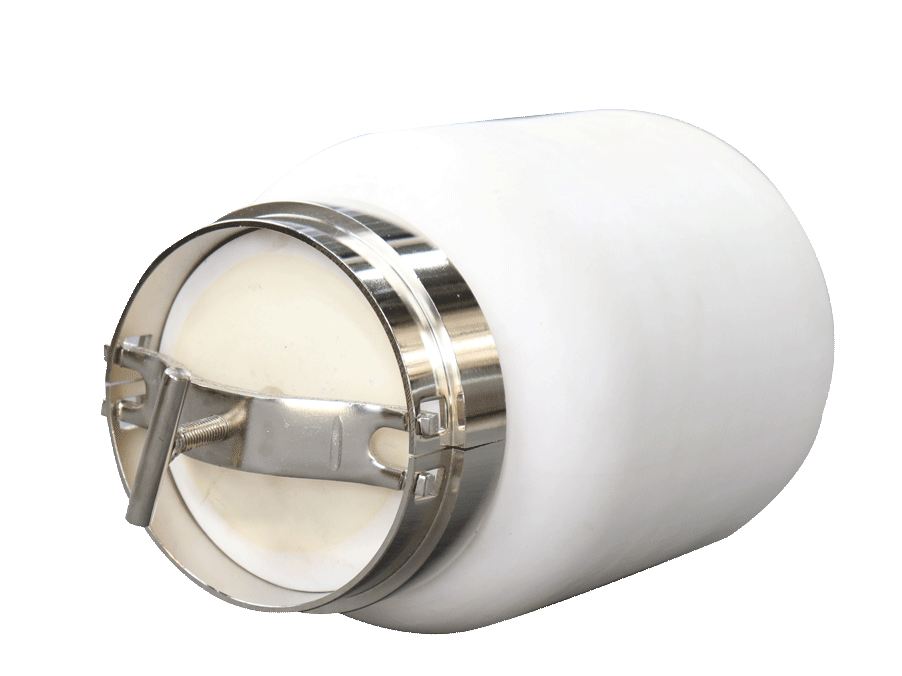
- Standard corundum jar: Made from sintered high-purity alumina, featuring a smooth inner surface to minimize media wear and ease cleaning. Available in capacities from 0.5 L to 20 L.
- Corundum jar with airtight seal: Equipped with a silicone or PTFE gasket for wet grinding or milling under controlled atmospheres.
- Corundum jar with internal ribs: Some designs incorporate lifting bars or ribs to enhance media lifting efficiency, improving grinding performance for harder materials.
Compared to other roll mill jar materials—such as nylon (abrasion-resistant but softer), stainless steel (possible iron contamination), polyurethane (elastic but lower hardness), and PTFE (chemically inert but soft)—corundum offers the best balance of hardness, wear resistance, and chemical purity. It is the preferred choice when contamination from metals or polymers is unacceptable.
Key Performance Indicators and Selection Guide
When selecting a corundum roll mill jar, consider the following parameters:
- Capacity: Match the jar volume to your batch size. Common ranges: 0.5 L, 1 L, 2 L, 5 L, 10 L, 20 L.
- Purity: Typically >99% Al₂O₃. Higher purity (99.5%+) is recommended for ultra-high-purity applications like electronic ceramics.
- Wall thickness and durability: A thicker wall resists breakage under heavy loads, but adds weight. Standard wall thickness is around 5–10 mm.
- Sealing performance: For wet milling or reactive materials, choose jars with reliable gaskets and clamping mechanisms to prevent leakage.
- Compatibility: Ensure the outer diameter and length fit your specific roller ball mill model. Most corundum jars have a cylindrical shape with flat ends and are compatible with standard roll mills.
- Ease of cleaning: The smooth glazed interior of a quality corundum jar minimizes residue adhesion, reducing cross-contamination between batches.
Application Areas and Selection Advice
Corundum roll mill jars are widely used in research laboratories and small production lines for:
- Advanced ceramics: Milling alumina, zirconia, silicon nitride, and other oxide powders.
- Electronic materials: Grinding ferrites, piezoelectric ceramics, dielectric powders, and LTCC materials.
- Battery materials: Preparing cathode (NMC, LFP) and anode (graphite, silicon) powders without iron contamination.
- Pharmaceuticals and cosmetics: Fine grinding of active ingredients where metal-free processing is mandatory.
- Geological and mining samples: Pulverizing ores and minerals for analytical testing.
For users who require the highest purity and lowest wear rate, a corundum jar paired with corundum grinding balls is an excellent combination. If budget is a concern but moderate purity is acceptable, a nylon or stainless steel jar may be considered. However, for most high-value applications, the corundum roll mill jar remains the gold standard for contaminant-free milling.
References
Related Products
Get In Touch
Our professional team will reply to you within one business day. Please feel free to contact us!