

What is a Corundum Roll Mill Jar? A High-Purity Contamination-Free Grinding Container for Roll Ball Mills
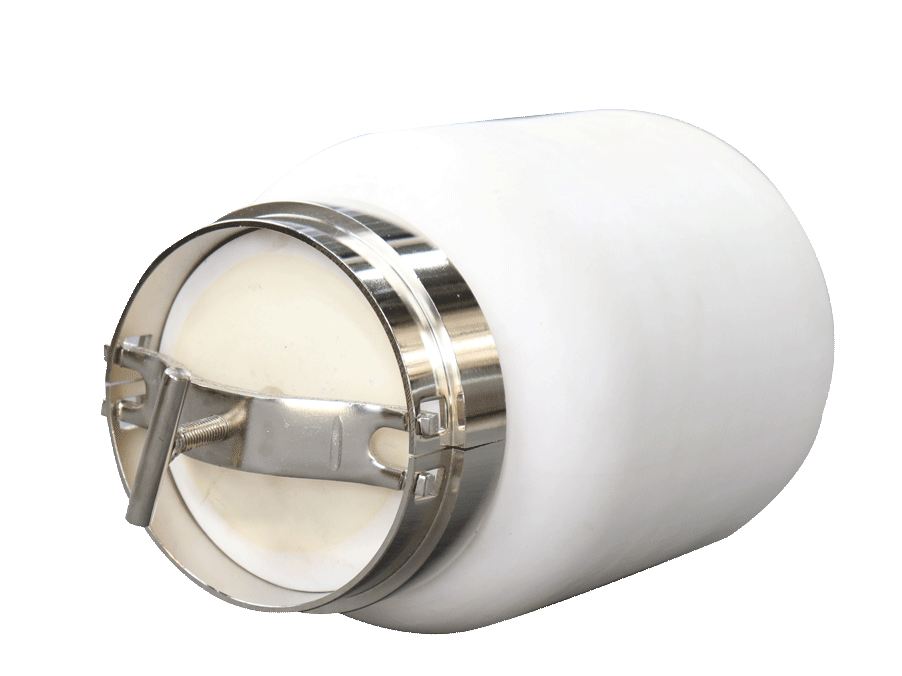
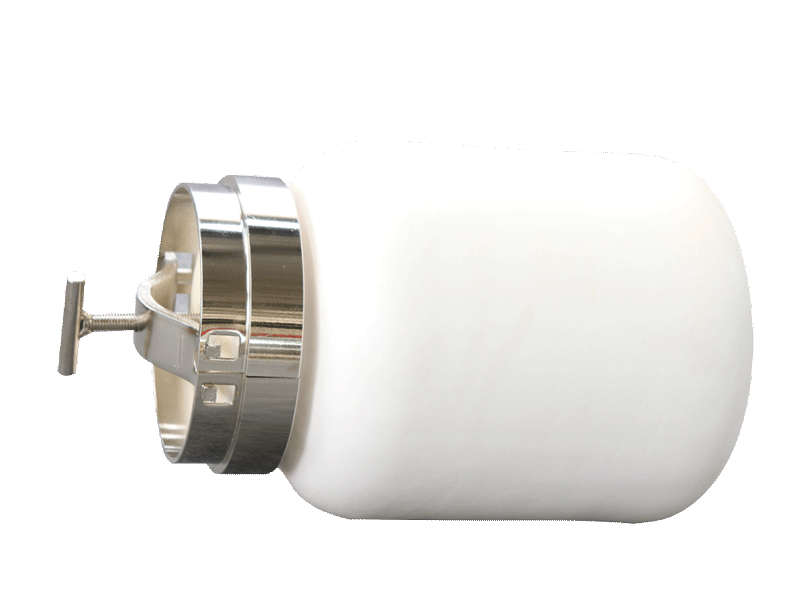
At its core, a corundum roll mill jar is a precision-engineered grinding container, manufactured from high-purity corundum (crystalline alpha-alumina, Al₂O₃). Laboratory and production facilities use it as the primary vessel in roll ball mills to grind, mix, and homogenize materials where the utmost level of purity is non-negotiable. Its unique value lies in eliminating metallic contamination—a critical requirement for industries such as advanced ceramics, electronic materials, pharmaceuticals, and fine chemicals.
Core Function and Working Principle
Transforming Materials with Zero Contamination
The fundamental function of a corundum roll mill jar is to convert raw materials from coarse particles or agglomerates into fine powders, pastes, or slurries. The jar is placed on the rotating rollers of a roll ball mill. As the mill rotates, the jar spins, causing the grinding media (typically corundum or zirconia balls) and the sample inside to tumble, cascade, and collide. This mechanical action—a combination of impact, compression, and shear—breaks down particles primarily through friction and attrition rather than forceful impact. Because the corundum jar and matching grinding balls are chemically identical or highly compatible, the risk of introducing foreign ions (like iron, chromium, or nickel) into the sample is virtually eliminated.
Core Working Mechanism
The operational principle is elegantly simple: rolling friction replaces violent collisions. The jar's cylindrical geometry ensures even distribution of grinding media. When the mill operates, the corundum jar rotates at a controlled speed, typically between 50 and 300 RPM. The grinding balls (3-20mm in diameter) lift along the rising side of the jar and then fall or roll back down, creating a cascading effect. This process grinds the sample trapped between the balls and the jar wall. Key parameters influencing final particle size include:
- Rotation speed: Affects the kinetic energy transferred to the balls.
- Ball-to-material ratio: Typically 3:1 to 5:1 by volume.
- Grinding time: Ranges from minutes to hours depending on target fineness.
- Media size distribution: A mix of larger and smaller balls improves packing density and grinding efficiency.
Key Performance Indicators and Selection Criteria
Processing Capacity and Scale
Corundum roll mill jars are available in various volumetric capacities, typically ranging from 50 ml (for small laboratory experiments) to 3 liters (for batch production or pilot-scale tests). The choice depends on the required batch size and the mill's loading capacity. A 500 ml jar is a common workhorse for R&D, while 1L or 2L jars suit process development.
Purity and Contamination Control
The primary performance metric is chemical inertness and wear resistance. High-quality corundum jars have a Mohs hardness of 9, second only to diamond. During extended grinding, the weight loss (wear) of a good corundum jar is less than 0.01% per hour under normal conditions, ensuring the ground sample's purity remains above 99.9% in most applications. For ultra-sensitive nanomaterials or electronic ceramics, this purity is non-negotiable.
Automation and Programmability
While the jar itself is a passive component, it interfaces with advanced mill controls. Modern roll ball mills often feature touch-screen interfaces, programmable speed ramps, and bidirectional rotation. The jar must be robust enough to withstand continuous operation (up to 90 hours) and variable rotational speeds without cracking or leaking.
Durability and Maintenance
Corundum jars are exceptionally durable but brittle. They are resistant to acids, alkalis, and high temperatures (up to 1800°C sintering temperature during manufacture, though working temperature is lower). Maintenance involves cleaning with dilute acid or ultrasonic baths to remove residual material. The main consideration is mechanical shock—dropping or impact can cause chipping or fracture. They pair best with corundum grinding balls for minimal wear, though they can be used with zirconia balls for higher density.
Application Domains and Selection Guidance
Primary Industries
- Advanced Ceramics & Electronic Materials: Grinding of alumina, zirconia, barium titanate, PZT ceramics, MLCC dielectric powders, varistor materials (ZnO), ferrites, and ceramic capacitors. Contamination-free grinding is critical to maintain dielectric properties.
- Battery Materials: Processing of cathode materials like LiCoO₂, LiMn₂O₄, LiFePO₄, and solid-state electrolyte powders.
- Pharmaceuticals & Medical: Grinding of active pharmaceutical ingredients (APIs), excipients, and bone cement components where metal traces can cause toxicity.
- Geology & Environmental Science: Soil, mineral, and rock sample preparation for XRF, ICP-MS, or XRD analysis. A corundum jar ensures no interference from iron or chromium.
- Fine Chemicals & Pigments: Production of high-purity pigments, dyes, catalysts, and fluorescent powders.
Selection Guidance for Users
- For Routine Sample Prep (Geology, Soils): If sample purity is not ultra-critical, a ceramic roll mill jar or nylon roll mill jar can be a cost-effective alternative. However, if trace-element analysis is involved, invest in corundum.
- For Electronic Ceramics R&D: Always choose a high-grade corundum jar (99.7%+ Al₂O₃) to prevent grain boundary contamination that degrades performance.
- For High-Volume Production: Pair the jar with a heavy-duty roll ball mill (like the Large roll ball mill or Roller ball mill jar series) for consistent, scalable results.
- For Wet vs. Dry Grinding: Corundum jars perform excellently in both modes. For wet grinding of very hard materials, ensure the grinding media density is matched (zirconia balls are often preferred).
References
Related Products
Get In Touch
Our professional team will reply to you within one business day. Please feel free to contact us!