

What is a Corundum Roll Mill Jar? A High-Purity Grinding Vessel for Contamination-Free Sample Preparation
Introduction: What is a Corundum Roll Mill Jar?
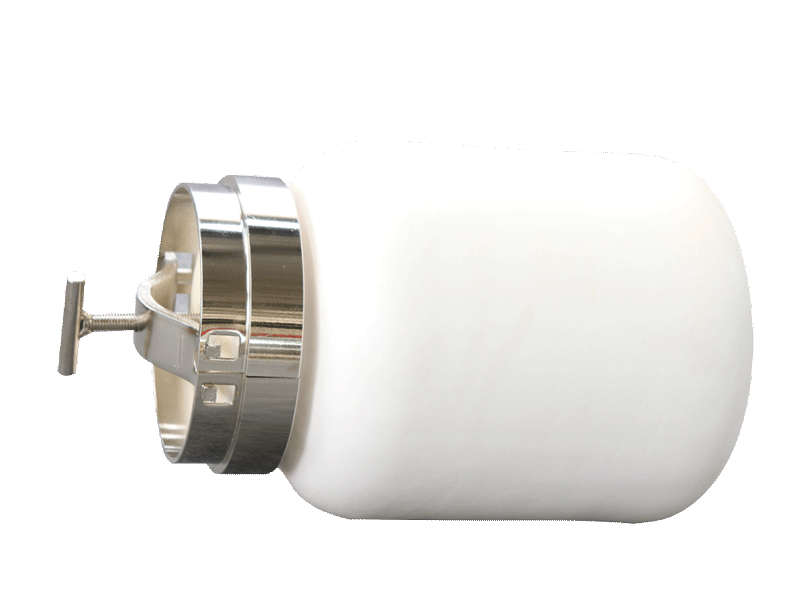
A corundum roll mill jar is a specialized, high-performance grinding vessel crafted from synthetic corundum (α-Al₂O₃) — a high-purity, densely sintered alumina material. Laboratories, pilot plants, and small-scale manufacturers use it in roller ball mills to pulverize, mix, and homogenize hard or abrasive solids without introducing metallic contamination. While standard steel or polymer jars may wear quickly or react with sample materials, a corundum jar provides a chemically inert, wear-resistant chamber that preserves sample integrity.
Core Function and Working Principle
From Coarse Chips to Fine Powder
A corundum roll mill jar is mounted horizontally on a roller ball mill (see the roll ball mill product range). As the roller rotates the jar, the internal charge — including the sample material and grinding media (such as corundum balls) — tumbles. This motion creates a cascade effect: media lift, roll, and then impact the sample, while friction between particles and the vessel walls generates shearing action. Over time, these mechanisms reduce particle size from coarse chips (typically under 3–5 mm) to fine or ultra-fine powders (down to micrometers).
Key Mechanical and Material Parameters
- Grinding speed: Rotational speed (typically 50 to 400 RPM) determines the intensity of impact and milling efficiency.
- Filling ratio: The jar should be about 30–40% filled with grinding media for optimal energy transfer without dead zones.
- Grinding time: The duration is controlled based on material hardness and target particle size.
Thanks to the extreme hardness (Mohs 9) and low wear rate of corundum, the jar contributes negligible contamination to the powder — achieving true “zero-extraneous contamination” matching expensive agate vessels but with superior mechanical durability.
Key Performance Indicators (KPIs) and Selection Criteria
1. Wear Resistance and Purity
Corundum jars exhibit exceptional resistance to abrasion. After high-run hours of milling silica or zircon sand, the wear debris added to the sample is typically less than 0.01 wt% — meeting the requirements for high-purity technical ceramics and electronic materials.
2. Processing Capacity and Jar Volume
Corundum roll mill jars are available in capacities from 0.1 L to 20 L. Small jars (0.1–0.5 L) work best for laboratory feasibility studies; medium jars (1–5 L) suit pilot-scale formulation; and large ones (10–20 L) support small production batches.
3. Chemical and Thermal Stability
Corundum is inert in most environments: it resists acids (except concentrated HF), alkalis, and solvents. Additionally, it can withstand sustained operating up to ~350°C, so wet or dry grinding with moderate heating is possible without vessel degradation.
4. Compatibility with Roller Ball Mills
These jars are designed to fit standard roll ball mill frames. The smooth cylindrical exterior ensures stable rotation, and the jar closure mechanism (typically a sealed lid with O-rings or a screw cap) prevents leakage during vigorous tumbling.
Primary Applications and Use Cases
Corundum jars are an excellent choice in situations where sample purity and durability must be guaranteed:
- Ceramic powder grinding: For processing alumina (Al₂O₃), zirconia (ZrO₂), silicon carbide (SiC), and other refractory oxides to a uniform fine powder.
- Mineral processing research: Grinding rock and ore samples (quartz, feldspar, iron ore) to release mineral inclusions without metallic contamination from steel jars.
- Geological sample milling: Preparation of soil sediment or rock powder for XRF, XRD, and elemental analyses where contamination would skew results.
- Electrode material preparation: Milling cathode/anode active materials such as LiFePO₄, NMC (Nickel-Manganese-Cobalt) oxides, and graphite for battery R&D.
- Pharmaceutical and chemical milling: Grinding pigments, catalysts, and other sensitive powders where purity is regulated.
Selection Tips for Your Corundum Roll Mill Jar
When selecting a corundum roll mill jar for your lab, consider these three factors:
- Volume choice: Match the jar size to the batch quantity you typically handle. Overfilling (more than 2/3 volume) reduces grinding efficiency; underfilling increases media-to-sample impact, which may accelerate wear.
- Media pairing: Use corundum or high-density alumina grinding balls to match jar hardness. Mixed-media (e.g., zirconia balls in a corundum jar) may cause accelerated wear on both the jar and media.
- Sealing system: Validate that the jar lid has a reliable seal (silicone O-rings or PTFE gaskets) to contain dust and liquid, particularly if you employ wet grinding or volatile solvents.
For a full catalog of roll mill jar options — including nylon, stainless steel, PTFE, ceramic, and PU jars — visit the roller ball mill jar product page.
Conclusion
In summary, the corundum roll mill jar is an indispensable item for any laboratory aiming to produce high-purity powders without sacrificing operational durability. Compared to agate, it offers similar chemical inertness but greater fracture toughness; compared to steel and polymer jars, it eliminates metallic contamination. Whether you are milling ceramic powders for advanced materials or preparing geological samples for trace analysis, this vessel delivers reliable performance batch after batch.
Reference
- Corundum Roll Mill Jar — product page: https://www.planetaryballmills.com/products/grinding-series/roller-ball-mill-jar/corundum-roll-mill-jar.html
Related Products
Get In Touch
Our professional team will reply to you within one business day. Please feel free to contact us!