

What is a Corundum Planetary Mill Jar? A High-Purity Grinding Container for Hard Materials in Planetary Ball Mills
What is a Corundum Planetary Mill Jar?
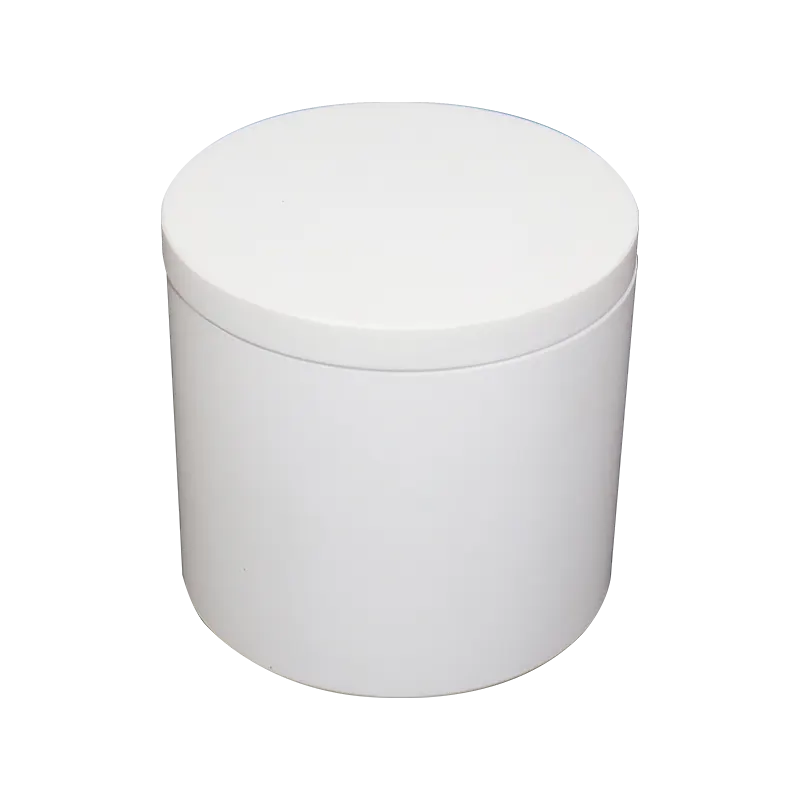
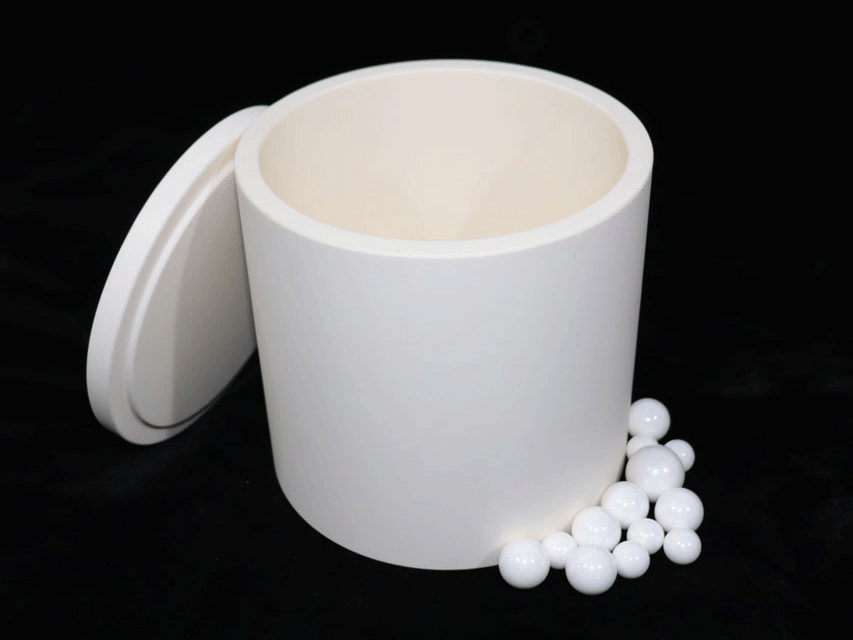
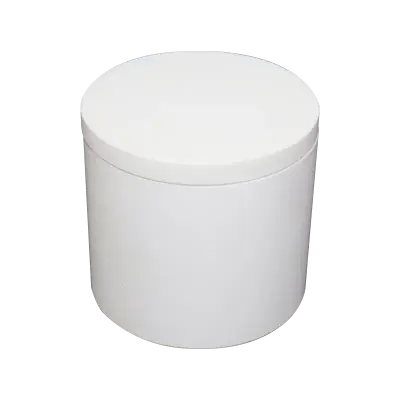
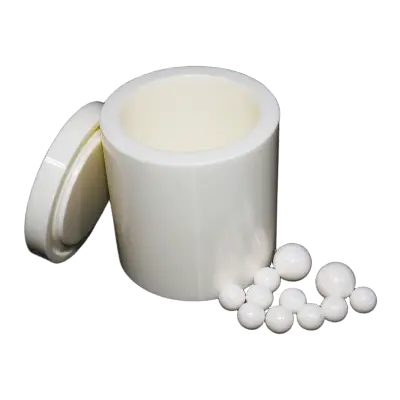
At its core, a corundum planetary mill jar is a specialized high-purity grinding container designed for use in planetary ball mills. It is used to grind, mix, and homogenize hard and brittle materials — such as advanced ceramics, minerals, ores, and abrasives — without introducing metallic contamination. Made from high-density aluminum oxide (Al₂O₃, typically >99%), corundum jars offer excellent hardness (Mohs 9), wear resistance, and chemical inertness, making them ideal for demanding powder processing applications.
Core Function and Working Principle
In a planetary ball mill, the corundum jar is mounted on a rotating turntable and simultaneously revolves around its own axis. This planetary motion subjects the grinding balls and material inside the jar to intense impact and friction forces. The material is repeatedly crushed and ground between the balls and the inner wall of the jar, resulting in particle size reduction down to the submicron or even nanometer range.
The key advantage of a corundum jar lies in its material properties. Unlike steel or other metal jars, corundum does not shed iron or other metallic impurities into the sample. This is critical for applications where chemical purity must be preserved, such as in the preparation of high-performance ceramics, battery materials, or pharmaceutical ingredients. The working mechanism can be adjusted by varying jar rotation speed, ball-to-material ratio, and grinding time to achieve the desired fineness and particle size distribution.
Core Components and Key Technology
A corundum planetary mill jar typically consists of three main parts:
- Jar body – precision-machined from high-purity corundum (alumina), with a smooth inner surface to minimize wear and contamination.
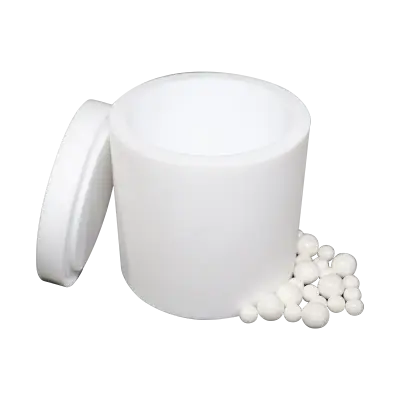
- Lid and sealing gasket – provides airtight closure, often with a silicone or PTFE gasket to prevent leakage during grinding. Some models support vacuum or inert gas atmosphere grinding.
- Grinding media – usually corundum balls or cylinders of the same material to match the jar’s purity and hardness. Other media like zirconia may also be used depending on the application.
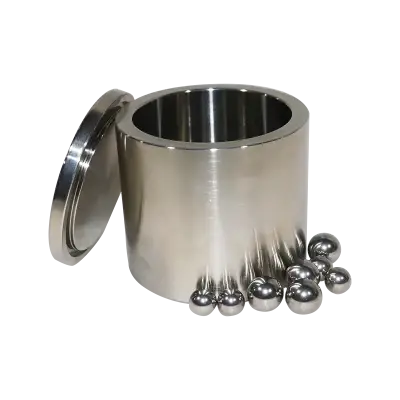
Compared to other jar materials, corundum offers a balance between hardness, wear resistance, and cost. For example, zirconia jars provide even higher toughness and fracture resistance, while 304 stainless steel jars are better for impact-heavy grinding but risk metal contamination. Corundum jars are the preferred choice when high purity and moderate impact resistance are required.
Key Performance Indicators and Selection Criteria
When selecting a corundum planetary mill jar, consider the following parameters:
- Capacity – available in volumes from 0.1 L to 5 L or more, depending on the mill model. Choose a size that matches your batch volume and mill specifications.
- Maximum rotational speed – corundum jars have a lower density than metal jars, so they can withstand high speeds, but always check the manufacturer’s speed limit to avoid breakage.
- Sealing performance – for wet grinding or processing under protective atmosphere, a vacuum-grade seal is essential. Some corundum jars come with double O-ring seals for leak-proof operation.
- Wear resistance – high-purity corundum offers excellent abrasion resistance, but the inner surface will gradually wear after extended use. Monitor the inner diameter and replace when the wall thickness decreases significantly.
- Temperature tolerance – corundum can withstand high temperatures (up to 1600°C), but the sealing gasket material limits the practical operating temperature (usually below 200°C for silicone gaskets).
Applications and Selection Advice
Corundum planetary mill jars are widely used in:
- Advanced ceramics – grinding of alumina, zirconia, silicon carbide, and other ceramic powders.
- Mineral processing – pulverization of ores, rocks, and geological samples.
- Battery materials – preparation of electrode active materials like LCO, NMC, and solid electrolytes.
- Chemical and pharmaceutical – fine grinding of catalysts, pigments, and active pharmaceutical ingredients.
- Abrasives – as shown in the research on granulation of ceramic corundum abrasives, planetary ball mills with corundum jars effectively control particle shape and size distribution.
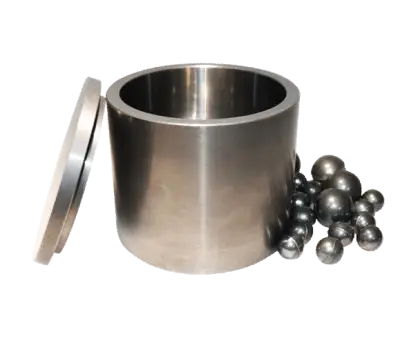
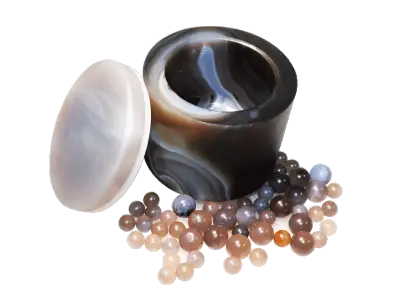
For users who need to grind materials with hardness below Mohs 7, a agate jar may be more cost-effective. For extremely hard samples (e.g., tungsten carbide), a tungsten carbide jar is recommended. However, for most high-purity ceramic and mineral grinding tasks, the corundum jar remains the most versatile and economical choice.
References
Related Products
Get In Touch
Our professional team will reply to you within one business day. Please feel free to contact us!