
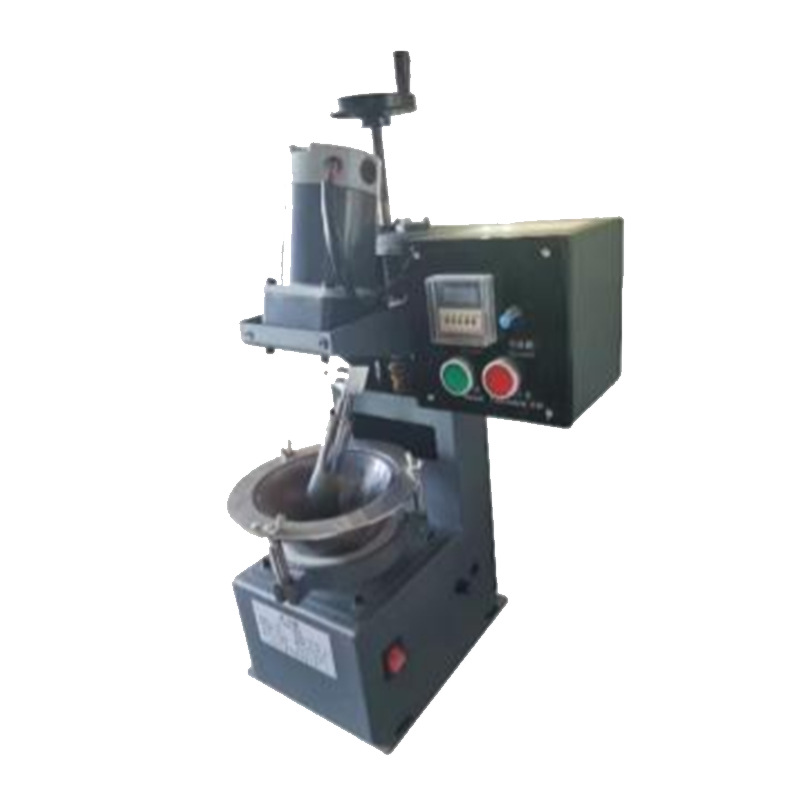
What is an Agate Grinder? A Precision Laboratory Equipment for Ultra-Fine Powder Grinding

Introduction
From its core, an agate grinder is a specialized laboratory grinding device that research institutions, quality control labs, and material processing industries use to convert coarse solid particles into uniformly fine powders with exceptional purity. The equipment achieves this through a unique combination of rotating agate mortar and pestle, ensuring that every particle receives equal grinding action, resulting in highly consistent particle size distribution.
Core Functionality and Working Principle
The agate grinder transforms coarse feed materials, typically with particle sizes up to 1–2 mm, into fine powders that can reach micron or even nanometer scales. The core working mechanism involves a precisely machined agate mortar that rotates slowly (typically around 10 rpm) while an agate pestle, driven by a separate high-speed motor (around 80 rpm for the JB-120 model), moves in a conical orbital pattern. The pestle is spring-loaded, maintaining constant contact with the mortar's hemispherical bottom, creating a rolling and pressing action that efficiently crushes and grinds the material.
Key process parameters include the rotation speeds of both mortar and pestle, the gap between them, and the grinding duration. The JB-120 model, for example, features a pestle speed of 80 rpm and a mortar speed of 10 rpm, with a programmable timer allowing precise control over grinding time. The resulting powder exhibits extremely narrow particle size distribution, making it ideal for applications requiring high repeatability and low contamination.
Main Types and Configurations
Agate grinders are available in several configurations to suit different throughput and sample handling needs:
Single-Station Agate Grinder
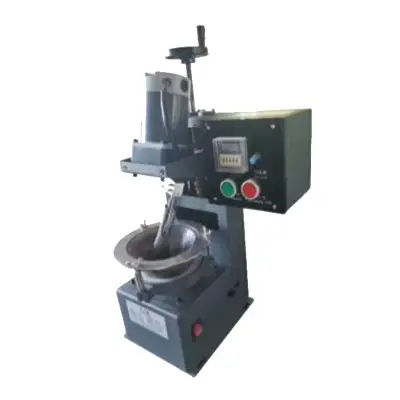
This is the classic design, exemplified by the JB-120 model. It features one agate mortar and pestle set, suitable for small batches (typically up to 50–100 grams per run). It is ideal for preparing individual samples in research and development labs where sample size is limited and contamination control is critical.
Multi-Station Agate Grinder
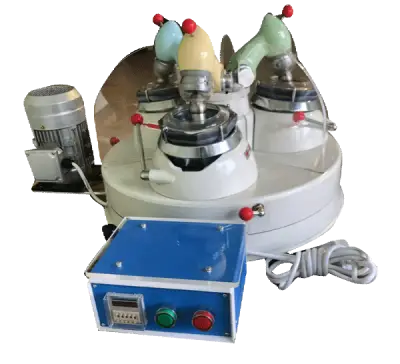
For laboratories needing higher throughput, grinders with three or more working stations are available. These machines, such as the three-head agate grinder, allow simultaneous processing of multiple samples under identical conditions, improving efficiency and batch consistency. Each station operates independently but shares the same drive system, ensuring uniform grinding parameters.
Key Components and Materials
All agate grinders rely on high-purity agate (natural or synthetic) for both mortar and pestle due to its exceptional hardness (Mohs 7), chemical inertness, and wear resistance. The frame is typically made of robust materials like cast iron or stainless steel, with a sealed oil bath system to reduce noise and ensure long-term stability. The drive system uses two independent motors: one for the mortar (slow rotation) and one for the pestle (high-speed orbital motion), with adjustable timing controls.
Key Performance Indicators and Selection Criteria
When selecting an agate grinder, consider the following technical parameters:
- Processing Capacity: Determine the maximum sample volume per batch. Single-station units typically handle 10–100 grams; multi-station units can process up to 300 grams in total.
- Particle Size Control: The ability to achieve target fineness (e.g., D90 < 10 μm) depends on grinding time and material hardness. Most models can produce powders down to 1–5 μm with proper optimization.
- Automation and Programmability: Look for digital timers with settable grinding cycles, automatic shut-off, and optional speed control for different materials.
- Noise and Vibration: Low-noise designs (e.g., oil-immersed drives) are essential for laboratory environments. Check the decibel rating and vibration isolation features.
- Ease of Maintenance: Agate components are durable but can crack if mishandled. Ensure the machine allows easy access for cleaning and replacement of the mortar and pestle.
Application Areas and Selection Advice
Agate grinders are indispensable in fields where sample purity and particle size uniformity are paramount:
- Superhard Materials: Grinding diamond, cubic boron nitride, and other abrasive powders for cutting tools and polishing compounds.
- Electronics: Preparing semiconductor materials, silicon powder, and ceramic precursors for microelectronic components.
- Pharmaceuticals: Milling active pharmaceutical ingredients (APIs) and excipients to achieve consistent dissolution rates.
- Geology and Mining: Pulverizing rock samples for X-ray fluorescence (XRF) and other analytical techniques.
- Food and Chemicals: Fine grinding of coffee, spices, and chemical reagents where trace metal contamination must be avoided.
For users with high sample throughput, a multi-station agate grinder is recommended. For laboratories focusing on rare or expensive materials, a single-station unit with precise control offers better cost efficiency. Always verify that the agate used is of high purity and free from internal cracks to ensure long service life.
References
Related Products
Get In Touch
Our professional team will reply to you within one business day. Please feel free to contact us!