
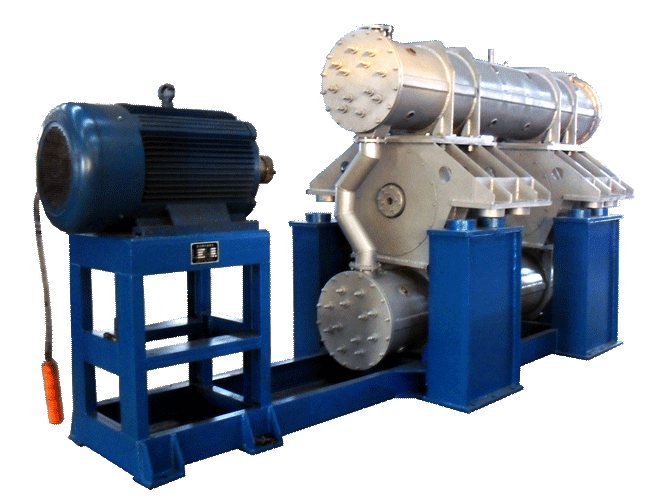
What is a Heavy Duty Vibrating Ball Mill? A High-Energy Grinding Equipment for Efficient Sample Preparation

Introduction
At its core, a heavy duty vibrating ball mill is a specialized high-energy grinding device used in laboratories and small-scale production to rapidly reduce materials from coarse particles to fine powders or even nano-scale. Unlike traditional rotary ball mills, this equipment achieves comminution through high-frequency mechanical vibration, making it particularly effective for hard, brittle, fibrous, and even some ductile materials. It is an indispensable tool for sample preparation in materials science, geology, metallurgy, ceramics, and pharmaceuticals.
Core Function & Working Principle
The fundamental function of a heavy duty vibrating ball mill is to transform bulk materials into fine powders through a combination of impact and friction. The machine consists of a robust milling chamber (typically made of stainless steel or hardened steel) that is eccentrically mounted on a vibrating platform. An electric motor drives an eccentric shaft, causing the entire chamber to oscillate in a three-dimensional circular motion at high frequency (typically 600–1500 rpm) and adjustable amplitude.
Inside the chamber, grinding media (such as steel balls, ceramic balls, or agate balls) are agitated violently. The high-energy collisions between the media, the chamber walls, and the material particles generate intense shear and impact forces, efficiently breaking down the material. The vibrational motion can be finely tuned to optimize grinding efficiency, with parameters like vibration frequency, amplitude, and grinding time directly affecting the final particle size distribution. The closed grinding system also prevents contamination and allows for wet or dry grinding.
Key Components & Technology
Rather than having multiple distinct product types, the heavy duty vibrating ball mill is characterized by several advanced components that ensure durability and performance:
Vibration Motor & Eccentric Mechanism
A heavy-duty vibration motor with adjustable eccentric blocks generates the required oscillatory motion. The amplitude can be adjusted by changing the relative position of the counterweights, allowing the operator to control the energy input into the grinding process.
Grinding Chamber
The chamber is designed for high strength and wear resistance, often lined with replaceable wear-resistant steel or ceramic. Multiple chamber sizes (e.g., 100 mL to 5000 mL) are available to accommodate different sample volumes, from a few grams to several kilograms.
Cooling System & Noise Reduction
Continuous operation can generate significant heat, which may affect heat-sensitive materials. Some models integrate a water cooling jacket or forced air cooling to maintain a stable temperature. Additionally, soundproof enclosures are often included to reduce noise levels below 75 dB.
Control System
Modern heavy duty vibrating ball mills come with programmable logic controllers (PLC) or touch-screen interfaces that allow users to set grinding time, vibration frequency, pause intervals, and even multi-step grinding programs. This automation ensures reproducibility and ease of use.
Key Performance Indicators & Selection Guide
When selecting a heavy duty vibrating ball mill, consider the following technical parameters:
Processing Capacity & Sample Size
Capacities typically range from 100 g to 5 kg per batch. The maximum feed particle size should be less than 10 mm for most models. The final fineness can reach below 1 micron (sub-micron level) for many materials.
Vibration Frequency & Amplitude
Higher vibration frequencies (e.g., 1200 rpm) provide more impact events per second, leading to faster grinding. However, excessive amplitude may cause excessive wear or sample overheating. The optimal combination depends on the material's hardness and brittleness.
Energy Efficiency & Noise
Despite its high energy input, the heavy duty vibrating ball mill is relatively energy-efficient for the fine particle size achieved. Look for models with low noise levels (under 80 dB) and effective cooling to ensure long-term operation.
Automation & Reproducibility
Programmable features allow for standardized grinding protocols, critical for research and quality control. Digital timers, frequency displays, and safety interlocks are essential for consistent results.
Maintenance & Durability
Check for easy access to the grinding chamber, spare parts availability (e.g., vibration springs, motor bearings), and the quality of materials used in the construction. A robust design with a long service life reduces downtime.
Application Fields & Selection Advice
The heavy duty vibrating ball mill is widely used in:
- Materials Research: Preparation of ultrafine powders for XRD, XRF, SEM analysis, and mechanical alloying.
- Geology & Mining: Grinding of ore samples, rocks, and minerals for assay and mineral processing studies.
- Ceramics & Glass: Fine grinding of ceramic raw materials, pigments, and glazes.
- Pharmaceuticals & Chemistry: Homogenization of active pharmaceutical ingredients (APIs), catalysts, and chemical reagents.
- Environmental Testing: Grinding of soil, sediment, and solid waste for contaminant analysis.
For users who need to process small batches (< 1 kg) occasionally, the lab vibration ball mill may be a more cost-effective choice. However, if your work involves high throughput (multiple batches per day), hard and abrasive materials, or requires repetitive grinding cycles, the heavy duty vibrating ball mill is the recommended solution. Its robust construction and higher capacity make it suitable for both research and pilot-scale production.
References
Related Products
Get In Touch
Our professional team will reply to you within one business day. Please feel free to contact us!