
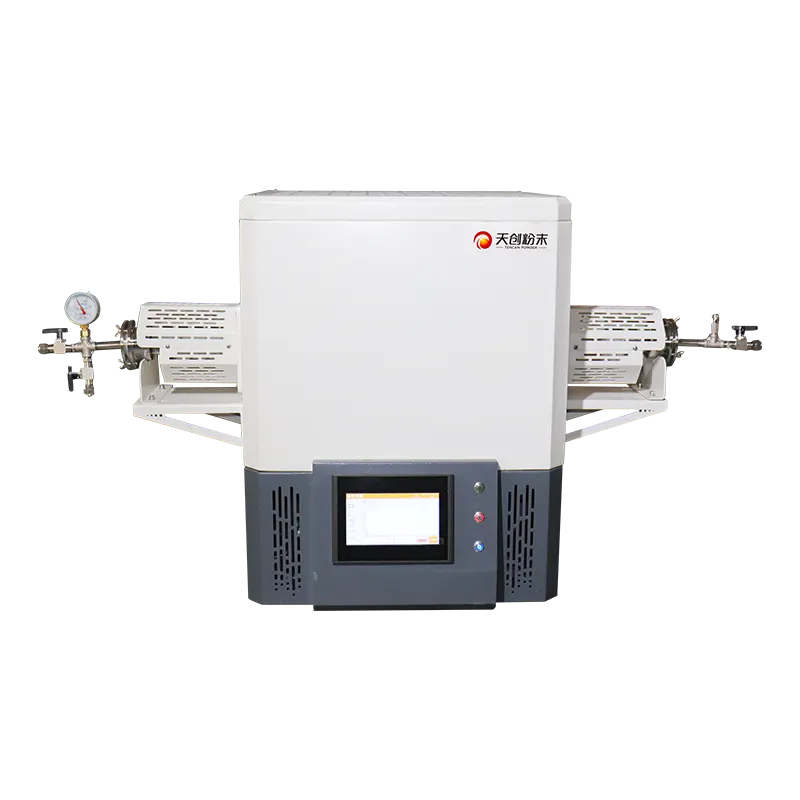
What is a Vacuum Tube Furnace? A Precision Tube Heating Equipment for High-Temperature Material Processing and Atmosphere Sintering

Introduction
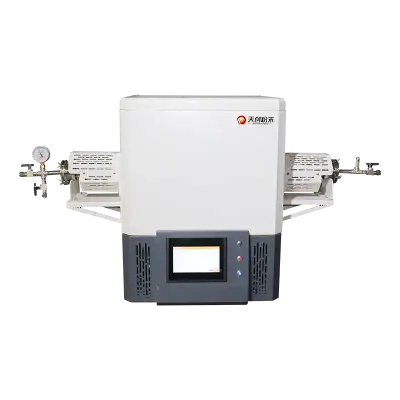
At its core, a vacuum tube furnace is a specialized high-temperature heat treatment device designed for laboratories and R&D facilities. It is used to sinter, anneal, calcine, or process materials in a vacuum or controlled atmosphere environment. The equipment features a tubular heating chamber, typically made of high-purity quartz or alumina, and can reach temperatures up to 1200°C or higher, with precise temperature control and programmable profiles.
Core Function & Working Principle
The primary function of a vacuum tube furnace is to transform raw materials from their initial state (e.g., green compacts, powder compacts, or as-synthesized samples) into a final processed state with improved density, purity, or crystal structure. The core working mechanism involves placing the sample inside a sealed tube, which is then evacuated to remove air and moisture, and optionally backfilled with inert or reactive gases. The tube is heated by resistance elements embedded in the furnace body, transferring heat uniformly to the sample.
Key process parameters include temperature profile (ramp rate, hold time, cooling rate), atmosphere composition (vacuum level, gas type and flow rate), and tube material compatibility. These parameters directly influence the final product’s microstructure, phase composition, and mechanical properties. For example, in ceramic sintering, a slow heating rate and precise temperature hold are critical to avoid cracking and achieve full densification.
Main Types & Classification
Vacuum tube furnaces come in several configurations to suit different applications:
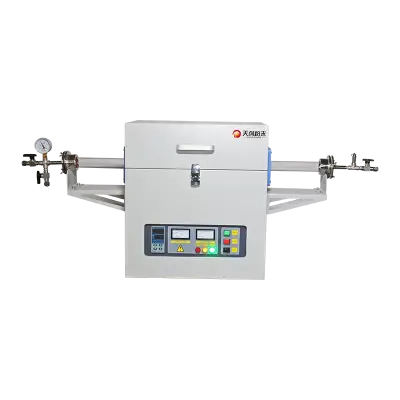
- Horizontal Tube Furnace: The tube is placed horizontally, making it easy to load and unload samples. It is ideal for continuous processes like CVD (chemical vapor deposition) and thermal annealing.
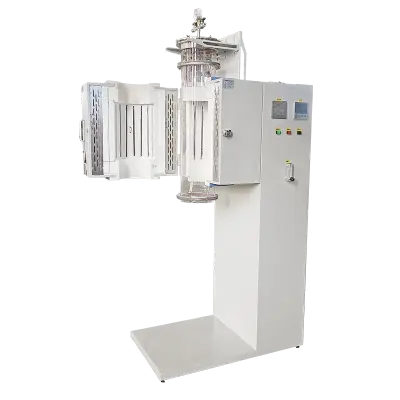
- Vertical Tube Furnace: The tube is oriented vertically, often used for gravity-assisted sintering or when the sample needs to be suspended or quenched. It is also common for chemical vapor deposition with vertical gas flow.
- Rotary Tube Furnace: The tube rotates to continuously mix and heat powder materials, suitable for calcination, drying, and surface treatment of granular products.
- Single-Zone vs. Multi-Zone: Single-zone furnaces have one heating element for uniform temperature; multi-zone models provide independent control over different sections, allowing temperature gradients or improved uniformity over longer tubes.
Selection depends on the sample geometry, desired temperature uniformity, and process atmosphere requirements.
Key Performance Indicators & Selection Tips
When choosing a vacuum tube furnace, consider the following critical metrics:
- Maximum Temperature & Working Temperature: Most models offer 1200°C max (1100°C working), but some reach 1800°C with molybdenum disilicide elements. Ensure the tube material (quartz, alumina, etc.) can withstand the required temperature.
- Temperature Control Accuracy: Look for PID controllers with 30+ programmable segments, accuracy of ±1°C, and features like self-tuning and over-temperature protection.
- Heating & Cooling Rate: Typical rates are 0~20°C/min. Faster rates reduce cycle time but may cause thermal shock; slower rates are safer for delicate samples.
- Vacuum Level: Standard models achieve 10-2 Pa to 10-5 Pa range. Higher vacuum (e.g., 6.67x10⁻⁵ Pa) is needed for applications like vacuum brazing or high-purity sintering.
- Tube Diameter & Heated Length: Common diameters range from 30mm to 150mm, with heated lengths from 200mm to 1200mm. Choose a size that accommodates your sample size and throughput.
- Safety Features: Over-temperature alarm, leakage protection, door interlock, and automatic shutdown are essential for safe operation.
For typical laboratory use, a 1200°C horizontal tube furnace with quartz tube and stainless steel vacuum flange offers a good balance of cost and performance.
Application Fields & Selection Advice
Vacuum tube furnaces are widely used in materials science, chemistry, metallurgy, and electronics for:
- Sintering of ceramics, metals, and composites
- Thermal annealing of semiconductors and thin films
- Chemical vapor deposition (CVD) and physical vapor deposition (PVD) experiments
- Heat treatment of metallic powders and alloys
- Calibration of thermocouples and thermal analysis
For university labs, a compact single-zone horizontal furnace with basic vacuum capability is sufficient. For industrial R&D, multi-zone or rotary models may be required for larger batches or gradient studies. Always verify the tube material compatibility with your process gases and temperatures.
References
For more details, please visit the Vacuum Tube Furnace product page and related Horizontal Tube Furnace or Vertical Tube Furnace resources.
Related Products
Get In Touch
Our professional team will reply to you within one business day. Please feel free to contact us!