
What is a Vacuum Tube Furnace? A High-Temperature Tubular Furnace for Material Processing Under Controlled Atmosphere

What is a Vacuum Tube Furnace? A High-Temperature Tubular Furnace for Material Processing Under Controlled Atmosphere
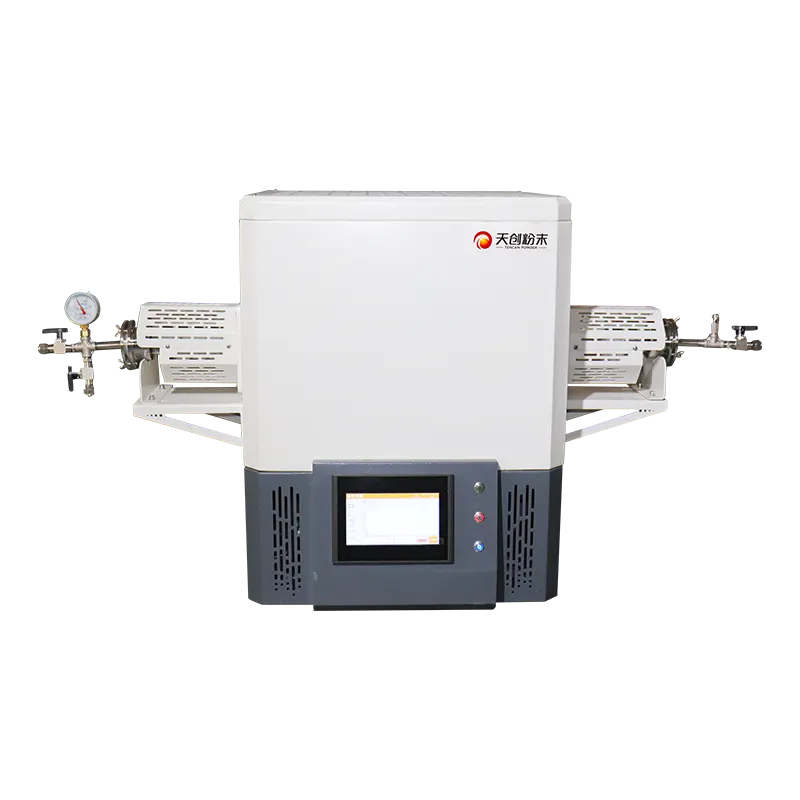
At its core, a vacuum tube furnace is a professional thermal processing device that uses a tubular heating chamber to treat materials at high temperatures (up to 1800°C or more) under vacuum or precisely controlled gas atmospheres. Laboratories, research institutes, and industrial sectors use it for sintering, annealing, calcination, CVD (chemical vapor deposition), and other heat treatment processes where oxidation must be avoided or specific chemical reactions are required. By combining a vacuum system with a gas delivery module, the furnace creates an environment free from reactive gases, enabling the processing of advanced ceramics, metals, semiconductors, and nanomaterials.
Core Function and Working Principle
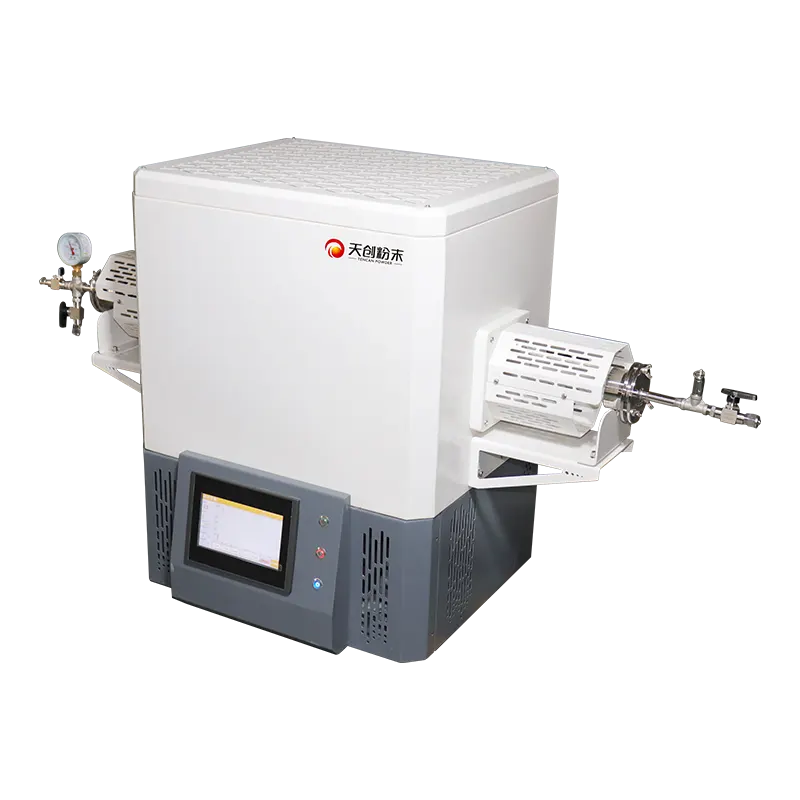
The basic function of a vacuum tube furnace is to transform materials from their initial state (solid bulk, powder, or substrate) into a desired final state (sintered compact, annealed crystal, or thin-film coating) through controlled heating in a protective environment. The core working component is a horizontal or vertical tube made of high-purity quartz, alumina (corundum), or metal alloys, which serves as the reaction chamber. The tube is surrounded by heating elements (e.g., Fe-Cr-Al-Mo wire, silicon carbide rods, or molybdenum disilicide rods) that radiate heat uniformly to the tube interior. The furnace jacket is typically double-walled with air cooling to maintain a safe outer surface temperature, while the insulation is made of high-purity alumina ceramic fiber or polycrystalline mullite fiber for excellent thermal efficiency.
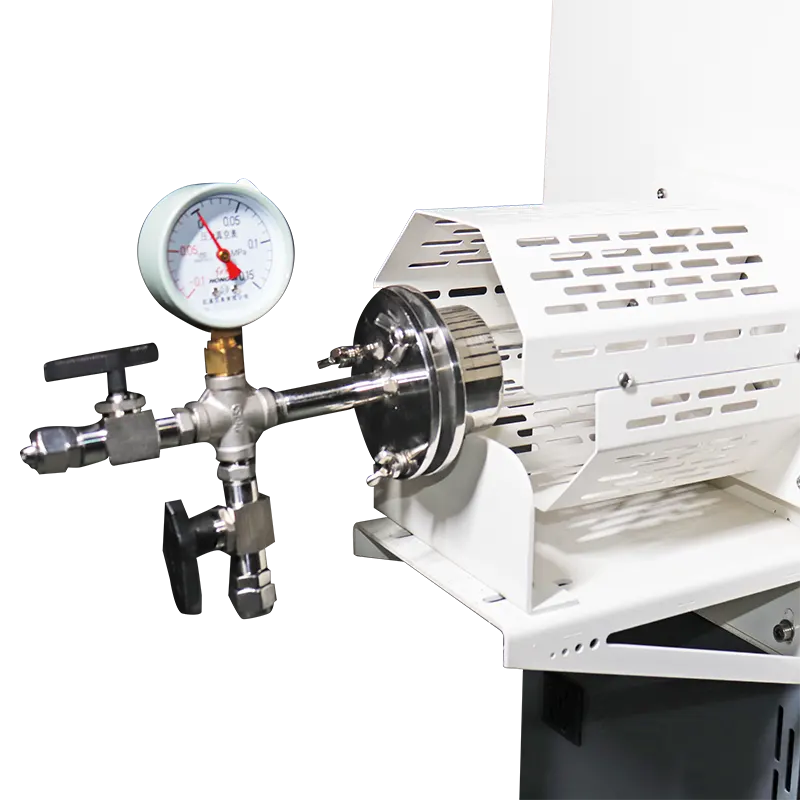
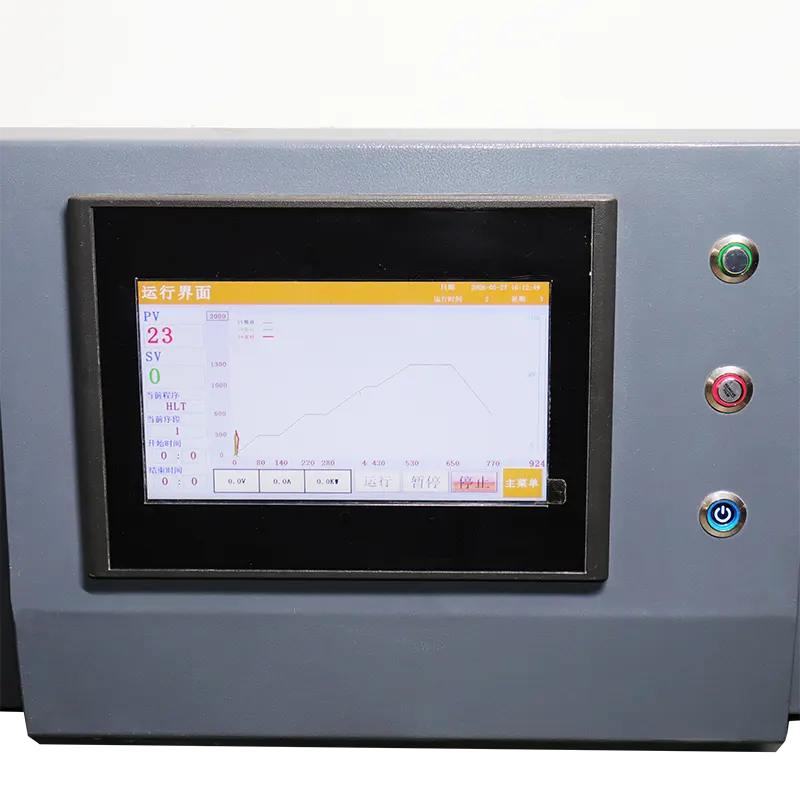
The working principle is straightforward: after loading the sample into the tube, the system is sealed with stainless steel flanges equipped with vacuum-tight O-rings. A vacuum pump (e.g., rotary vane pump or molecular pump) evacuates the tube to a vacuum level as low as 6.67×10⁻⁵ Pa. Then, a programmable PID controller (often 30-segment) regulates the heating rate (typically 1–20°C/min) and temperature profile, while an optional inert gas flow (argon, nitrogen, or hydrogen) is introduced to create a specific atmosphere. The combination of high temperature, vacuum, and gas control allows users to achieve precise thermal treatments without oxidation or contamination.
Main Types and Classifications
Vacuum tube furnaces can be classified by tube orientation, heating zone configuration, and maximum temperature:
By Tube Orientation
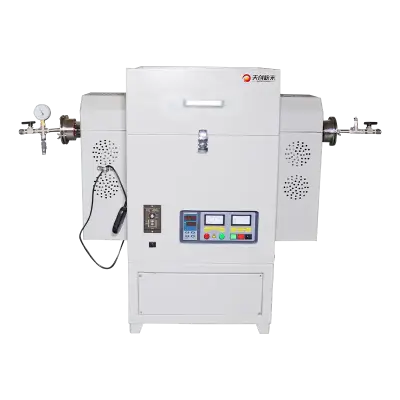
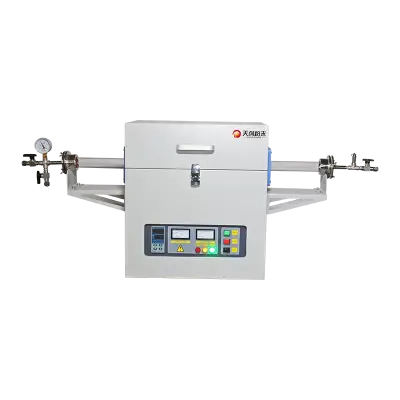
- Horizontal Tube Furnace: The tube is placed horizontally. This is the most common type for general sintering and annealing applications. It allows easy sample loading and continuous processing with a boat or pusher system.
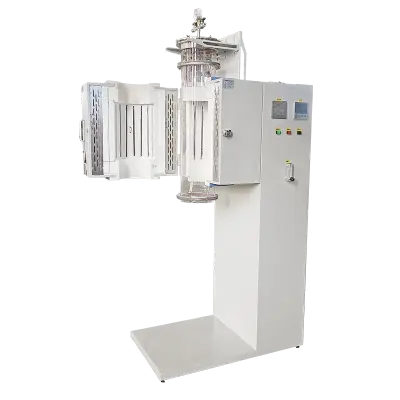
- Vertical Tube Furnace: The tube is oriented vertically. This design is ideal for gravity-assisted processing such as melting, quenching, or crystal growth, where the sample can be suspended or dropped through the hot zone.
- Rotary Tube Furnace: The tube rotates slowly, providing continuous mixing of powder samples. It is widely used for calcination or heat treatment of granular materials, ensuring uniform exposure to the atmosphere.
By Heating Zone and Temperature
- Single-zone tube furnaces: Have one heating zone with a uniform temperature profile; suitable for simple sintering or annealing.
- Multi-zone tube furnaces: Feature two or more independently controlled heating zones, allowing a temperature gradient or longer uniform hot zone. These are essential for CVD or thin-film deposition where substrate temperature uniformity is critical.
- Low-to-medium temperature models (up to 1200°C): Use quartz tubes and Fe-Cr-Al-Mo heating elements; economical for routine laboratory work.
- High-temperature models (1400°C–1800°C): Use corundum tubes and SiC or MoSi₂ heating elements; necessary for advanced ceramics and refractory metals.
- Ultra-high-temperature models (above 1800°C): Employ tungsten or graphite heating elements and graphite tubes, requiring water-cooled vacuum chambers.
Key Performance Indicators and Selection Criteria
When selecting a vacuum tube furnace, users should pay attention to the following specifications:
- Maximum temperature and working temperature: The rated maximum temperature (e.g., 1200°C, 1600°C, 1800°C) and the recommended continuous working temperature (usually 100–200°C lower). Overheating accelerates wear of heating elements and tube materials.
- Temperature uniformity and accuracy: High-end models offer ±1°C accuracy and uniformity over a specified length. PID controllers with 30-segment programmable profiles are standard for complex heat treatments.
- Heating rate: Typically 0–20°C/min, but some models allow faster rates with special power supply. Faster heating saves time but may cause thermal shock to the tube or sample.
- Tube dimensions and material: Diameter (e.g., 40mm, 60mm, 80mm, 100mm) and length (e.g., 300mm to 1200mm). Quartz tubes are suitable up to 1200°C, while corundum tubes can withstand higher temperatures and corrosive atmospheres.
- Vacuum level: Rough vacuum (10⁻¹ Pa) for general degassing, high vacuum (10⁻³ Pa) for oxygen-sensitive materials, and ultra-high vacuum (10⁻⁵ Pa) for advanced thin-film processes.
- Sealing system: Stainless steel flanges with O-rings or metal gaskets. Quick-release flanges (KF style) are convenient for frequent sample changes.
- Safety features: Over-temperature protection, leakage detection, door interlock, and automatic shutdown. These are crucial for unattended operation.
- Automation and connectivity: Some models offer RS485/computer interface for remote monitoring and data logging, beneficial for quality control and research.
Application Fields and Selection Advice
Vacuum tube furnaces are indispensable in the following fields:
- Materials science research: Sintering of ceramics, annealing of metals, and synthesis of nanomaterials.
- Semiconductor and electronics: CVD coating, oxidation, and diffusion of silicon wafers.
- Chemical engineering: Catalytic reactions, pyrolysis, and gas-phase synthesis.
- Powder metallurgy: Sintering of metal powders under vacuum to avoid oxidation.
- Environmental and energy: Heat treatment of battery materials, fuel cells, and carbon materials.
- Dental and medical: Sintering of dental ceramics and implants.
For selection, consider your maximum temperature requirement and the nature of your samples. If you are working with oxygen-sensitive materials, choose a model with high vacuum capability and a gas purification system. For routine laboratory work, a single-zone horizontal tube furnace with a quartz tube (up to 1200°C) is a cost-effective choice. For advanced thin-film deposition, a multi-zone vertical or horizontal tube furnace with precise gas flow control is recommended. Always check the compatibility of the tube material with your process gases and temperature range.
References
Related Products
Get In Touch
Our professional team will reply to you within one business day. Please feel free to contact us!