

What Is a Vacuum Planetary Mill Jar? A Sealed Jar for Air-Sensitive Grinding
Definition: What Is a Vacuum Planetary Mill Jar?
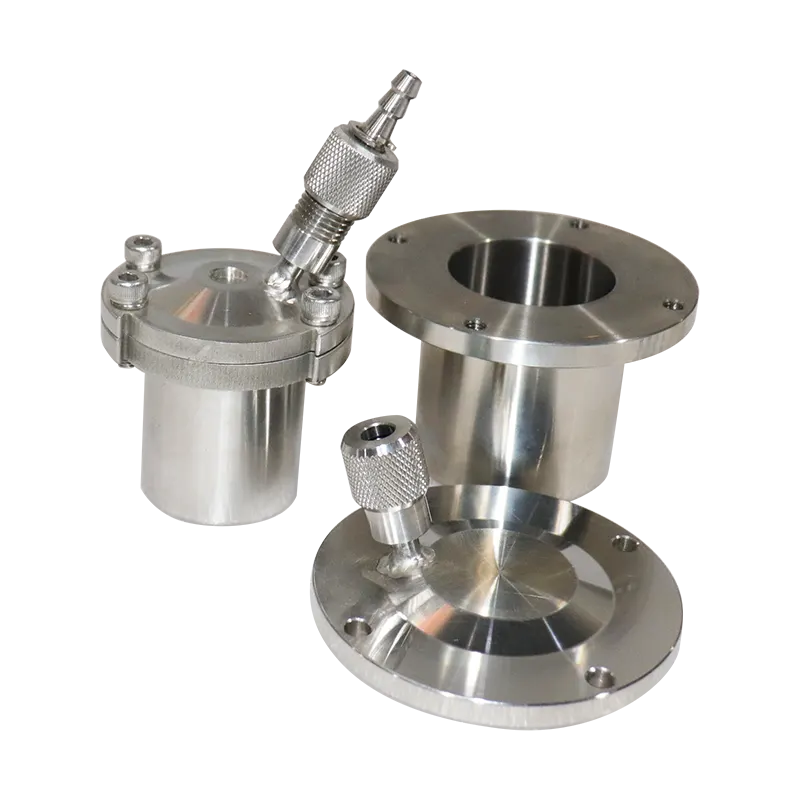
From its core, a vacuum planetary mill jar is a sealed grinding container for planetary ball mills. Laboratories use it to mill, mix, and homogenize powders while limiting contact with air, moisture, and contamination. A standard jar holds sample and media; a vacuum version adds a gas-tight lid and a port for evacuation or controlled backfilling.
Core Function and Working Principle
The jar does not create motion. It is mounted on a planetary mill, where it rotates around its own axis and the main disk. Grinding balls strike the powder and jar wall, while friction and shear refine particles. The sealed chamber keeps the internal atmosphere stable during high-energy action.
In a typical workflow, the operator loads powder and media, closes the lid, and connects the port to a vacuum pump. After evacuation, the jar may be filled with argon or nitrogen. Because it stays closed, oxygen-sensitive powders and moisture-sensitive salts can be milled with less oxidation or hydrolysis.
Key variables include jar volume, ball size and fill ratio, speed, time, and atmosphere. These factors affect final particle size, contamination, and sample recovery.
Main Types and Configurations
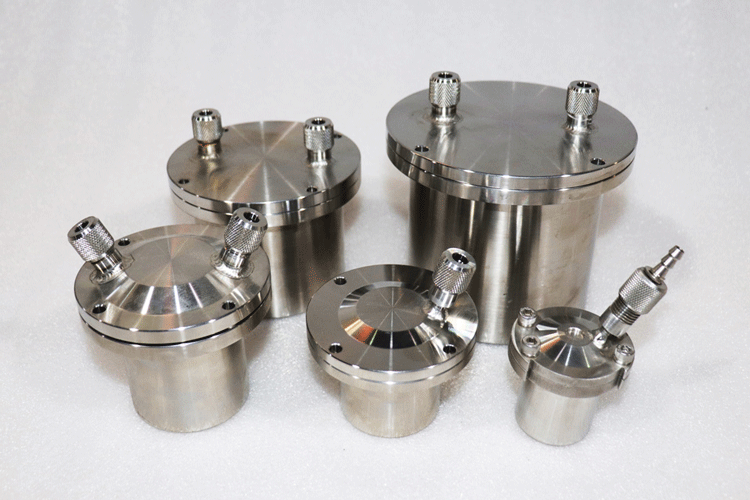
Jars come in several materials and sizes. Stainless steel offers strength; zirconia, corundum, and agate reduce metallic contamination; nylon, PTFE, and PU serve specific chemical or low-wear needs. Most units use an O-ring, a clamp or threaded lid, and a vacuum or gas port. Some include valves for evacuation and backfilling without reopening the jar.
Size must fit the mill's holders and sample load. Overfilling restricts ball movement; underfilling reduces efficiency. Leave free volume for media motion.
Key Performance Indicators and Selection Points
Review vacuum retention, lid and seal durability, material compatibility, usable volume, and cleaning ease. A jar that loses vacuum during a long run may allow air into the chamber. Inspect sealing surfaces and replace worn O-rings before they affect results.
Media choice also matters. Dense balls suit hard powders, and smaller balls support finer grinding, but the media must not react with the sample. Check whether residue can be removed from corners and ports when switching materials.
For repeated work, quick-clamp lids, clear labeling, and compatible fittings improve safety. Follow the manufacturer's limits for speed, pressure, and temperature.
Applications and Selection Advice
These jars are used in materials research, battery and catalyst development, metal powder processing, ceramics, and geochemistry. They help when a sample must stay dry, oxygen-free, or protected from humidity. For stable powders, a standard jar may suffice; for reactive samples, a vacuum jar provides more control.
Match the jar material to the powder first, then confirm vacuum performance and capacity. Establish a cleaning and seal-check routine before every run.
Reference
Product information: vacuum planetary mill jar.
Related Products
Get In Touch
Our professional team will reply to you within one business day. Please feel free to contact us!