
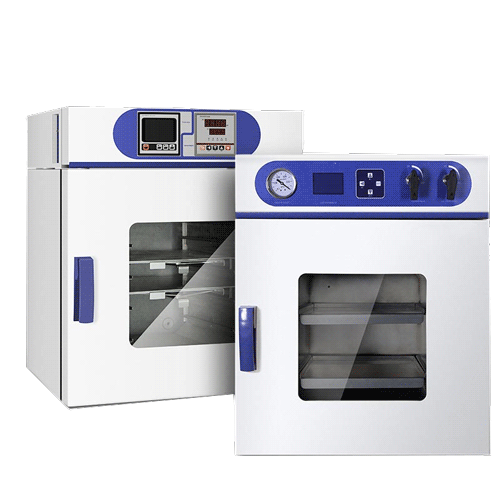
What is a Vacuum Drying Oven? A Specialized Equipment for Gentle Drying of Heat-Sensitive Materials Under Reduced Pressure

Introduction
At its core, a vacuum drying oven is a specialized heating device that removes moisture or solvents from materials under a reduced-pressure environment. Industries such as pharmaceuticals, biochemistry, chemical engineering, agriculture, and materials science use it to dry heat-sensitive, easily decomposed, easily oxidized, or complex-component substances safely and efficiently. By lowering the chamber pressure, the boiling point of water or solvents is significantly reduced, allowing gentle drying at low temperatures without damaging the product.
Core Function and Working Principle
The primary function of a vacuum drying oven is to transform a wet or moist material into a dry, stable state by removing volatile components. The process takes place inside a sealed chamber where a vacuum pump creates a negative pressure, typically down to 0.098 MPa (below 133 Pa). Under such low pressure, the boiling point of water drops to around 40–60°C, enabling rapid evaporation without exposing the material to high temperatures.
The oven is equipped with electric heating elements arranged around the chamber walls or shelves. The heat is transferred to the material via conduction (through the shelves) and radiation. A microcomputer-based temperature controller maintains the set temperature with a fluctuation of ±1°C, while a vacuum gauge monitors the chamber pressure. The combination of vacuum and controlled heating accelerates the drying process and prevents oxidation or thermal degradation.
Key Components and Technologies
Chamber Construction
Most vacuum drying ovens feature a rectangular or cylindrical chamber made of stainless steel (e.g., 1Cr18Ni9Ti) to ensure corrosion resistance and easy cleaning. The outer casing is made of cold-rolled steel with a durable paint finish. High-quality mineral wool insulation, typically 80–100 mm thick, keeps the outer surface temperature at room temperature +25°C or lower during operation.
Door and Sealing System
The door is equipped with a tempered glass observation window (often double-layer for safety) and a silicone rubber gasket that provides a high-vacuum seal. A manual latch mechanism allows the door to be tightly closed, ensuring no leakage during the drying cycle.
Vacuum Pump and Control
Depending on the model, the oven may come with a built-in or external vacuum pump. For example, larger models like DZF-6090 and DZF-6210 include a 2XZ-4 rotary vane pump. The vacuum level is typically displayed on a mechanical pointer gauge or a digital display. Some advanced models offer programmable vacuum cycles to further improve drying efficiency.
Key Performance Indicators and Selection Criteria
When choosing a vacuum drying oven, users should consider the following factors:
- Working Temperature Range: Most ovens cover RT+10°C to 250°C, with temperature resolution of 0.1°C and fluctuation of ±1°C. For extremely heat-sensitive materials, a lower maximum temperature may be sufficient.
- Vacuum Degree: A typical ultimate vacuum is below 133 Pa (1 Torr). Some models can achieve deeper vacuum levels for faster drying.
- Chamber Volume: Common sizes range from 20 L (e.g., DZF-6020: 300×300×275 mm) to 210 L (DZF-6210: 560×590×640 mm). The choice depends on the batch size and throughput requirements.
- Heating Power and Control: Power consumption varies from 350 W to 2000 W. Microcomputer PID controllers with digital display and self-tuning capability ensure precise temperature control.
- Number of Shelves: Standard configurations include 1 to 3 shelves, and more shelves can be added to increase capacity.
- Material of Construction: Stainless steel is recommended for corrosive or hygroscopic materials; for general use, a steel chamber with anti-corrosion coating may be adequate.
Applications and Selection Advice
Vacuum drying ovens are widely used in laboratories, research institutes, and production facilities for:
- Pharmaceuticals: Drying of active pharmaceutical ingredients (APIs), vitamins, and herbal extracts that degrade at high temperatures.
- Chemical Engineering: Drying of catalysts, polymers, and fine chemicals that are sensitive to oxygen or moisture.
- Biochemistry and Agriculture: Drying of biological samples, enzymes, and food products while preserving their activity and nutrients.
- Materials Science: Drying of powders, nanomaterials, and electronic components to remove residual solvents without causing structural changes.
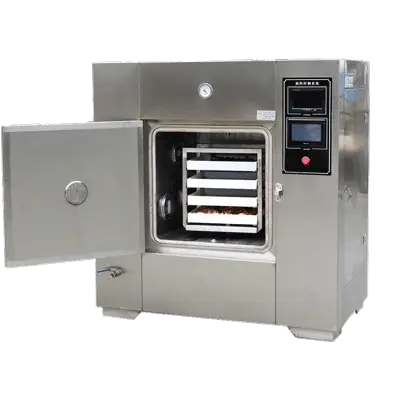
For users who primarily work with heat-sensitive or easily oxidized materials, a standard vacuum drying oven (like the DZF series) is an excellent choice. If faster drying is required, consider a microwave vacuum drying oven that combines microwave heating with vacuum. For freeze-drying applications, a vacuum freeze-drying oven is more suitable.
References
- Product page: Vacuum Drying Oven
- Related product: Circulation Oven
- Related product: Microwave Vacuum Drying Oven
- Related product: Vacuum Freeze-Drying Oven
Related Products
Get In Touch
Our professional team will reply to you within one business day. Please feel free to contact us!