

What is a Trough Mixer? A Professional Mixing Equipment for Uniform Powder Blending in Laboratories and Industries
Introduction
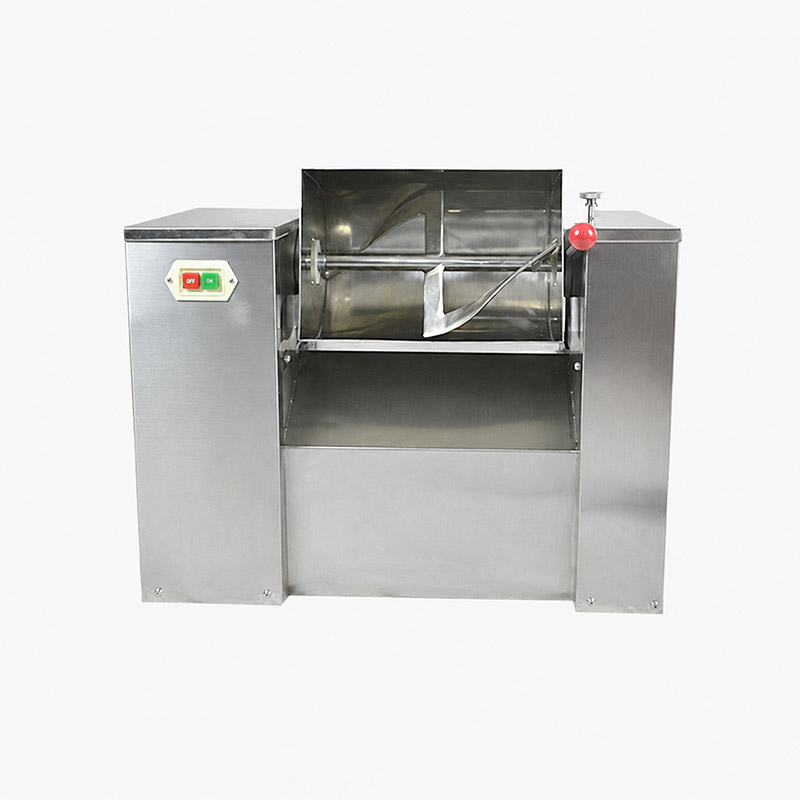
From the core perspective, a trough mixer is a professional mixing equipment widely used in laboratories and industries to achieve uniform blending of dry powders, granules, and even fine abrasive materials. With its distinctive U-shaped trough and rotating mixing elements, it efficiently combines multiple components into a homogenous mixture, making it an essential tool for formulation development, quality control, and small-scale production.
This article will explore the working principle, key features, selection criteria, and application fields of the trough mixer, providing a comprehensive FAQ-style guide for professionals in powder technology.
Core Function and Working Principle
The primary function of a trough mixer is to transform a mixture of two or more solid components from an initial segregated state into a uniform, homogeneous final blend. The core working mechanism relies on the rotation of mixing blades, paddles, or a helical ribbon inside a stationary U-shaped trough. As the mixing element rotates, it lifts, shears, and re-circulates the material, creating convective, shear, and diffusive mixing actions.
Key process parameters that influence the final product quality include the rotational speed of the mixing element, the mixing time, the filling level of the trough (typically 30-70% of total volume), and the material properties such as particle size, density, and flowability. Proper selection of these parameters ensures optimal mixing uniformity and prevents segregation or over-mixing.
Key Features and Types
Although the trough mixer is a single category, it can be classified based on the mixing element design:
1. Ribbon-Type Trough Mixer
This type features a double helical ribbon that moves material in axial and radial directions simultaneously. It is ideal for gentle mixing of fragile or high-density powders and is commonly used in pharmaceutical and food industries.
2. Paddle-Type Trough Mixer
Equipped with solid paddles or blades, this design is more robust and suitable for mixing abrasive or sticky materials. It provides higher shear forces, making it effective for de-agglomeration and coating applications.
3. Plow-Type Trough Mixer
Using plow-shaped mixing elements, this variant creates a fluidized bed-like motion, enhancing mixing efficiency for cohesive powders. It is often used in chemical and construction material processing.
All trough mixers share common features: a sealed trough design to prevent dust leakage, easy-cleaning access ports, and the option for jacketed heating or cooling. Some models also include a chopper or breaker for breaking lumps.
Key Performance Indicators and Selection Guide
When selecting a trough mixer, consider the following critical performance indicators:
- Processing Capacity: Typical laboratory trough mixers range from 1 to 20 liters, while industrial models can handle up to several hundred liters per batch.
- Mixing Uniformity: The coefficient of variation (CV) for well-mixed products can be as low as 2-5%, depending on material properties and process parameters.
- Speed Control: Variable speed drives allow optimization of mixing intensity for different materials, preventing damage to fragile particles.
- Sealing and Dust Control: High-quality trough mixers feature a tightly sealed lid and gaskets to prevent dust emission and cross-contamination.
- Cleaning and Maintenance: Quick-release clamps, removable troughs, and smooth interior surfaces facilitate easy cleaning and batch changeover.
- Automation: Programmable logic controllers (PLC) and touch-screen interfaces enable automatic mixing cycles, recipe storage, and data logging for reproducible results.
For laboratory and pilot-scale applications, a compact trough mixer with a transparent lid (e.g., acrylic) allows visual monitoring of the mixing process. For production, heavy-duty stainless steel construction with sanitary design is recommended.
Application Fields and Recommendations
Trough mixers find extensive use in the following industries:
- Pharmaceutical: Blending of active pharmaceutical ingredients (APIs) with excipients, granulation, and tablet press feed preparation.
- Chemical: Mixing of catalysts, pigments, additives, and fine chemicals.
- Food and Feed: Uniform blending of powdered ingredients, flavors, and premixes.
- Materials Science: Homogenization of ceramic powders, metal powders, and composite materials.
- Cosmetics: Mixing of powders for face powders, eyeshadows, and dry shampoos.
For users who primarily handle free-flowing powders with similar particle sizes, a ribbon-type trough mixer is a cost-effective choice. For sticky or abrasive materials, choose a paddle-type with wear-resistant coating. If you require high precision and repeatability with automated control, opt for a model with PLC and data logging capabilities.
References
Related Products
Get In Touch
Our professional team will reply to you within one business day. Please feel free to contact us!