

What is a Stainless Steel Vacuum Glove Box? A Sealed Enclosure for Moisture and Oxygen-Sensitive Materials Processing
What is a Stainless Steel Vacuum Glove Box?
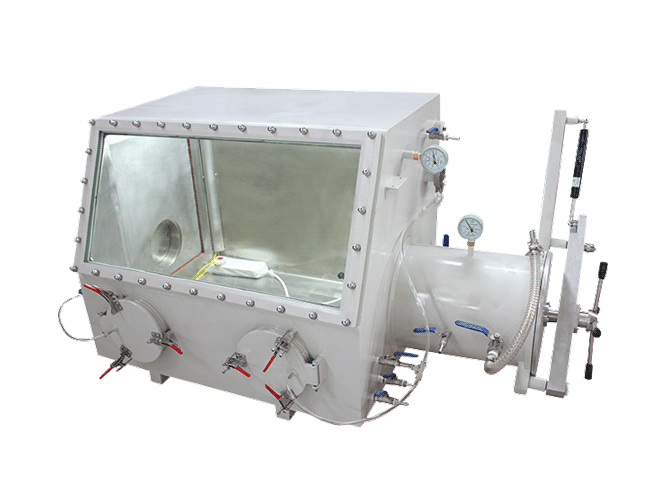
At its core, a stainless steel vacuum glove box is a specialized sealed enclosure designed for handling materials that are highly sensitive to moisture, oxygen, or dust. Researchers and manufacturers use it to create and maintain an ultra-pure inert atmosphere (typically argon or nitrogen) inside the working chamber, enabling precise manipulation of samples without exposure to ambient air. The device gets its name from the built-in gloves that allow operators to perform tasks inside the sealed environment, and the vacuum antechamber that facilitates airlock transfer of materials.
Core Function and Working Principle
The primary function of a stainless steel vacuum glove box is to transform a normal ambient environment into an inert gas atmosphere with extremely low levels of water vapor and oxygen. The process begins by placing the sample or equipment into the main chamber through a vacuum antechamber (also called a transfer chamber). The antechamber can be evacuated and refilled with inert gas multiple times to remove any residual air before opening the inner door, ensuring that the main chamber remains uncontaminated.
Inside the main chamber, the inert gas is continuously circulated through a purification system (if equipped) that removes trace H₂O and O₂ using molecular sieves and copper catalysts. The gas is driven by a blower or fan, and the purification columns can be regenerated automatically when saturated. The glove box maintains a slight positive pressure (typically 0.5–5 mbar) to prevent outside air from leaking in. Operators access the chamber via built-in gloves, which are sealed to the front panel and allow precise manual operations.
Key parameters that affect the final atmosphere quality include the leak rate of the chamber, the efficiency of the purification system, the vacuum level achieved in the antechamber, and the frequency of regeneration. A well-maintained stainless steel vacuum glove box can achieve and sustain H₂O and O₂ concentrations below 1 ppm (parts per million), meeting the stringent requirements of advanced research.
Core Components and Key Technologies
A stainless steel vacuum glove box consists of several critical subsystems, each contributing to its overall performance and reliability:
Main Chamber
Constructed from high-quality 304 or 316L stainless steel, the main chamber provides excellent corrosion resistance, structural integrity, and low outgassing. The chamber is typically welded and polished to minimize surface roughness, reducing the risk of particle contamination. Windows are made of tempered glass or acrylic, allowing clear visibility of the interior.
Vacuum Antechamber
Also known as the load lock or transfer chamber, this component is essential for introducing samples and tools without compromising the atmosphere. The antechamber can be evacuated to a high vacuum (e.g., 10⁻² mbar) using a rotary vane vacuum pump, then backfilled with inert gas. A double-door interlock system ensures that one door must be closed before the other can open, preventing direct air ingress.
Glove Ports and Gloves
Standard glove boxes have two or more glove ports, each fitted with replaceable, chemical-resistant gloves (e.g., butyl rubber, neoprene, or hypalon). The gloves are sealed to the ports using O-rings or clamps, providing a flexible yet airtight interface for manual operation.
Gas Purification System (Optional but Recommended)
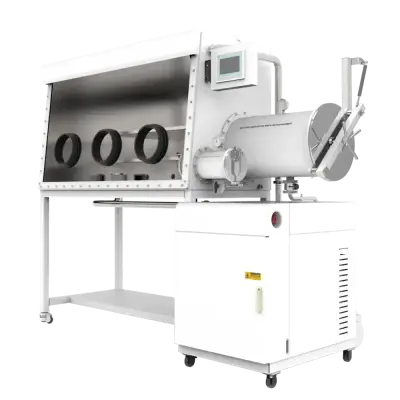
For applications requiring the highest purity, a glove box with purification system integrates a closed-loop circulation loop, a blower, and a purifier column containing molecular sieves (for water removal) and copper catalyst (for oxygen removal). The system can continuously maintain H₂O and O₂ levels below 1 ppm and often includes automatic regeneration, pressure control, and data logging.
Control System
Modern glove boxes are equipped with PLC-based controllers and touchscreen interfaces. They allow operators to set pressure, gas purge cycles, regeneration parameters, and alarm thresholds. Many models also include sensors for continuous monitoring of oxygen and moisture levels, with real-time data output.
Key Performance Indicators and Selection Criteria
When choosing a stainless steel vacuum glove box, evaluate the following metrics to ensure it meets your specific needs:
- Atmosphere Purity: The achievable H₂O and O₂ levels. Standard models reach <1 ppm; high-end systems can achieve <0.1 ppm. The leak rate of the chamber (measured in vol%/h) directly impacts long-term stability.
- Antechamber Size and Vacuum Capability: Larger antechambers accommodate bigger samples but require more powerful pumps. Typical vacuum levels are 10⁻² to 10⁻³ mbar.
- Circulation and Purification Capacity: The flow rate of the gas circulation (e.g., 50–100 m³/h) and the purifier's capacity (volume of catalyst) determine how quickly the system recovers after a contamination event.
- Automation and Data Management: Features like automatic pressure control, programmable purge cycles, regeneration scheduling, and data logging enhance usability and reproducibility.
- Maintenance and Consumables: Consider the cost and frequency of replacing gloves, filters, and purification catalyst. Some systems offer low-maintenance designs with long-life purifiers.
- Physical Dimensions: Chamber size (e.g., 1200mm × 750mm × 900mm) and number of glove ports should match your intended tasks. Custom sizes are often available.
Application Areas and Selection Recommendations
Stainless steel vacuum glove boxes are widely used in research and production environments where air-sensitive materials are handled. Common applications include:
- Lithium-ion battery R&D: Electrode preparation, electrolyte filling, and cell assembly under inert gas.
- Organic electronics (OLED, PLED): Device fabrication and encapsulation in moisture-free conditions.
- Semiconductor and MOCVD: Handling of precursor materials and wafer processing.
- Nanomaterial synthesis: Reaction of air-sensitive metal-organic compounds.
- Pharmaceutical and biotechnology: Storage of hygroscopic drugs or anaerobic culture studies.
- Material characterization: Sample preparation for XPS, FTIR, and other surface-sensitive techniques.
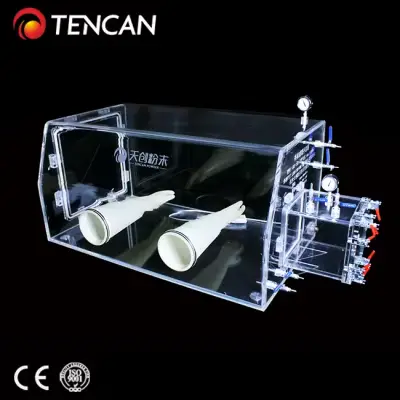
For users who require the highest purity and automated operation, a glove box with purification system is the recommended choice. If budget is limited and the application tolerates slightly higher residual levels (e.g., <100 ppm), an acrylic glove box may be a cost-effective alternative for basic inert gas handling. For facilities that need to maintain multiple glove boxes or replace a worn-out purification unit, a standalone purification system box can be added to existing setups.
References
Related Products
Get In Touch
Our professional team will reply to you within one business day. Please feel free to contact us!