

What is a Stainless Steel Vacuum Glove Box? A Controlled Environment Chamber for Air-Sensitive Material Processing
What is a Stainless Steel Vacuum Glove Box?
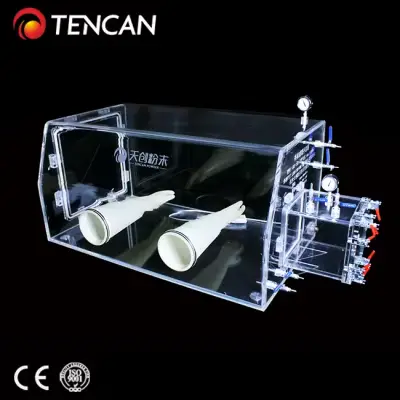
At its core, a stainless steel vacuum glove box is a professional sealed enclosure designed to create and maintain a controlled inert atmosphere. Researchers in materials science, chemistry, battery manufacturing, and semiconductor fields use it to handle air-sensitive materials, perform synthesis under argon or nitrogen, and protect samples from moisture, oxygen, and contamination. The combination of a robust stainless steel chamber, integrated vacuum system, and gas purification ensures that the internal environment can reach extremely low impurity levels, often below 1 ppm of H2O and O2.
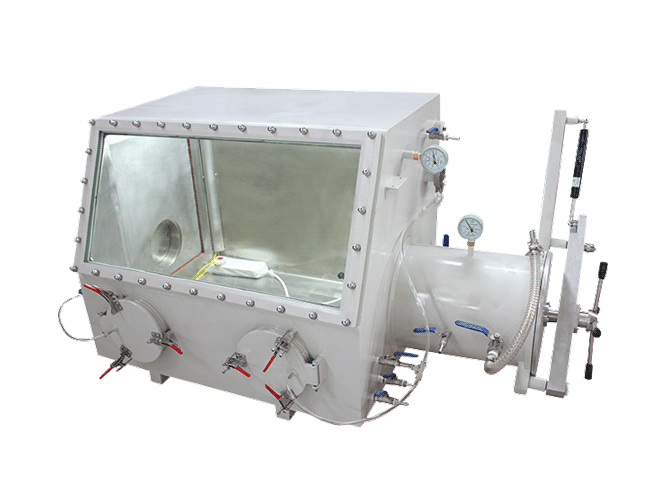
Core Function & Working Principle
The basic function of a stainless steel vacuum glove box is to transform a normal laboratory atmosphere into a defined, ultra-pure inert gas environment. The equipment consists of a main chamber with glove ports, a transition chamber (airlock), a vacuum pump, and a gas purification system. The working principle involves first evacuating the main chamber and transition chamber using the vacuum pump to remove ambient air, then refilling with high-purity inert gas such as argon or nitrogen. During operation, the gas purification system continuously circulates the internal atmosphere through a catalyst column to remove trace moisture and oxygen, maintaining the set purity level.
Key parameters that influence the final environment quality include the vacuum leak rate (typically ≤0.05 vol%/h), the purification system's capacity (e.g., GP-20 inert gas purifier), and the vacuum pump's ultimate pressure (e.g., 2×10⁻³ mbar). The transition chamber allows samples and tools to be introduced without breaking the main chamber's atmosphere, minimizing contamination.
Key Components & Technical Features
Modern stainless steel glove boxes are built with high-quality 304 stainless steel cabinets and tempered glass or polycarbonate viewing windows. The following are the core components and their functions:
- Main Chamber & Transition Chamber: Available in standard sizes (e.g., 1220×750×900 mm, 1500×1000×900 mm, etc.). The transition chamber is equipped with independent vacuum and gas supply ports.
- Vacuum Pump: Often a BOC EDWARDS RV8 or similar oil-sealed rotary vane pump with oil mist filter and gas ballast, capable of pumping down to 2×10⁻³ mbar.
- Gas Purification System: The GP-20 system (or equivalent) removes moisture and oxygen to below 1 ppm, using a closed gas cycle with no oil contamination.
- Control System: Siemens micro-controller and touch screen interface for easy operation, data logging, and self-diagnosis. Pedal pressure control replaces manual regulation.
- HEPA Filter: Ensures the internal atmosphere is free of particulates, critical for cleanroom-level applications.
Key Performance Indicators & Selection Criteria
When selecting a stainless steel vacuum glove box, consider the following metrics:
- Purity Level: Look for H2O and O2 content below 1 ppm. The leak rate should be ≤0.05 vol%/h.
- Chamber Size: Choose from standard lengths of 1220, 1500, 1800, or 2400 mm, with widths of 750, 1000, or 1200 mm, and height 900 mm. Custom designs are often available.
- Vacuum Performance: Pump down time and ultimate vacuum (e.g., 2×10⁻³ mbar) affect how quickly you can switch between inert gas and air.
- Automation & Data Logging: Advanced models include Siemens touch screen, automatic pressure control, and data recording for traceability and reproducibility.
- Ease of Maintenance: Gas purification columns, vacuum pump, and filters should be accessible for replacement. Stainless steel construction with O-ring sealing ensures long life and easy cleaning.
Applications & Selection Advice
Stainless steel vacuum glove boxes are widely used in lithium-ion battery research (assembly of cells in dry atmosphere), organic electronics (OLED fabrication), pharmaceutical R&D (handling air-sensitive compounds), and nanotechnology (synthesis of nanomaterials). Compared to acrylic glove boxes, the stainless steel version offers superior gas barrier properties, higher vacuum capability, and better chemical resistance. For users who require the highest purity (e.g., below 1 ppm H2O/O2), a model with a dedicated purification system is essential. For occasional use with less stringent requirements, an acrylic glove box may be a cost-effective alternative. Always verify the compatibility of the glove box materials with your specific chemicals and processes.
References
Related Products
Get In Touch
Our professional team will reply to you within one business day. Please feel free to contact us!