
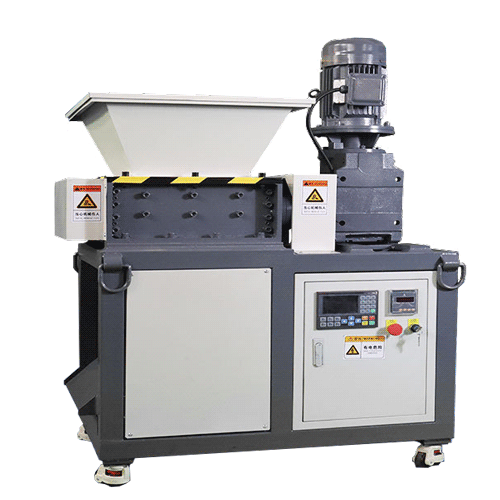
What is a Small Shredder? A Compact Crushing Device for Laboratory and Small-Scale Material Reduction

What is a Small Shredder? A Compact Crushing Device for Laboratory and Small-Scale Material Reduction
At its core, a small shredder is a specialized crushing device designed for laboratories, research institutions, and small-scale production facilities. It is used to reduce the size of various materials—such as plastics, rubber, wood, paper, electronic waste, and soft metals—into smaller, uniform fragments or chips. Unlike large industrial shredders, compact models focus on precision, low noise, and minimal dust generation, making them ideal for sample preparation and small batch processing.
Core Function and Working Principle
The primary function of a small shredder is to transform bulky or oversized materials into smaller, manageable pieces through a combination of cutting, shearing, and tearing actions. The machine typically consists of a feed hopper, a crushing chamber with rotating blades, a screen mesh, and a discharge outlet.
Materials are fed into the hopper and enter the crushing chamber, where one or more rotating shafts equipped with cutting blades operate at a low to moderate speed. The blades interlock with stationary counter-knives or another set of rotating blades to shear the material. The shredded particles pass through a screen mesh at the bottom, which determines the final particle size. The speed and torque are adjustable, allowing operators to control the degree of size reduction.
Key parameters influencing the final output include blade design (e.g., hook-shaped, saw-tooth), shaft speed, screen aperture size, and the number of shafts. For example, higher torque at lower speeds is better for tough materials, while higher speeds can handle softer or more brittle substances.
Main Types of Small Shredders
Single-Shaft Shredder
Single-shaft shredders feature a single rotor with blades that rotate against a stationary bed knife. They are commonly used for processing plastics, wood, and paper. The machine is simple in design, easy to maintain, and suitable for uniform materials. A screen controls the output size.
Double-Shaft Shredder
Double-shaft shredders have two parallel shafts rotating in opposite directions, each equipped with blades. The intermeshing action provides higher shear force, making them effective for tougher materials like rubber, tires, and electronic waste. They can handle larger feed sizes and produce a more consistent output.
Four-Shaft Shredder
Four-shaft shredders use two sets of shafts (two primary and two secondary) to achieve finer and more uniform particle sizes. This design is ideal for materials that require extra fine grinding, such as confidential documents, medical waste, or composite materials. The multi-stage crushing reduces the load on each shaft, extending blade life and reducing energy consumption.
When selecting a type, consider the material's hardness, toughness, and desired output size. Single-shaft units are cost-effective for lighter materials; double-shaft units offer versatility; four-shaft units provide high precision and low fines.
Key Performance Indicators and Selection Criteria
When choosing a small shredder, evaluate the following technical specifications:
- Throughput Capacity: Typically measured in kilograms per hour (kg/h). Laboratory models range from 10–100 kg/h, while small production units can reach 200–500 kg/h.
- Power and Torque: Motor power (e.g., 0.75 kW to 5.5 kW) and torque rating determine the machine's ability to process hard or bulky materials. Higher torque is essential for cutting thick plastics or metal.
- Blade Material and Durability: Blades are often made of hardened tool steel (e.g., 9CrSi, SKD-11) or tungsten carbide. Check for easy replacement and availability of spare parts.
- Noise and Dust Control: Many small shredders feature sound-dampening enclosures and dust-sealed chambers. This is critical for laboratory environments.
- Automation and Safety: Look for features like overload protection, emergency stop buttons, and reverse rotation to clear jams. Some models offer touch-screen control and programmable cycle times.
- Maintenance and Cleaning: Quick-release screens and easy-access chambers reduce downtime. Removable blade assemblies simplify sharpening or replacement.
Application Fields and Selection Advice
Small shredders are widely used in:
- Sample Preparation: Grinding plastics, rubber, or electronic components for chemical analysis or material testing.
- Recycling Research: Processing small batches of waste materials for feasibility studies.
- Pharmaceutical and Food Industry: Reducing herbs, tablets, or food packaging for extraction or blending.
- Educational and R&D Labs: Teaching material science, waste management, or mechanical engineering.
For users who primarily shred soft plastics, paper, or cardboard, a single-shaft shredder is a cost-effective choice. Laboratories dealing with mixed or tough materials (e.g., rubber, circuit boards) should opt for a double-shaft or four-shaft model. If fine particle size is critical, a four-shaft unit with a fine screen is recommended. Always match the throughput capacity to your expected sample volume to avoid overloading or underutilization.
References
Related Products
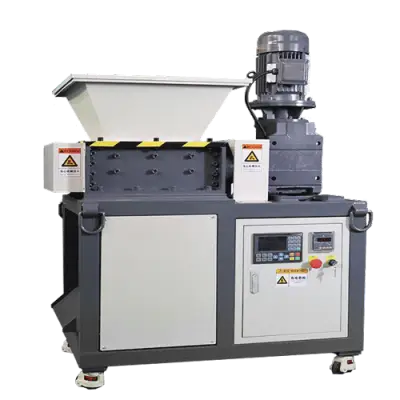
Get In Touch
Our professional team will reply to you within one business day. Please feel free to contact us!