

What is a Small Shredder? A Compact Crushing Machine for Laboratory and Small-Scale Material Processing
What is a Small Shredder?
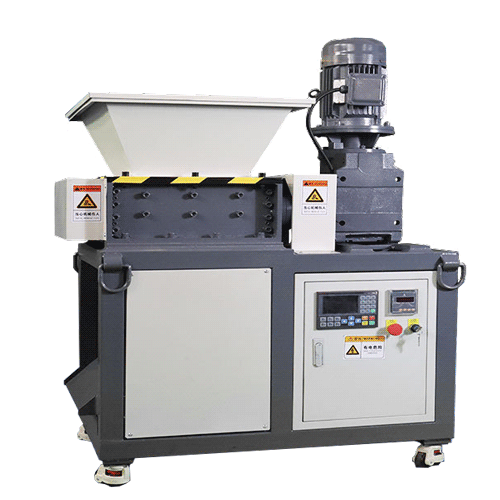
At its core, a small shredder is a compact, electrically driven crushing machine used in laboratories, small workshops, and recycling facilities to reduce the size of various materials—from plastics and wood to paper and soft minerals. It transforms large, bulky items into smaller fragments or chips, facilitating further processing, recycling, or analysis. Designed for low to medium throughput, it combines portability with efficient size reduction.
Core Function and Working Principle
The primary function of a small shredder is to convert heterogeneous feed materials into a uniform, smaller particle size. The working principle typically involves a rotating shaft equipped with blades, hammers, or cutters that shear, impact, or tear the material against a fixed screen or anvil. The feed is introduced through a hopper, and the shredded product passes through a screen with controlled openings, determining the final particle size.
Key mechanisms include:
- Cutting/Shearing: Common in dual-shaft or single-shaft models, where interlocking blades cut the material like scissors.
- Impact/Breaking: In hammer mill-style shredders, high-speed rotating hammers strike the material until it fractures.
- Crushing: Some models use a combination of rotating blades and a fixed counter-blade to compress and break the material.
Critical process parameters include motor power (typically 0.5-3 kW), blade speed, screen aperture size, and feed rate. These parameters directly affect output particle size, throughput, and energy consumption. For example, finer screens produce smaller particles but reduce throughput.
Key Components and Design Features
While the small shredder category encompasses various designs, most share these core components:
| Component | Function |
|---|---|
| Hopper | Feeds material into the shredding chamber safely. |
| Shredding Chamber | Houses the rotating blades or hammers; lined with wear-resistant material. |
| Rotating Blades/Hammers | The primary cutting or impacting elements; made of hardened steel or alloy. |
| Screen/Grid | Controls the final particle size; easily replaceable for different granulometries. |
| Motor & Drive System | Provides rotational power; often gear-driven for torque. |
| Control Panel | Start/stop, speed control, emergency stop, overload protection. |
| Collection Bin | Collects shredded material, often with a dust-tight seal. |
Design variations include single-shaft vs. dual-shaft configurations, open vs. enclosed rotors, and the presence of soundproofing or dust extraction ports. For laboratory environments, features like easy cleaning, compact footprint, and low noise are prioritized.
Key Performance Indicators and Selection Criteria
When selecting a small shredder, evaluate these essential metrics:
- Throughput: Typically 10-200 kg/h, depending on material density and motor power. Laboratory models often process 20-50 kg/h.
- Final Particle Size: Adjustable from 2-20 mm via screen selection. Some models achieve sub-millimeter particles with fine screens or multiple passes.
- Motor Power: Ranges from 0.5 kW to 3 kW for laboratory units. Higher power enables processing tougher materials.
- Blade Speed: Usually 100-1500 rpm. Lower speed with high torque for tough plastics; higher speed for brittle materials.
- Material of Construction: Stainless steel (304/316) for food/pharma applications; carbon steel for general industrial use.
- Safety Features: Emergency stop, interlock switches, overload protection, and thermal cut-off are critical.
- Maintenance: Quick-access blade replacement, easy screen change, and tool-free cleaning reduce downtime.
Application Areas and Selection Recommendations
Small shredders are widely used in:
- Materials Research & Quality Control: Preparing samples for chemical analysis, particle size analysis, or further grinding in a planetary ball mill.
- Plastic Recycling: Shredding plastic bottles, caps, films, and 3D printing waste for recycling or repurposing.
- Wood & Biomass Processing: Reducing wood chips, pellets, leaves, and agricultural residues for composting or biofuel.
- Paper & Document Destruction: Cross-cut shredding for secure disposal of sensitive documents.
- Pharmaceutical & Food Sample Preparation: Grinding tablets, herbs, spices, and grains for homogeneity.
For labs and small businesses, a compact, stainless steel model with variable speed control and easy screen change is recommended. For tougher materials like plastics or wood, a dual-shaft design with higher torque is preferable. Automated models with programmable timers and batch processing suit repetitive tasks.
References
- TENCAN Small Shredder Product Page: https://www.planetaryballmills.com/products/broken-series/small-shredder.html
- Related product: Multi-functional Crusher
- Related product: Plastic Crusher
Related Products
Get In Touch
Our professional team will reply to you within one business day. Please feel free to contact us!