

What is a Purification System Box? A Gas Purification Unit for Maintaining Inert Atmosphere in Glove Boxes
What is a Purification System Box?
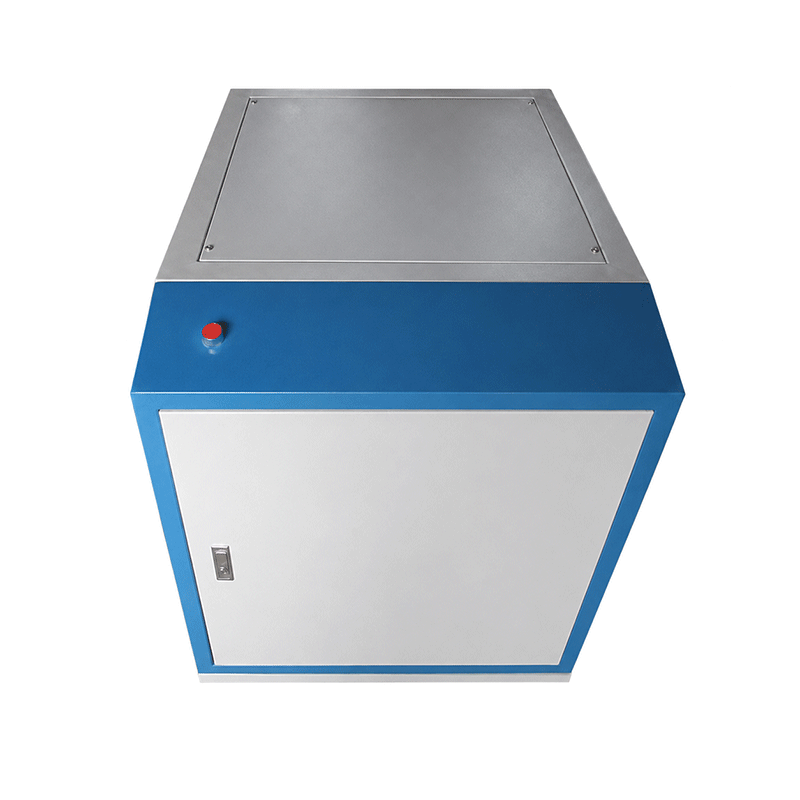
At its core, a purification system box is a specialized gas purification unit designed to maintain an ultra-low oxygen and moisture environment inside a glove box (also known as an inert atmosphere box). Laboratories and industries working with air-sensitive materials use it to continuously remove water vapor (H₂O) and oxygen (O₂) from the circulating inert gas (typically argon, nitrogen, or helium), keeping the working atmosphere at parts-per-million (ppm) or even sub-ppm levels. This ensures that reactive chemicals, battery materials, nanomaterials, or biological samples can be handled without degradation or contamination.
Core Function and Working Principle
The purification system box functions as a closed-loop gas treatment system. The glove box's interior gas is drawn by a circulation fan, passes through a pretreatment filter (removing particles), and then enters the purification column. The column contains a dual-layer adsorbent: a molecular sieve for moisture removal and a copper-based catalyst for oxygen chemisorption. As the gas flows through, H₂O and O₂ are chemically bound to the adsorbent, and the purified gas returns to the glove box. The process is continuous, maintaining the specified impurity level.
To achieve long‑term operation, the purification system box incorporates an automatic regeneration function. When the adsorbent becomes saturated, the system automatically switches to a standby column while the saturated column is heated and purged with a regeneration gas (typically a mixture of 5% hydrogen in argon). This desorbs the captured moisture and reduces the copper oxide back to metallic copper, restoring its capacity. The regeneration cycle is fully programmable via an HMI touchscreen, allowing users to set parameters such as temperature, time, and gas flow.
Key Components and Technologies
Modern purification system boxes, such as those offered by TENCAN, consist of the following critical subsystems:
- Dual purification columns – One actively purifies while the other undergoes regeneration or standby, ensuring uninterrupted operation.
- Circulation fan – A high‑efficiency, low‑noise fan that drives the gas circulation at a controlled flow rate (typically 40–100 m³/h).
- Heating elements and temperature sensors – Used during regeneration to heat the column to 250–350°C.
- HMI touchscreen controller – Displays real‑time O₂ and H₂O readings (from external sensors), column status, and allows manual/automatic control.
- Valve manifold – Solenoid valves automatically switch gas paths between purification, regeneration, and bypass modes.
Key Performance Indicators and Selection Criteria
When selecting a purification system box, consider the following specifications:
- Ultimate impurity level – The minimum achievable H₂O and O₂ concentration. High‑end systems reach <1 ppm, while standard models offer <5 ppm.
- Circulation flow rate – Determines how quickly the glove box atmosphere can be purified. Larger glove boxes require higher flow rates.
- Column capacity – The total amount of moisture and oxygen that can be adsorbed before regeneration. Measured in liters of gas or grams of adsorbent.
- Regeneration time – The time required to fully regenerate a column. Automatic systems with fast heating reduce downtime.
- Automation level – Fully automatic systems with touchscreen control are preferred for ease of use, while manual systems are more affordable.
- Compatibility with glove box materials – Ensure the purification system box can be integrated with the existing glove box (acrylic, stainless steel, etc.).
Application Areas and Selection Advice
Purification system boxes are indispensable in fields such as:
- Lithium‑ion battery research – Handling moisture‑sensitive electrolytes and electrode materials.
- Pharmaceutical and chemical synthesis – Working with air‑reactive organometallic compounds, Grignard reactions, etc.
- Material science – Preparing thin films, quantum dots, or perovskite solar cells under inert conditions.
- Nanotechnology – Storing and manipulating nanoparticles that oxidize rapidly in air.
For laboratories with moderate requirements (e.g., <10 ppm O₂/H₂O), a standard purification system box paired with an acrylic glove box is cost‑effective. For ultra‑high‑vacuum or sub‑ppm applications, a stainless steel vacuum glove box combined with a high‑capacity purification system is recommended. Always consult the manufacturer's technical data to match the system's performance with your specific workflow.
References
Related Products
Get In Touch
Our professional team will reply to you within one business day. Please feel free to contact us!