

What is a PU Roll Mill Jar? A Wear-Resistant Grinding Container for Roll Ball Mills
Introduction
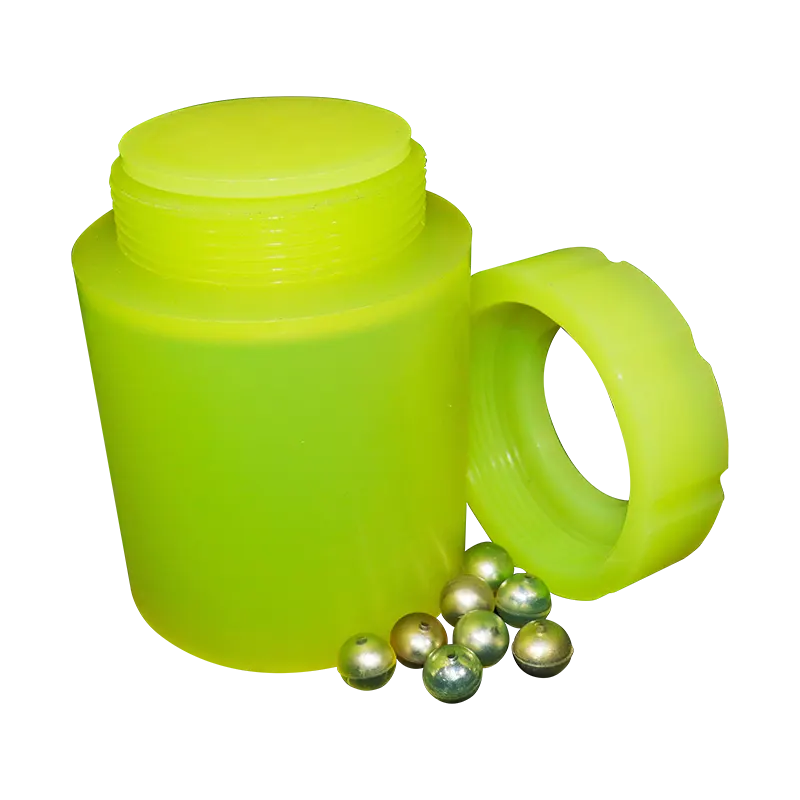
From the core, a PU roll mill jar is a specialized grinding container designed for roll ball mills, used in laboratories and small-scale production for fine grinding and mixing of materials. The polyurethane (PU) material provides excellent wear resistance, chemical resistance, and elasticity, making it an ideal choice for grinding materials that require low contamination and high durability.
Core Function and Working Principle
The primary function of a PU roll mill jar is to act as a vessel for grinding media (such as balls) and the material to be ground. When placed on a roll ball mill, the jar rotates due to the friction between the jar surface and the rotating rollers. The rotation causes the grinding media and the material to tumble, slide, and impact against each other, resulting in particle size reduction. The gentle rolling action is particularly suitable for brittle materials, and the elastic nature of PU helps to cushion impacts, reducing the risk of damage to the jar or the mill.
Key process parameters include the rotation speed, jar volume, media size, and grinding time. The PU material also offers a degree of thermal insulation, which can be beneficial for heat-sensitive materials.
Core Components and Key Technologies
Unlike traditional metal or ceramic jars, the PU roll mill jar is made entirely of high-quality polyurethane. The material properties include:
- Wear Resistance: PU has excellent abrasion resistance, prolonging the jar's lifespan even with hard grinding media.
- Chemical Resistance: It resists oils, solvents, and many chemicals, making it suitable for a wide range of materials.
- Elasticity: The flexible nature reduces noise and vibration, and protects the mill from shock loads.
- Low Contamination: PU does not introduce metallic impurities, making it ideal for purity-sensitive applications like pharmaceuticals or advanced ceramics.
The jar typically features a sealed lid with a gasket to prevent leakage, and may have a vent or valve for pressure release during wet grinding.
Key Performance Indicators and Selection Guide
When selecting a PU roll mill jar, consider the following factors:
- Capacity: Common sizes range from 0.5L to 5L or more, depending on the model.
- Grinding Media Compatibility: PU jars can be used with various media such as stainless steel, zirconia, agate, or ceramic balls.
- Temperature Range: PU typically withstands temperatures up to 80-100°C; avoid high-temperature applications.
- Sealing Performance: Ensure the lid provides a tight seal, especially for wet grinding or toxic materials.
- Cleaning and Maintenance: PU is easy to clean, but avoid abrasive cleaners that may scratch the surface.
For users who need to grind highly abrasive materials or require extreme chemical resistance, alternative materials like nylon roll mill jar or PTFE roll mill jar may be considered. However, PU offers a good balance of durability and cost-effectiveness.
Application Areas and Selection Advice
PU roll mill jars are widely used in research and development labs, quality control, and small-batch production in fields such as:
- Battery materials (e.g., electrode powders)
- Ceramics and glass
- Pigments and dyes
- Pharmaceuticals and cosmetics
- Minerals and ores
For users with high-purity requirements, PU jars are preferable over metal jars. For extremely hard materials, consider reinforced jars or ceramic-lined options. Always match the jar material with the chemical and physical properties of your sample.
References
For more details, please visit the PU roll mill jar product page.
Related Products
Get In Touch
Our professional team will reply to you within one business day. Please feel free to contact us!