

What Is a PTFE Roll Mill Jar? A Chemical-Resistant Grinding Container for Mills
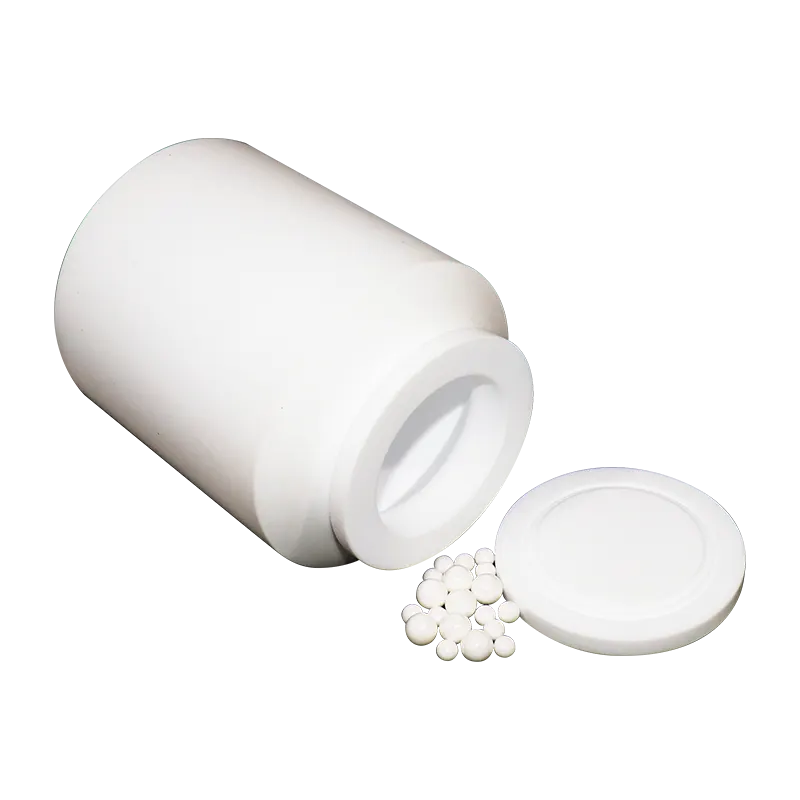
From a practical standpoint, a PTFE roll mill jar is a cylindrical grinding container made with polytetrafluoroethylene and used on a roll mill to hold a sample together with grinding media. The roll mill supplies the motion; the jar provides a chemically resistant, low-stick contact surface in which particles are reduced, blended, or dispersed. It is best understood as a sample-contact vessel rather than a complete mill. Its value comes from combining the geometry of a roll mill jar with the surface properties of PTFE, so users can process materials in a container that is easy to clean and less likely to retain fines or introduce metal contamination from the jar wall.
What a PTFE Roll Mill Jar Is and What It Does
The name describes three elements: PTFE, roll mill, and jar. PTFE is a fluoropolymer; a roll mill is a machine that rotates a cylindrical jar on powered rollers; and the jar is the vessel that contains the material and media. A PTFE roll mill jar therefore sits at the intersection of material selection and milling mechanics. It is not a new type of mill, but a specific choice of jar construction for a familiar milling platform.
PTFE is chosen for its chemical inertness and its low surface energy. In simple terms, many substances that would wet or react with a metal surface do not wet PTFE as readily, and the surface is comparatively easy to clean. This does not make the jar universally resistant to every chemical or every temperature, but it explains why PTFE is attractive for laboratory and small-scale processing where cross-contamination is a concern. The exact chemical and thermal limits depend on the PTFE grade, the sealing materials, and the supplier's recommendations.
In use, the jar is filled with the sample and a grinding medium, closed with a lid, and placed on the rollers of a roll mill. The mill turns the jar, the contents tumble, and the sample is repeatedly struck and rubbed by the moving media. The jar itself does not crush the material; it defines the chamber, the contact surface, and the sealing boundary. That distinction is important when comparing a jar with a complete milling machine. A good jar supports the process quietly by containing the load, transferring motion, and limiting unwanted interaction between the sample and the vessel.
How the Roll Milling Process Works
A roll mill is simple in mechanical terms, but the interaction among jar, media, and powder determines the result. The following subsections separate the motion, the size-reduction mechanism, and the influence of the jar material.
Rolling motion and media action
The jar rests on rotating rollers. As the rollers turn, friction rotates the jar about its horizontal axis. Inside, the grinding media is lifted along the rising wall, then falls or rolls back toward the lower side. This repeated lifting, cascading, and sliding gives the media many opportunities to contact the sample. The useful action is not a single violent blow but a large number of small interactions distributed through the bed. The jar geometry, the fill level, and the rotation speed all affect how those interactions occur.
How particles are reduced
Size reduction occurs when the moving media applies impact and shear to the particles trapped between media surfaces or between media and the jar wall. Coarse particles are first broken into smaller fragments; with continued rolling, the fragments are further refined and mixed. In a dry powder, the process also redistributes fines and can promote blending. In a liquid or slurry, the liquid carries particles into the contact zones and the process may become a combination of milling and dispersion. The result depends on the material's brittleness, hardness, and tendency to agglomerate, as well as on the media size, media density, media fill, sample load, and running time.
The jar's role in the process
The jar is the boundary of the process. Its internal diameter and length influence the path of the media; its wall surface influences friction and material adhesion; and its lid and seal determine whether fine powder or liquid remains inside. A PTFE surface can reduce sticking and make discharge easier, but PTFE is also softer than metal or many ceramics. That softness is an advantage when metal contamination must be avoided, yet it is a limitation when the media is highly abrasive or the load is severe. The jar should therefore be matched to the duty, not selected by material name alone.
Why PTFE Is Used in a Roll Mill Jar
The main reason to use PTFE is chemical resistance. Many aggressive or sensitive materials are handled in laboratories and small production batches, and users want a jar that will not readily react with the sample or retain residues from a previous batch. PTFE is also non-wetting toward many substances, so powders and slurries are less likely to cling to the wall. This can improve recovery and shorten cleaning time, especially when the sample is sticky, electrostatic, or difficult to remove from a metal surface.
A second reason is contamination control. Metal jars can wear and release iron or alloy particles into the sample, which matters when the final material must remain free of metallic contamination. PTFE is not a metal, so the jar wall does not contribute the same metallic wear debris. This does not mean that a PTFE jar is contamination-free in every case: the grinding media, the lid seal, and any worn jar surfaces still need to be considered. The user should treat the entire jar-and-media system as the contact set.
The limitations also matter. PTFE is relatively soft, has limited mechanical strength compared with steel, and can creep or distort under unsuitable loads or temperatures. Its thermal conductivity is low, so heat generated during milling may not dissipate as quickly as it would through a metal wall. It can be scratched by sharp or very hard media, and a damaged surface may trap material. PTFE is therefore a strong choice for chemical resistance and easy cleaning, but it is not automatically the best choice for every abrasive, high-energy, or high-temperature application. Confirm the intended duty with the jar supplier before use.
Core Components and Key Design Features
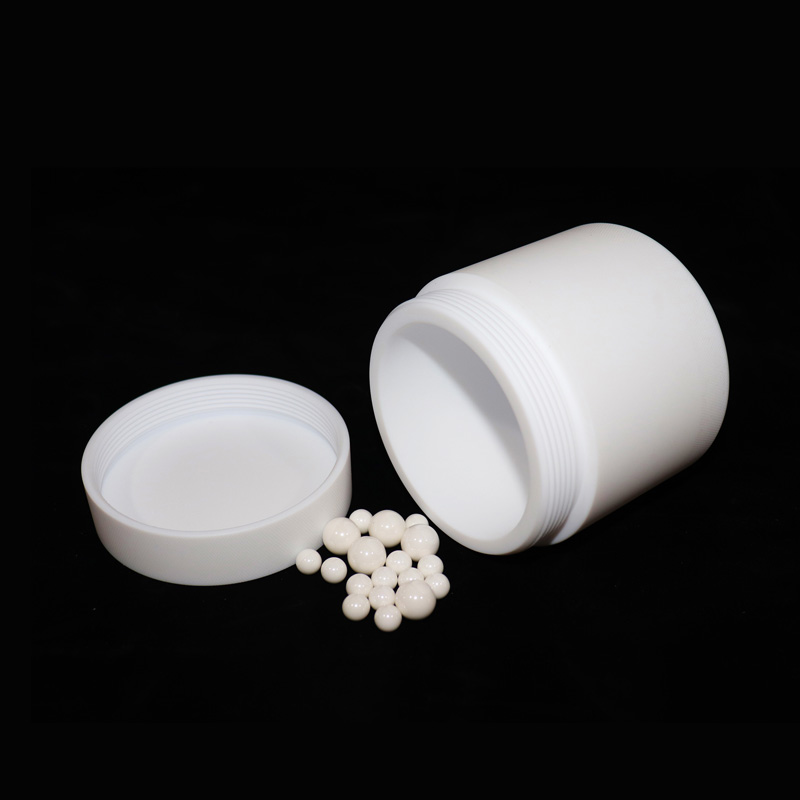
Because a PTFE roll mill jar is a focused product type rather than a broad family of machines, it is more useful to examine its key components than to force it into artificial categories. The important features are the body, the lid and seal, the grinding media, the surface condition, and the fit between jar and mill.
Jar body
The body is the cylindrical chamber that holds the sample and media. Its internal volume, diameter, length, and wall thickness affect loading, media movement, and mechanical stability. The body should be round and consistent so that it rolls smoothly on the mill. A jar that is too large for the mill may not rotate properly, while a jar that is too small may not provide enough working volume for the required media charge. The PTFE material should be appropriate for the intended chemical and thermal environment, and the wall should be free from deep scratches or embedded particles.
Lid and sealing arrangement
The lid closes the chamber and keeps the contents inside during rotation. For dry powders, the lid limits dusting and loss; for slurries and solvents, the seal is more critical. The sealing material must be compatible with the sample and with the cleaning method. A closure that is difficult to tighten evenly can leak, while a seal that is over-compressed may be damaged. Users should check that the lid seats correctly, that the sealing element is in good condition, and that the assembled jar can rotate without the lid contacting the rollers or frame.
Grinding media
The media does the actual size reduction, so its selection is as important as the jar material. Media density, diameter, shape, and chemical compatibility influence grinding efficiency and wear. Dense media can improve breakage but may increase wear on a soft PTFE wall. Large media may be effective on coarse feed but can leave a coarser product; small media may refine the product but requires more careful separation. The media should be compatible with the sample and should be inspected for cracks, chips, or contamination before each run.
Surface condition and cleaning
A smooth PTFE surface helps material release and makes cleaning easier. Users should avoid abrasive cleaning tools that can scratch the surface, because scratches can retain fines and make the next batch harder to clean. Mild cleaning agents and soft brushes are generally preferable, followed by a rinse and thorough drying. If the jar is used for multiple materials, a documented cleaning procedure helps prevent cross-batch contamination. Visual inspection under good light is a simple but effective check for residue, discoloration, or surface damage.
Mill compatibility
Even a well-made jar must fit the mill. The jar diameter, length, weight when loaded, and lid clearance all need to match the roller spacing and drive arrangement. An overloaded jar may slip, rotate unevenly, or place unnecessary stress on the mill. Users should also consider how the jar will be lifted and emptied, because a large jar filled with media can be heavy. Compatibility is not only a matter of dimensions; it is also a matter of safe handling and stable rotation.
Key Performance Indicators and Selection Points
When comparing PTFE roll mill jars, buyers should look beyond the material name and consider the whole processing setup. The most useful indicators are working volume, chemical compatibility, wear resistance, sealing quality, thermal behavior, and ease of maintenance.
Capacity and working volume
Rated capacity is not the same as useful working volume. The jar must hold the sample, the grinding media, and enough free space for the media to move. Overfilling reduces media motion and can cause poor grinding or excessive load. Underfilling may reduce efficiency and increase wear. The right fill level depends on the material and the media, so it should be established through trials or supplier guidance rather than assumed from the jar's total volume.
Chemical compatibility
PTFE is widely used for chemical resistance, but compatibility should still be checked for the specific sample, solvent, additive, and cleaning agent. The lid seal and any other non-PTFE parts may be the limiting materials. Temperature and pressure also affect compatibility and mechanical behavior. A jar that performs well at room temperature with a benign powder may behave differently with a hot solvent or a reactive mixture. When in doubt, request compatibility information from the supplier and run a small trial before committing a batch.
Wear and contamination control
Because PTFE is softer than many jar materials, wear is a real selection point. Hard, sharp, or highly abrasive media can gradually damage the wall. The resulting wear may change the surface finish, increase material retention, or release PTFE particles into the sample. In some applications, a small amount of jar wear is acceptable; in others, it is not. Users should inspect the jar regularly, avoid excessive media loads, and choose media that reduces unnecessary abrasion. If the application demands high abrasion resistance, a different jar material may be more suitable.
Sealing and leakage control
The lid and seal are critical for liquid processing and for fine powders that can escape as dust. A good seal should be easy to install correctly and should remain stable during rotation. Users should check for signs of leakage, hardening, swelling, or deformation. The sealing method should also be compatible with the cleaning routine. A seal that is difficult to dry may retain moisture or cleaning residue, which can affect the next batch.
Thermal behavior and process time
Milling generates heat through friction and impact. PTFE has relatively low thermal conductivity, so heat may remain in the sample and jar rather than dissipating quickly. Long runs, high media loads, and fast rotation can all raise the temperature. If the material is heat-sensitive, users should monitor the process and consider shorter runs, lower speeds, or pauses. The acceptable temperature range should be confirmed with the jar supplier, especially when the lid seal is a different material.
Cleaning and maintenance
Easy cleaning is one of the practical advantages of a low-stick PTFE surface, but it should not be taken for granted. The jar should be cleaned soon after use, inspected for scratches, and dried completely before storage. The lid and seal should be checked separately. A simple maintenance log can record cleaning, inspection, and any change in appearance. This is especially useful when the jar is shared among users or used for several materials.
Typical Applications and Selection Guidance
PTFE roll mill jars are most often considered for laboratory and small-scale work in which chemical resistance, easy cleaning, or reduced metal contamination are important. They can be useful for materials research, pigment and coating development, chemical processing, environmental sample preparation, and other tasks where a standard metal jar may react with the sample or retain residue. They are also a natural choice when the sample is sticky or when batch-to-batch cleanliness is a priority. The exact suitability still depends on the material, the media, the solvent, and the operating conditions.
Selection should begin with the sample. If the main risk is metallic contamination, a PTFE contact surface is attractive. If the main risk is chemical attack, check the sample and cleaning agents against the jar and seal materials. If the main risk is abrasion, remember that PTFE is soft and may not be the most durable option. If the main risk is leakage, focus on the lid and seal rather than the jar body alone. This risk-based approach is more reliable than choosing a jar solely by volume or by the word chemical-resistant.
For scale-up, users should also consider how the jar behaves on the available mill. A jar that is convenient in small batches may become difficult to handle when filled with dense media. A jar that rolls smoothly when new may behave differently after the lid is tightened or after the seal is replaced. Trials with the actual sample and media are the best way to confirm that the jar, mill, and process work together.
Operating and Maintenance Practices
Good operating practice starts with a correct load. Add the sample and media in a ratio that leaves room for motion, close the lid evenly, and confirm that the jar is seated securely on the rollers. Run the mill at a speed that produces steady tumbling rather than violent throwing. After the run, allow the jar to settle before opening it, and separate the media carefully to avoid losing fines. Record the sample, media, speed, and time so that a successful result can be repeated.
Maintenance is mostly about inspection. Check the jar wall for scratches, discoloration, or embedded material; check the lid and seal for cracks, swelling, or hardening; and check the media for chips or wear. Clean the jar with methods that do not scratch the PTFE surface, and dry it fully before storage. If the jar shows signs of damage, replace it rather than risk leakage or contamination. These simple habits extend service life and make the jar's condition visible before it affects a batch.
A Practical Product Example
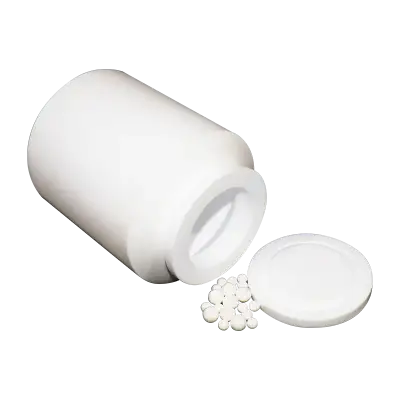
The PTFE roll mill jar product page presents this jar as part of a roller ball mill jar range. The page is the appropriate place to confirm the available configuration, dimensions, and supplier guidance before ordering. Product images can help users understand the general form of the jar, but they should not replace a check of the actual specification. For a specific process, match the jar to the mill, the sample, the media, and the cleaning routine.
Frequently Asked Questions
Is a PTFE roll mill jar the same as a planetary ball mill jar?
No. Both are grinding jars, but they are designed for different machines and motion patterns. A roll mill jar is intended to rotate on rollers, while a planetary ball mill jar is mounted in a carrier that creates a different combination of rotation and revolution. Mounting geometry and mechanical loads differ, so the jar should be used on the machine type for which it is intended.
Does a PTFE jar eliminate all contamination?
It reduces the risk of metallic contamination from the jar wall, but it does not eliminate every source. Grinding media, seals, wear particles, and cleaning residues can still affect the sample. The full contact set should be reviewed, and the jar should be inspected for damage before use.
Can a PTFE jar handle abrasive materials?
It can handle some abrasive materials, but PTFE is soft compared with metal or ceramic jar materials. Hard or sharp media may wear the wall over time. For highly abrasive duty, users should evaluate wear rate, inspect frequently, and consider whether a more wear-resistant jar material is better suited to the application.
How should I choose the jar size?
Choose by working volume, not by total volume alone. The jar must hold the sample, the media, and enough free space for media motion, while still fitting the mill and remaining safe to handle. Supplier guidance and small-scale trials are the most reliable way to set the load.
What should I check before ordering?
Confirm the mill compatibility, jar dimensions, lid and seal arrangement, chemical compatibility, cleaning requirements, and available supplier information. If the process involves solvents, heat, fine powders, or high media loads, raise those points before purchase. A jar that fits the process is more valuable than one that fits only the catalog description.
Related Products
Get In Touch
Our professional team will reply to you within one business day. Please feel free to contact us!