

What Is a Polyurethane Coated Iron Core Grinding Ball? A Durable Grinding Medium
Quick Definition: A Coated Metal-Core Grinding Medium
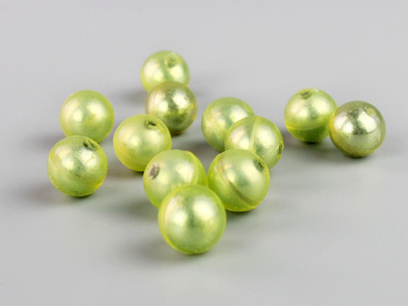
From the core, a polyurethane coated iron core grinding ball is a ball mill grinding medium made with a dense iron core and a polyurethane outer layer. Ball mills, jar mills, planetary mills, and other milling systems use it to transfer mechanical energy to a powder or slurry, helping reduce particle size, blend ingredients, disperse solids, or support mechanochemical reactions. It is not a mill itself. It is a consumable working part that sits inside the milling chamber and does the repeated work of impact, rolling, and shearing against the material.
The name is practical rather than decorative. Iron core describes the dense inner body that gives the ball mass. Polyurethane coated describes the polymer skin that separates the iron core from the mill charge and changes the contact behavior at the ball surface. Grinding ball describes the function: a rounded medium that moves with the mill and applies force to the material. The product page for the Polyurethane coated iron core grinding ball is the correct place to confirm dimensions, compatibility, and ordering details before use.
How a Coated Iron Core Ball Works in Milling
Energy transfer from the mill to the material
A ball mill works by moving its media. Depending on the machine, the jar may rotate, vibrate, swing, or be stirred. The media is lifted, rolled, and dropped, or pressed and rubbed against neighboring media and the chamber wall. Each contact is small, but a mill produces a very large number of contacts. The powder or slurry is trapped between moving surfaces, and the repeated compression, impact, and shear break down particles and mix the charge.
The iron core matters because a grinding ball must have enough mass to carry momentum. A denser core can deliver a stronger impact for a given ball size and mill speed, while also helping the media bed behave in a predictable way. The polyurethane coating matters because the surface that touches the powder is no longer bare iron. It is a polymer surface with different friction, elasticity, and chemical resistance. The core and coating therefore do different jobs: the core supplies mass and structural support, while the coating defines the surface interaction.
Why use a polyurethane coating?
In a conventional steel or iron ball, the grinding surface is metallic. That can be an advantage when high impact energy is needed, but it can also create concerns such as metallic wear debris, corrosion, noise, or adhesion of sticky material. A polyurethane coating places a continuous polymer layer between the metal core and the mill charge. This layer can cushion contacts, reduce metal-to-metal noise, and provide a non-metallic contact surface. For processes where the surface chemistry of the grinding medium matters, that change can be important.
The coating also changes how the ball interacts with the mill jar and with other media. A polymer surface may have different friction from steel, so the media bed may flow differently, especially in wet milling or with fine powders. The effect is not automatically better or worse. It must be matched to the mill type, the material, and the target particle size. The useful question is not whether a coating is present, but whether the coated surface is compatible with the process and durable under the actual operating conditions.
What the coating does not change
A polyurethane coating does not replace good milling practice. It does not correct an unsuitable mill speed, an overloaded jar, an incorrect ball size, or a poorly selected process time. It also does not make the ball immune to wear. If the coating is cut, torn, or worn through, the iron core may be exposed. At that point, the benefits of the coated surface are reduced, and the risk of contamination or corrosion may increase. Coated media should therefore be inspected as a working part, not treated as a permanent fixture.
For process development, it is better to treat the coated ball as one variable in a milling system. The same ball can behave differently in a small laboratory jar and in a larger production mill because the energy input, media motion, and thermal environment change. A coated medium that performs well in one jar may need a different size or load in another. This is why a trial should reproduce the intended mill type, fill level, and material chemistry as closely as practical.
Where This Product Fits Among Ball Mill Media
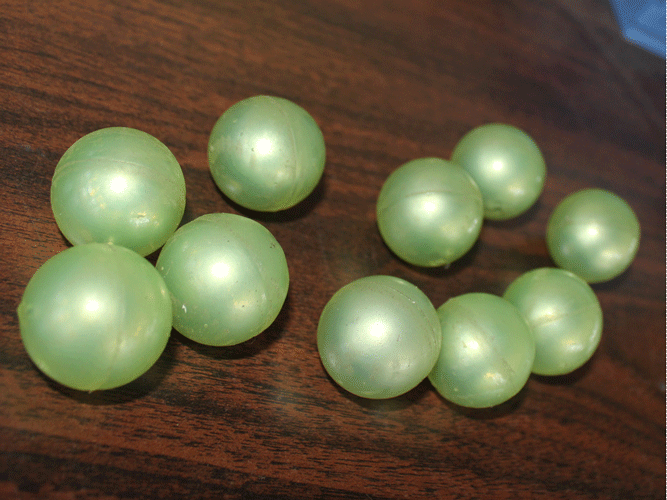
Ball mill media is a broad family. It includes uncoated steel balls, stainless steel balls, ceramic balls, zirconia balls, agate balls, tungsten carbide balls, and polymer or coated balls. Each family makes a different trade-off between density, hardness, wear resistance, chemical inertness, cost, and contamination risk. The polyurethane coated iron core grinding ball sits in the coated metal-core part of that family. It is intended to combine the mass of an iron core with the surface properties of a polymer coating.
Coated metal-core media
Coated metal-core media is useful when a dense ball is wanted but bare metal contact is not desirable. The iron core provides the mass that helps the media move and transfer energy. The polyurethane coating provides a continuous outer surface that can reduce direct metal contact with the jar and charge. This arrangement is often considered for fine milling, dispersion, and mixing duties where the process is sensitive to metallic contact, noise, or surface adhesion. It is still a composite product, so the coating and the core must be evaluated together.
How it differs from other media choices
Compared with uncoated steel media, the obvious difference is the polymer surface. Uncoated steel is simple, robust, and widely used, but it presents a metal contact surface to the material. Compared with ceramic media, a coated iron core ball offers a different combination: the core is metal, while the working surface is polymer. Compared with a solid polymer ball, the iron core adds mass, which can matter when impact energy is needed. These are general distinctions, not a ranking. The right choice depends on the mill, the material, the acceptable contamination level, and the cleaning regime.
| Media option | General character | Points to check |
|---|---|---|
| Polyurethane coated iron core ball | Dense core with a polymer contact surface | Coating integrity, chemical compatibility, temperature limits, core exposure |
| Uncoated steel ball | Simple metal media with high mass | Corrosion, metallic wear, contamination, noise |
| Ceramic or zirconia ball | Non-metallic or oxide-based media | Brittleness, density, jar wear, cost, contamination profile |
| Solid polymer ball | Low-mass polymer media | Impact energy, wear rate, deformation, milling efficiency |
Key Performance Indicators and Selection Points
Selecting a grinding ball is not only a question of diameter. The ball must fit the mill, the jar, the material, and the purpose of the step. For a coated iron core ball, the most important checks can be grouped into mass and size, coating quality, chemical compatibility, wear and contamination, and mill compatibility.
Ball size, mass, and size distribution
Ball size controls the number of contact points and the energy available at each contact. Larger balls generally provide more mass per ball and can deliver stronger impacts, but they also occupy more volume and may create a coarser grinding pattern. Smaller balls provide more contacts and can be useful for fine grinding, but they may lack the mass to break tough particles. A mixture of sizes is sometimes used to balance impact and attrition. The correct choice depends on the feed size, target fineness, jar diameter, and mill speed. The supplier should confirm the available sizes and the recommended load.
Core density and mill load
The iron core gives the ball its density, so the total media load can become heavy. Before increasing ball size or filling level, check the mill's rated load, jar capacity, and drive capability. An overloaded jar may run hotter, wear faster, or fail to move the media bed properly. More media is not always better. The best load usually leaves enough free space for the media to move and for the material to be caught between contacts.
Coating thickness, hardness, and surface quality
The polyurethane coating is a functional part of the product. Its thickness, hardness, and surface finish influence cushioning, friction, and wear life. A soft coating may protect the jar and reduce noise, but it may also absorb energy or deform under load. A harder coating may wear differently. The surface should be continuous and free from cuts, bubbles, embedded grit, or thin areas. Because the product name specifies a coating but not a single formulation, users should confirm the actual coating grade with the supplier for each application.
Chemical compatibility
Polyurethane is not universally resistant to every solvent, acid, base, or high-temperature process. Wet milling can be especially demanding because the liquid continuously contacts the coating. Before use, check compatibility with the carrier liquid, pH, additives, and operating temperature. If the coating swells, softens, cracks, or discolors, it may not be suitable for that chemistry. For sensitive applications, also consider whether coating wear debris is acceptable and how the media will be cleaned between batches.
Wear, contamination, and service life
All grinding media wears. The relevant questions are how it wears, where the wear products go, and whether the change affects the process. A coated ball should be inspected for coating loss, exposed core, deformation, and contamination. Replace media that show deep cuts, missing coating, or a change in shape. Keeping records of operating hours, material type, and inspection results helps distinguish normal wear from a compatibility problem. This is more reliable than judging a ball only by its appearance at the end of a campaign.
Mill compatibility and process control
The ball must match the mill type and the jar material. A heavy coated iron core ball may be suitable for a robust jar but less suitable for a delicate jar or a small laboratory mill. Mill speed, fill level, dry or wet operation, and the presence of process aids all affect performance. If the process is automated, confirm that the mill can handle the media load and that the control system can reproduce the same speed and time. Consistent media size and condition are part of reproducibility.
Composite Construction and Wear Behavior
A coated ball is a composite working part. The iron core provides shape and mass; the polyurethane layer provides the outer surface. Good bonding between the two is important. If the coating is poorly bonded, it can separate, blister, or peel under repeated impact. If the core is exposed, the ball no longer behaves as a uniformly coated medium. Inspection should therefore look at the whole ball, not only at the coating color.
Wear can occur by abrasion, impact, cutting, or chemical attack. Abrasion removes coating slowly and may change the surface texture. Impact can create local deformation or cracks. Cutting can occur when sharp particles are trapped between balls. Chemical attack can soften or swell the polymer. In practice, these modes can combine. A ball that looks acceptable after washing may still have microscopic damage, so performance records are useful.
Because the product is a medium rather than a machine, its life is process-dependent. Hard, angular feed, high mill speed, heavy media load, and aggressive liquids can all shorten service life. Gentler duty may allow longer use. The correct maintenance approach is to set an inspection interval based on observed wear and to replace media before coating loss becomes widespread. This protects both the process and the mill jar.
Applications and Selection Advice
Polyurethane coated iron core grinding balls are relevant wherever ball milling is used for size reduction, mixing, dispersion, or surface treatment, and where the contact surface of the media matters. Typical settings include laboratory and pilot-scale jar mills, planetary mills, and production mills that use tumbling or stirred media. They may be considered for mineral powders, ceramic raw materials, pigments, coatings, chemical powders, and other fine-particle slurries, provided the coating is compatible with the charge. The product should not be selected for an application only because it is coated; the material, liquid, temperature, and contamination limits must be checked first.
For a new application, start with the process objective. If the goal is coarse size reduction, mass and impact energy are important. If the goal is fine dispersion, contact frequency, ball size, and surface chemistry may matter more. If the goal is contamination control, the coating integrity and wear mode become critical. If the goal is scale-up, test the same media size and coating grade at laboratory scale before changing the mill. A small trial can reveal adhesion, foaming, coating swelling, or unusual wear that a specification sheet cannot predict.
- Define the feed material, target particle size, and whether the process is dry or wet.
- Check chemical compatibility of the polyurethane coating with the liquid, pH, and temperature.
- Match ball size and load to the jar volume, mill speed, and drive capacity.
- Run a small trial and inspect the media for coating damage, swelling, or contamination.
- Record the operating conditions so the result can be repeated with the same media grade.
Practical Notes for Installation, Cleaning, and Scale-Up
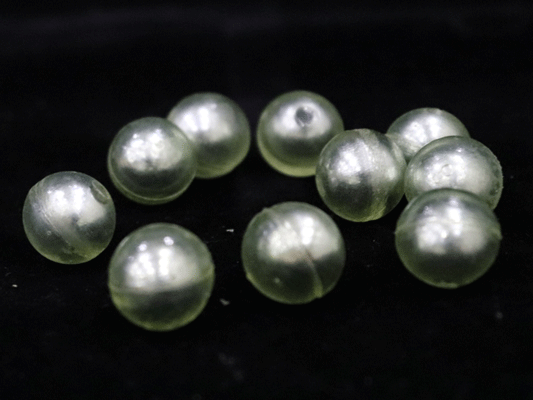
When a new batch of media is installed, confirm that the balls are the correct grade and size, and remove any damaged pieces before charging the mill. Keep the media clean and dry if the process is dry. For wet milling, use a cleaning procedure that is compatible with polyurethane and with the next batch. Avoid sharp tools that can cut the coating. After cleaning, inspect for cuts, swelling, and exposed core.
Scale-up should change one variable at a time. Increasing jar size, media load, and mill speed together makes it difficult to know which change affected the result. Start with the same media grade and a comparable media-to-feed ratio, then adjust speed and time. If the larger mill cannot reproduce the small-mill result, the cause may be media motion, temperature, or fill level rather than the ball itself.
For quality control, record the media grade, ball size, lot, operating hours, and inspection findings. These records help separate normal wear from a chemical compatibility problem. They also make it easier to compare coated media with uncoated or ceramic alternatives. A simple trial log is often more useful than a single visual check.
Frequently Asked Questions
Is a polyurethane coated iron core grinding ball a machine?
No. It is a grinding medium used inside a mill. The mill provides motion; the ball provides the moving contact that breaks down or disperses the material.
Does the polyurethane coating reduce grinding efficiency?
It can change the balance of impact and attrition, and the effect depends on the application. The iron core supplies mass, while the coating changes the surface contact. A trial is the best way to confirm whether the coated ball meets the target fineness and cycle time.
Can it be used for wet milling?
Wet milling is possible only after checking chemical compatibility. The liquid, pH, additives, and temperature can affect polyurethane. If the coating softens, swells, or cracks, the product is not suitable for that duty.
How can users tell when the media should be replaced?
Look for exposed iron core, deep cuts, missing coating, deformation, or a change in milling performance. Media that no longer presents a continuous polymer surface should not be expected to provide the same contamination or wear benefits.
Can coated and uncoated media be mixed?
Mixing media types is generally a process change, not a neutral substitution. Different densities and surface properties can cause segregation, uneven wear, and unpredictable grinding. If mixing is considered, test it rather than assuming the result will be the same.
Does a larger ball always grind faster?
No. Larger balls add mass and impact energy, but they also reduce the number of contact points for a given load. The best size depends on feed size, target fineness, mill geometry, and speed.
Is the coating suitable for high-temperature milling?
Temperature limits depend on the polyurethane grade and the process. Heat can soften or degrade a polymer, so the operating temperature should be confirmed before use. If the mill generates heat, measure the actual temperature rather than relying on room temperature.
Can the ball be used in a planetary mill?
A planetary mill can be used only if the ball size, jar volume, and load are compatible with the mill. Planetary mills often run at high energy, so jar capacity and media mass should be checked. A trial with a small jar is a sensible first step.
Product Information and Reference
The product described in this article is the Polyurethane coated iron core grinding ball listed by TENCAN. Use the product page to confirm the available specification, coating grade, and ordering information. Because milling results depend on the complete system, the product page should be read together with the mill manual and a trial plan for the specific material.
Related Products
Get In Touch
Our professional team will reply to you within one business day. Please feel free to contact us!