

What Is a Paddle Mill? A Versatile Crusher for Coarse and Medium Size Reduction
What Is a Paddle Mill?
In plain terms, a paddle mill is a mechanical crushing machine that uses a high-speed rotating shaft fitted with paddle-shaped blades to break lumpy, brittle, fibrous or caked feed material down into a uniform coarse-to-medium powder. Industries such as chemical manufacturing, food processing, ceramics, mineral processing, battery materials, agricultural products and solid-waste recycling use it as the first size-reduction step, the practical bridge between raw lumps arriving from storage and the fine grinding or mixing stages that follow.
Instead of squeezing material between two hard surfaces the way a jaw crusher or a roll crusher does, a paddle mill hits it. The paddles sweep through the crushing chamber at speed, striking the feed and hurling it against the chamber wall and a perforated screen. Each lump is broken by a combination of impact, shear and attrition until the fragments are small enough to pass the screen openings and leave the machine. That single idea, repeated rapid impacts inside a screened chamber, explains most of the machine's strengths, its limits, and the way it is selected for a given process.
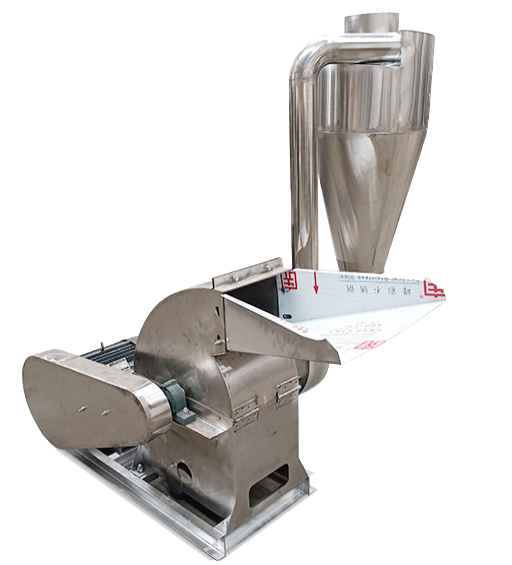
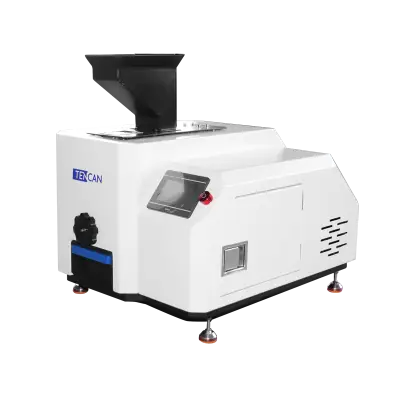
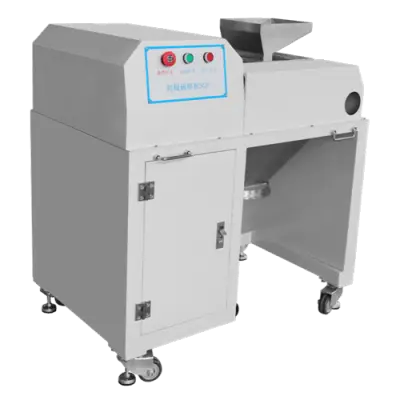
The equipment belongs to the wider family of rotor-based crushers, together with hammer mills, pin mills and cage mills. What distinguishes it is the shape of the rotor tooling: broad, blade-like paddles rather than thin swinging hammers or slender pins. That geometry produces a gentler, more shear-dominated action, which matters when the feed is friable, heat-sensitive, or simply agglomerated rather than genuinely hard rock. A representative machine in this product family can be reviewed on the paddle mill product page.
Core Function and Working Principle
From Lumpy Feed to Controlled Powder
The basic job of a paddle mill is to convert a coarse, irregular feed, whether lumps, flakes, pressed cakes, agglomerates or reclaimed scrap, into a free-flowing powder with a predictable top particle size. Material usually enters the machine from above through a hopper, often assisted by a vibrating feeder or screw feeder that holds a steady feed rate. Gravity carries it into the crushing chamber, where the rotor is spinning at high speed and the paddles catch the falling material and accelerate it outwards.
Because the tips of the paddles move far faster than the falling feed, the first contact already delivers a strong blow. The fragments are then thrown against the chamber wear plates and the screen, break again, and drop back into the path of the rotor. This cycle repeats many times per second, so a single lump may be struck dozens of times before it is small enough to escape.
The screen or grate at the bottom of the chamber acts as both classifier and discharge control. Only particles smaller than the screen aperture pass through; anything coarser stays inside and is hit again. In that sense the machine is partly self-regulating: the product top size is fixed by the screen rather than by rotor speed alone, which is why screen selection is the single most important decision when specifying a paddle mill.
The Crushing Mechanism Inside the Chamber
Three mechanisms work together inside the chamber:
- Impact — the paddle tip strikes the lump directly, opening cracks along the material's natural weaknesses.
- Shear — broad paddles drag material across the chamber wall and screen, tearing soft, flaky or fibrous particles apart instead of shattering them.
- Attrition — fragments rubbing against each other and against the liners round off edges and change the surface character of the finished powder.
Because shear and attrition play a larger role than they do in a hammer mill, a paddle mill tends to produce a product with fewer extremely fine particles, less airborne dust and less generated heat for the same reduction ratio. That is a real advantage for materials that scorch, melt, smear or lose crystallinity when they get hot.
Key Process Parameters and Their Effects
Rotor speed controls how energetic each impact is. Raising the speed makes the product finer and increases the proportion of fines, but it also accelerates wear on paddles, liners and screens and raises the temperature inside the chamber. Lowering the speed produces a coarser, more granular product with longer wear-part life.
Screen aperture sets the maximum particle size that can exit. A large opening gives high throughput and a coarse product; a small opening gives a finer product but lowers capacity and increases the load on the rotor. Paddle count, paddle width and the angle at which successive paddles are staggered along the shaft determine how many times the material is struck before it reaches the screen, so more, well-arranged paddles generally mean a more uniform grind.
Feed characteristics matter just as much. Oversized lumps that cannot be caught cleanly by the paddles may simply bounce around the chamber; very moist or sticky material blinds the screen and forces the machine to run partially full, wasting energy and generating heat; abrasive feed shortens the life of every wear part. Feed rate must also be matched to capacity: underfeeding wastes energy per tonne, while overfeeding chokes the chamber, increases internal recirculation and can push the product size above the target.
Main Configurations and Core Components
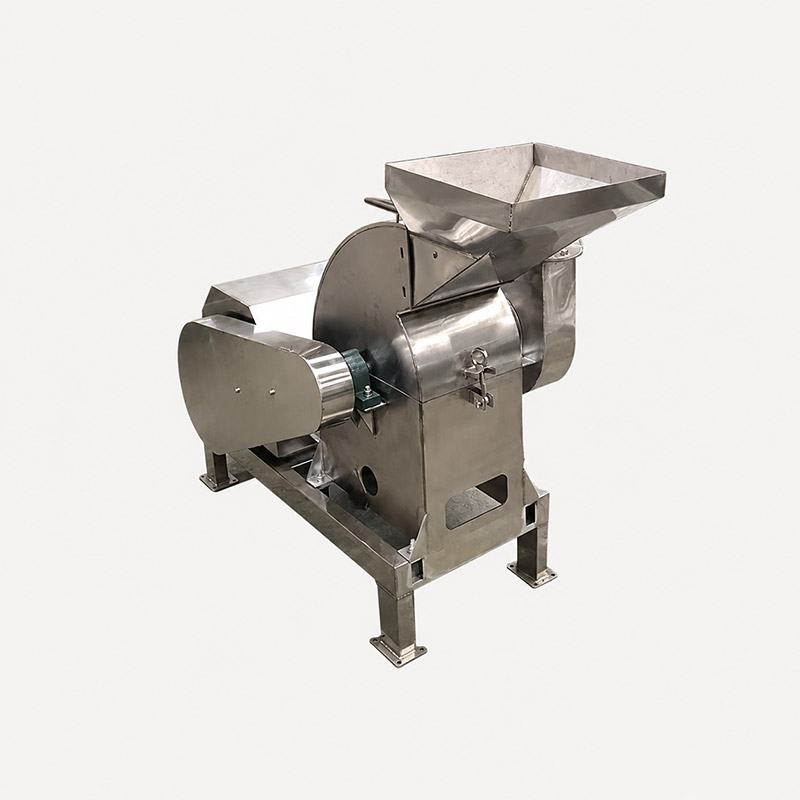
Paddle mills are not a single fixed design. They vary with duty, hygiene requirements and the way a plant wants to handle its product. The main building blocks, however, are consistent across models.
Rotor and Paddle Assembly
The rotor is a horizontal shaft on which paddles are mounted in rows. Depending on the model, the paddles may be fixed rigidly to the shaft or held in carriers so that individual blades can be replaced without dismantling the whole rotor. Staggering the rows at different angles spreads the load evenly and prevents the rotor from striking all of the material at one point. Because the rotor determines both grind quality and power draw, its balance is critical: an unbalanced rotor produces vibration, bearing wear and an inconsistent product.
Crushing Chamber, Liners and Screen
The chamber encloses the rotor and provides the stationary surfaces that material is thrown against. Replaceable liner plates protect the chamber body from abrasion and can be supplied in carbon steel, stainless steel or, for aggressive feed, harder wear-resistant alloys. The screen or grate at the discharge end defines the product top size and is normally the most frequently replaced item. Where metal contamination must be avoided, all contact parts can be made in stainless steel or fitted with non-metallic linings.
Drive, Bearings and Frame
A motor, usually through a belt drive or a direct coupling, turns the rotor. Belt drive allows rotor speed to be tuned by changing pulleys, which is useful when a plant needs to fine-tune the product without buying new tooling. The bearings carry both the rotor weight and the unbalanced impact loads, so they are normally heavy-duty, sealed and lubricated for continuous duty. The frame ties everything together and must be stiff enough to keep the rotor aligned under constant vibration.
Feeding and Discharge Arrangements
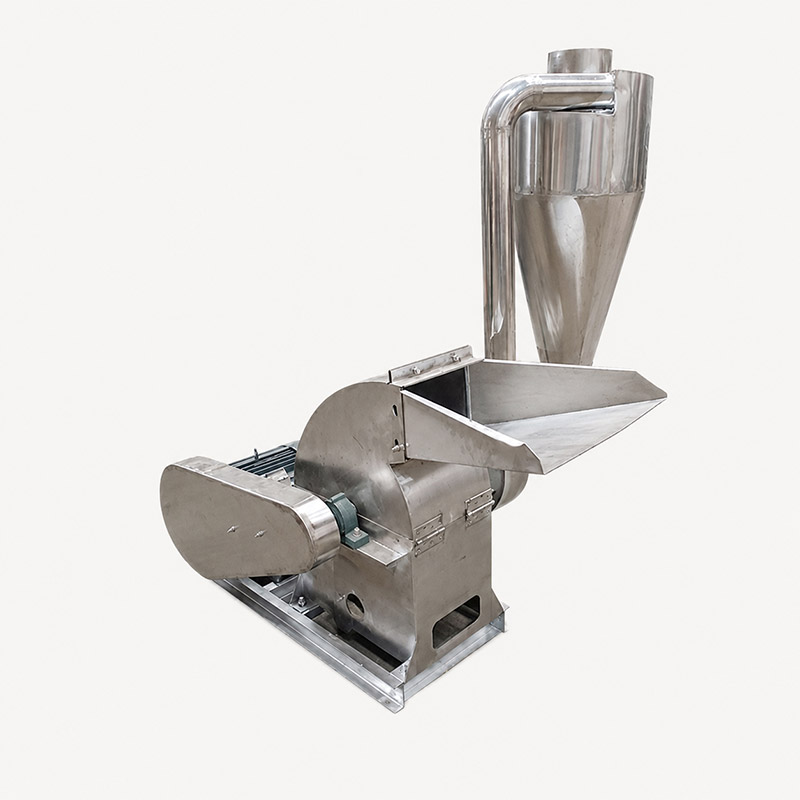
Feed can be delivered by gravity from a hopper, by a vibrating feeder, or by a screw conveyor when a controlled, dust-free feed is required. Discharge may be by gravity into a bin or conveyor, or assisted by an air stream that sweeps fine particles out of the chamber as soon as they are small enough to pass the screen. Air-swept discharge improves capacity on fine grinds and helps keep the chamber cool, but it requires a dust collector and a more careful system design.
Dust Control and Sealing
Crushing always generates dust, so seals at the shaft entries, a closed discharge and a connection to an extraction system are standard features. Good sealing protects the bearings, keeps the working area clean and, for food, pharmaceutical or battery materials, prevents cross-contamination between batches.
Key Performance Indicators and Selection Points
Throughput and Reduction Ratio
The first number any buyer asks about is capacity: how many kilograms or tonnes per hour can the machine process? Capacity is never a fixed figure, because it depends on the hardness, bulk density, moisture and initial size of the feed as well as on the target product size. The same mill that delivers a high output on a soft, dry feed will produce far less on a hard, damp one. The useful way to specify a machine is therefore a paired requirement: this feed, reduced from this top size to that top size, at this rate.
Particle Size Control and Distribution
Product quality is described by the top size and by the shape of the size distribution. A narrow distribution, in which most particles sit close to the target size with few extremes, usually means better behaviour downstream in mixing, tableting, sintering or spraying. Screen aperture and rotor speed together set the distribution, and a well-designed chamber with properly staggered paddles narrows it further by giving every particle a similar number of impacts.
Energy Consumption and Efficiency
Size reduction is energy-intensive by nature. A practical way to compare machines is specific energy: the electrical power consumed per tonne of acceptable product. A mill that grinds aggressively but produces a large share of unwanted fines may look fast yet consume more energy per saleable tonne. Efficient operation means matching rotor speed, screen and feed rate so that the chamber works steadily instead of in surges.
Automation and Controllability
Modern units are often supplied with variable-frequency drives, so rotor speed can be adjusted from a panel instead of by changing pulleys. Feeders can be interlocked with the mill's load, current draw or temperature, letting the line run at a constant, controlled rate. For plants that must document batches, recording current, running time and throughput provides a simple traceability record.
Maintenance and Wear Parts
Paddles, liners and screens all wear, so the real design question is how quickly and how easily they can be replaced. Quick-opening chambers, reversible or indexable paddles, and screens that drop out without removing the rotor all cut downtime. Easy access to bearings for greasing and a straightforward belt tensioning arrangement are equally practical considerations.
Materials of Construction and Hygiene Level
For general industrial duty, painted carbon steel is sufficient. For food, pharmaceutical or battery applications, stainless steel contact surfaces, polished welds, gap-free internal geometry and easy cleaning access become mandatory. Choosing the right construction at the specification stage is far cheaper than retrofitting a machine later.
Applications and Selection Advice
Where Paddle Mills Are Used
In the chemical industry the machine handles agglomerated intermediates, resins, pigments, dyes and fertilizer granules. Food processors use it for sugar, salt, spices, dried vegetables and starch, where low heat generation protects flavour and colour. Ceramics and glass producers crush frit, clay and glaze; mineral processors reduce limestone, gypsum, feldspar and kaolin. Battery and electronic materials that arrive as pressed cakes or lightly sintered blocks are often broken up in a paddle mill before fine milling. Recycling lines use it on plastics, rubber and mixed scrap, agriculture uses it on feed and biomass, and laboratories rely on it for preparing representative samples ahead of analysis.
How to Choose the Right Machine
Start with the material rather than the mill. Establish hardness, moisture content, bulk density, feed top size, target top size, required throughput, temperature sensitivity, abrasiveness and hygiene class. Then match those to a rotor speed range, available screen options, construction material, feeding and discharge style, and dust-collection requirements. Laboratory and small-batch users generally prioritise flexibility, easy cleaning and a small footprint, while pilot and production users prioritise throughput, uptime, wear-part life and clean integration with feeding, conveying and extraction equipment. Wherever possible, request a trial on your own material: a short test run answers questions that datasheets cannot. Further configuration details and contact-surface options are summarised on the paddle mill page.
Frequently Asked Questions
Is a paddle mill the same as a hammer mill?
No, although the two are close relatives. Both use a fast rotor inside a screened chamber, but hammer mills rely on thin, swinging hammers that deliver concentrated impact blows, which suits hard, brittle material and high reduction ratios. A paddle mill uses broader fixed blades, so more of the energy goes into shear and attrition. The result is a product containing fewer fines and less heat, which suits softer, fibrous, agglomerated or temperature-sensitive feeds.
How can I make the product finer?
There are three levers, in order of effect: fit a screen with smaller apertures, raise the rotor speed within the machine's permissible range, and reduce the feed rate so that the chamber is not overloaded. Changing all three at once usually gives a finer but hotter product, so it pays to move one parameter at a time and check the result.
What materials should not be processed?
Very hard, highly abrasive rock, tough ductile metals and sticky pastes with high moisture content are all poor candidates: they wear the machine, deform instead of breaking, or blind the screen. A paddle mill works best on brittle, friable or agglomerated material that is reasonably dry.
How much maintenance does it need?
Routine work is simple: check belt tension and bearing lubrication, inspect paddles, liners and screens for wear, and keep the seals and dust extraction system in order. Wear-part replacement is the main recurring cost, so the interval depends almost entirely on the abrasiveness of the feed and on how fine the product must be. Replacement intervals can be planned once a plant has recorded wear rates on its own material, and spare screens and paddles are normally stocked so that a change takes minutes rather than hours. Reviewed together with the working principle described above, these maintenance realities define whether the machine is the right fit for a given line; the full specification set is available on the paddle mill product listing.
Related Products
Get In Touch
Our professional team will reply to you within one business day. Please feel free to contact us!