
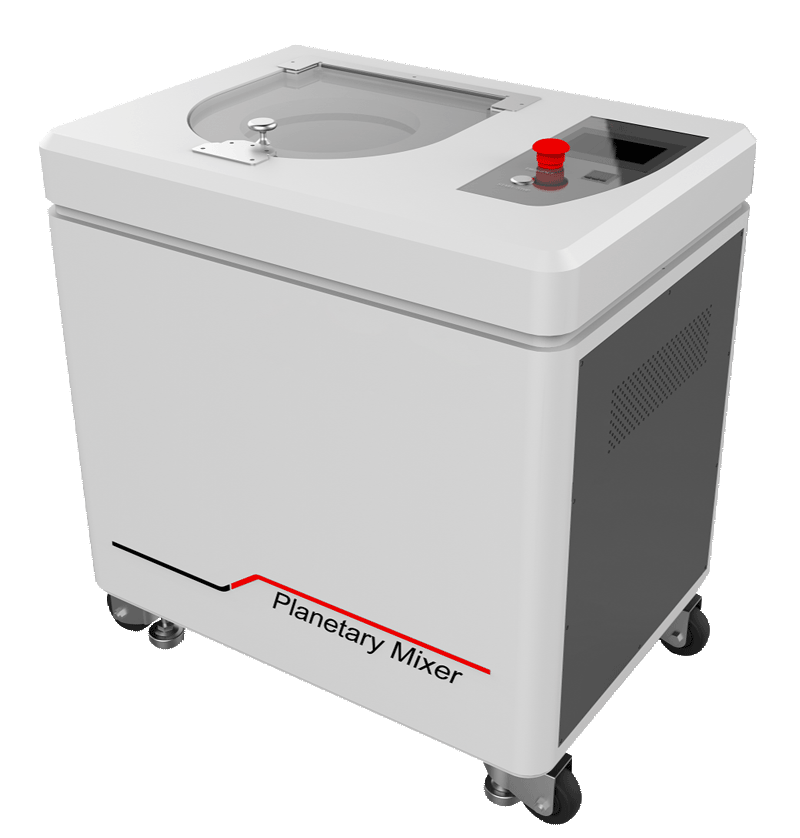
What is a Non-Invasive Material Homogenizer? A Versatile Mixing Device for Uniform Particle Dispersion and Emulsification

What is a Non-Invasive Material Homogenizer?
At its core, a non-invasive material homogenizer is a specialized mixing device designed to achieve uniform dispersion, emulsification, and homogenization of materials without direct mechanical contact with the sample. Unlike traditional homogenizers that rely on high-shear blades or rotor-stator systems, this equipment uses gentle, indirect forces—such as vibration, acoustic waves, or orbital motion—to process liquids, suspensions, and soft solids. It is widely used in laboratories and small-scale production lines where maintaining the integrity of sensitive materials (e.g., biological samples, pharmaceuticals, food ingredients) is critical.
This device belongs to the mixed series of TENCAN's product portfolio, offering a non-contact alternative for applications requiring high homogeneity without contamination or structural damage.
Core Function and Working Principle
The primary function of a non-invasive material homogenizer is to transform a heterogeneous mixture (e.g., oil-water, solid-liquid slurries) into a stable, uniform product. It achieves this through a combination of mechanical vibration and fluid dynamics. The sample is placed inside a sealed container or directly on a vibrating platform. The homogenizer generates controlled oscillations at specific frequencies and amplitudes, creating cavitation bubbles and micro-turbulence within the liquid. These micro-forces break down agglomerates, reduce droplet size, and promote intimate mixing.
Key parameters influencing the final result include vibration frequency (typically 20–50 kHz), amplitude (0.5–5 mm), processing time, and temperature control. By adjusting these parameters, users can achieve particle sizes down to the sub-micron range while preserving the chemical and biological activity of the sample.
Key Components and Technology
Vibration Drive System
The core of the non-invasive homogenizer is its drive unit, which converts electrical energy into precise mechanical vibrations. Advanced models use piezoelectric transducers or electromagnetic drivers to ensure stable frequency output and low noise operation.
Sample Container Compatibility
Most units accept standard laboratory containers (e.g., vials, beakers, centrifuge tubes) or specialized bags. The design eliminates the need for rotor insertion, reducing cross-contamination risk and cleaning time.
Control Interface
Modern homogenizers feature digital touchscreens or programmable controllers that allow users to set time, speed, and mode (continuous or pulsed). Some models include memory presets for routine protocols.
Key Performance Indicators and Selection Guide
When selecting a non-invasive material homogenizer, consider the following criteria:
- Processing Capacity: Typically ranges from 0.5 mL to 2 L per batch. Choose a model that matches your typical sample volume.
- Homogenization Efficiency: Measured by the final particle/droplet size distribution. Look for models that achieve D90 below 1 μm for emulsification tasks.
- Energy Efficiency: Power consumption varies from 50 W to 500 W. Higher power does not always mean better results; proper matching of frequency and amplitude is more important.
- Automation & Programmability: For repetitive tasks, a model with memory functions and remote control capability can significantly improve productivity.
- Maintenance: Non-invasive design inherently reduces wear and tear. Check for easy-to-clean surfaces and replaceable wear parts.
For example, TENCAN's non-invasive material homogenizer offers adjustable vibration amplitude and operating time, ensuring consistent results for a wide range of materials.
Application Fields and Selection Advice
This homogenizer is ideal for industries where sample integrity is paramount:
- Food & Beverage: Emulsifying sauces, dressings, and dairy products without degrading flavor or nutrients.
- Pharmaceuticals: Preparing liposomes, nanoemulsions, and cell lysates while preserving biological activity.
- Cosmetics: Homogenizing creams, lotions, and gels to achieve smooth texture and stability.
- Chemical & Materials: Dispersing nanoparticles, pigments, and catalysts in liquid media.
For users who need gentle processing of small volumes, a non-invasive homogenizer is a superior choice over traditional rotor-stator or high-pressure homogenizers. If your application requires high throughput (e.g., production scale), consider combining it with a high-speed dispersing homogenizer for pre-mixing.
References
- Non-invasive material homogenizer product page: https://www.planetaryballmills.com/products/mixed-series/non-invasive-material-homogenizer.html
- Mixed series overview: https://www.planetaryballmills.com/products/mixed-series/
Related Products
Get In Touch
Our professional team will reply to you within one business day. Please feel free to contact us!