

What is a Muffle Furnace? A Box-Type Heating Equipment Used for High-Temperature Processes like Ashing, Sintering, and Heat Treatment
Opening Definition
At its core, a muffle furnace (also referred to as a box-type furnace or Kammerofen) is a specialized high-temperature heating device widely utilized in laboratories and industrial manufacturing. It is primarily designed to subject solid materials to precisely controlled thermal environments for processes such as ashing, sintering, melting, annealing, and heat treatment. Unlike direct-flame heating systems, it employs a sealed inner chamber that physically isolates the sample from combustion gases, thereby ensuring contamination-free and highly consistent thermal processing.
Core Functions & Working Principles
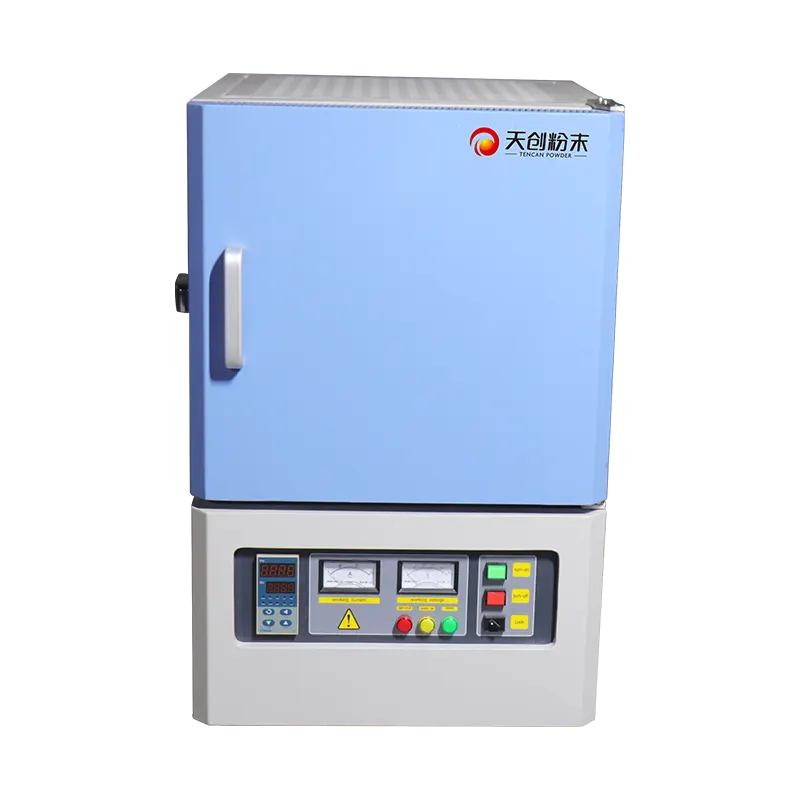
The fundamental function of a muffle furnace is to transform raw or pre-treated materials into refined products through targeted thermal energy application. The equipment operates on the principle of resistive heating, where electrical current flows through high-resistance heating elements—typically composed of Kanthal alloy or silicon carbide—embedded along the chamber walls. These elements generate radiant heat, which is then evenly distributed throughout the insulated cavity.
The working process begins by placing the sample inside a compatible crucible or directly onto the furnace floor within the isolated muffle chamber. As the integrated temperature controller regulates power input, the heating elements gradually reach predefined setpoints, often ranging from ambient conditions up to 1700°C. Multi-layer refractory insulation minimizes external heat loss while maintaining exceptional temperature uniformity. This indirect heating methodology effectively prevents cross-contamination from exhaust fumes, making it indispensable for sensitive chemical reactions and precise material phase transformations.
Key operational parameters include maximum operating temperature, temperature gradient tolerance, heating/cooling ramp rates, and dwell time. These variables directly dictate the crystalline structure, density, and mechanical integrity of the final output. For example, in ceramic powder processing, meticulous control over the thermal cycle prevents structural cracking and ensures optimal particle bonding, whereas in metallurgical applications, regulated cooling phases determine hardness and tensile strength.
Core Components & Key Technologies
The reliability and long-term performance of a muffle furnace hinge upon four integrated subsystems. First, the heating system utilizes high-efficiency resistance coils paired with precision transformers to deliver stable, adjustable thermal output. Second, the chamber assembly features a heavy-duty steel outer shell lined with advanced ceramic fiber or dense refractory bricks, offering superior thermal shock resistance and operator safety. Third, the control module relies on microcomputer-based PID algorithms with intuitive touch-screen interfaces, enabling programmable multi-stage temperature profiles, real-time monitoring, and automated data logging. Finally, the safety architecture incorporates overheat cut-offs, thermocouple failure detection, and emergency stop functions to safeguard both equipment and personnel during extended operational cycles.
Key Performance Indicators & Selection Points
When evaluating muffle furnaces for procurement, several critical metrics must be assessed. Maximum temperature capacity generally spans from 1100°C to 1700°C, dictated by the heating element grade and insulation thickness. Temperature uniformity, typically specified within ±1°C to ±5°C across the active zone, remains paramount for experimental reproducibility. Energy efficiency has also become a decisive factor; contemporary designs incorporate low-surface-temperature exteriors and optimized insulation matrices that can reduce electricity consumption by up to 30% compared to legacy models.
Automation capabilities significantly streamline laboratory workflows. Advanced configurations support multi-segment programming, allowing complex heating and cooling trajectories to run autonomously. Connectivity features such as USB data export or software integration facilitate strict adherence to quality management standards. Furthermore, maintenance accessibility should not be overlooked; modular heating components and tool-less door mechanisms simplify routine inspections and part replacements, substantially reducing unplanned downtime in continuous production settings.
Application Fields & Selection Advice
Muffle furnaces serve as foundational equipment across numerous scientific and industrial sectors, including materials research, geology, environmental analysis, pharmaceutical development, and dental technology. Academic institutions frequently deploy them for powder synthesis, oxide characterization, and thermal stability testing, while commercial facilities utilize them for batch sintering of advanced ceramics, metal stress-relief annealing, and catalyst activation.
For academic researchers managing small-scale samples with stringent purity requirements, a standard box-type configuration equipped with precise PID regulation and lightweight ceramic fiber insulation is highly recommended. Industrial operators seeking higher throughput or reactive gas environments may explore complementary solutions like box-type atmosphere furnaces or horizontal tube furnaces. Always align the chamber volume, peak temperature rating, and control sophistication with your specific batch dimensions and process protocols to maximize both thermal performance and operational economy.
References
Related Products
Get In Touch
Our professional team will reply to you within one business day. Please feel free to contact us!