

What Is a Lab Roll Ball Mill? A Laboratory Grinder for Fine Powder Production
What Is a Lab Roll Ball Mill?
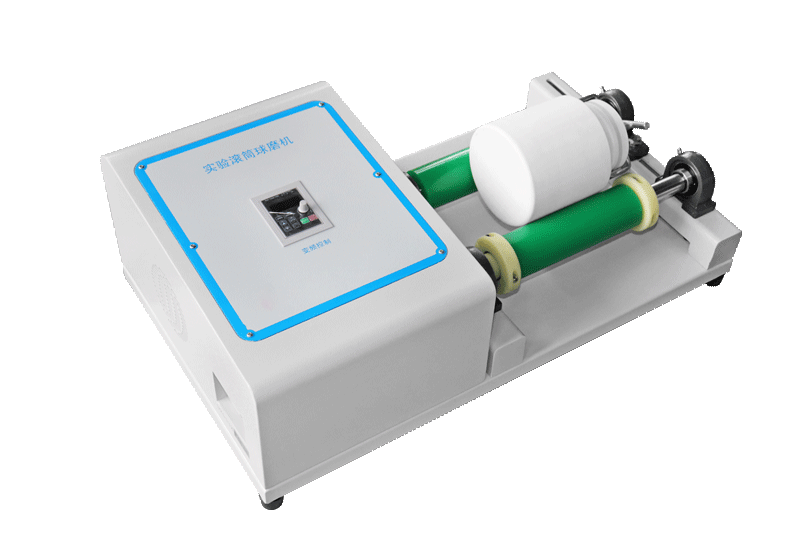
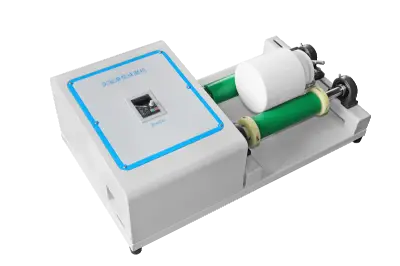
At its core, a lab roll ball mill is a compact grinding machine used in laboratories and small-scale production to reduce small samples of solid material into fine powders. It belongs to the broader family of ball mills, but it is designed for bench-top or pilot-scale work rather than heavy industrial output. The machine typically holds one or more cylindrical jars on rotating rollers. As the rollers turn, the jars rotate, and the grinding media inside tumble, cascade, and impact the sample. The result is a controlled reduction in particle size and, often, a more uniform powder than manual grinding can achieve. The lab roll ball mill product page provides a direct example of this type of equipment.
In practical terms, the lab roll ball mill answers two basic needs: it prepares small amounts of material for analysis, testing, or formulation, and it does so with repeatable mechanical action. Researchers in materials science, geology, ceramics, chemistry, and powder metallurgy use these mills when they need consistent powders without the footprint or cost of a full production mill. The equipment is also useful when multiple samples must be processed under similar conditions, because rotation speed and running time can be set and repeated.
Core Functions and Working Principles
From Coarse Feed to Fine Powder
A roll ball mill does not create powder in a single instant. It gradually transforms a coarse feed, often crushed mineral chips, ceramic granules, dried plant material, or small pieces of polymer, into a finer powder through repeated mechanical interactions. The starting material is placed inside a jar together with grinding media. The jar is then set on the rollers. When the machine runs, friction between the rollers and the jar surface causes the jar to rotate. Inside, the media and the sample are lifted along the jar wall and then fall or roll back down. Each collision, scrape, and compression event breaks particles further. Over time, the cumulative effect reduces the average particle size and narrows the distribution.
The final state depends on how long the process runs and how the machine is configured. A short run may only break agglomerates or blend materials. A longer run can produce fine powders suitable for sieving, analysis, or further processing. Because the action is mechanical rather than chemical, the composition of the sample usually remains unchanged, although heat, contamination, and oxidation are factors that operators must manage. The goal is not simply to make particles smaller but to make them smaller in a predictable and reproducible way.
The Role of Jar Rotation and Grinding Media
The central mechanism is the relative motion between the grinding media and the jar wall. As the jar rotates, the media charge is carried upward on the rising side. Depending on the rotation speed, the media may slide, roll, cascade, or cataract. At lower speeds, the media tend to roll and rub against each other, producing more attrition and surface grinding. At higher speeds, they are lifted further and then fall, creating stronger impact forces. If the speed becomes too high, the media may centrifuge against the jar wall and do little useful work. Therefore, the relationship between jar diameter, rotation speed, and media size is critical.
Grinding media can be made from many materials, including stainless steel, zirconia, alumina, agate, tungsten carbide, and other ceramics. The choice affects wear resistance, density, and contamination risk. Dense media deliver more impact energy, which can speed up coarse grinding, while lighter or softer media may be preferred when contamination must be minimized. Media size also matters: larger balls are better at breaking coarse particles, while smaller balls create more contact points and are often more effective for fine grinding. Media fill level, sample load, and jar fill volume all influence the balance between impact and attrition.
Key Process Variables That Shape the Result
Several variables control the outcome of a lab roll ball mill run. Rotation speed determines the motion regime inside the jar. Running time controls how much size reduction accumulates. The ratio of media to sample affects how often particles are caught between grinding bodies. Jar material and lining influence wear and contamination. Whether the process is wet or dry changes flow behavior, dust generation, and particle dispersion. Finally, the initial particle size and hardness of the feed set practical limits on what can be achieved. A soft, brittle material may become fine powder quickly, while a hard, ductile, or fibrous material may require more time or a different milling strategy.
Because these variables interact, a lab roll ball mill is not a push-button solution for every sample. It rewards careful method development. Operators often begin with a trial run, examine the powder by sieving or microscopy, and then adjust speed, time, and media. Once a suitable recipe is found, it can be repeated across batches. This makes the equipment valuable not only for making powder but also for establishing a reproducible preparation protocol. The lab roll ball mill is designed around this kind of flexible, small-scale work.
Main Types and Configurations
Single-Station and Multi-Station Roll Mills
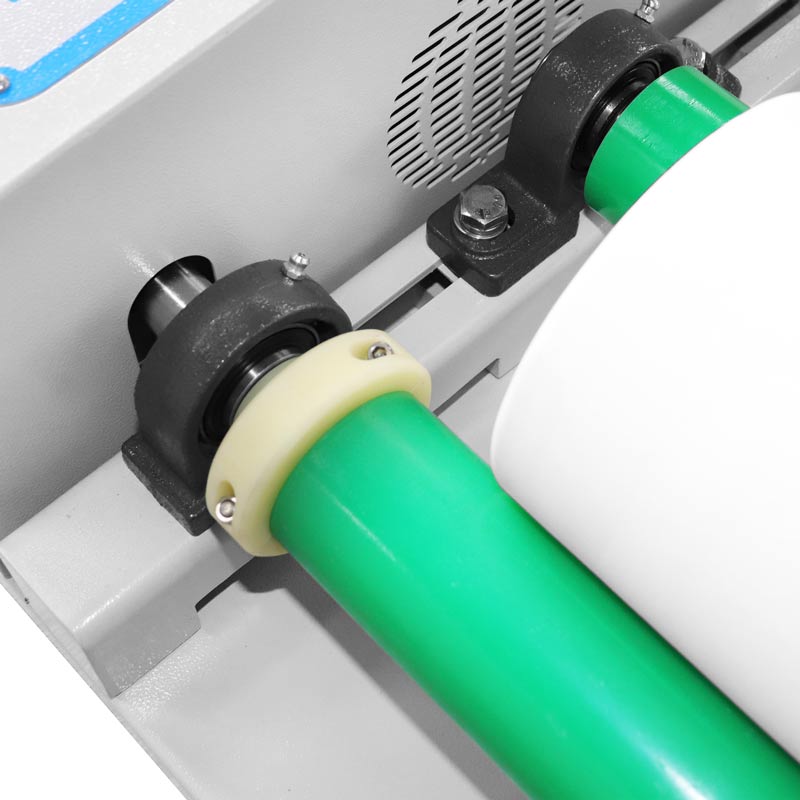
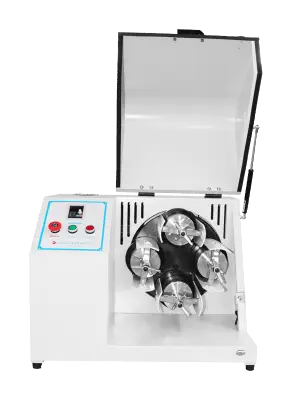
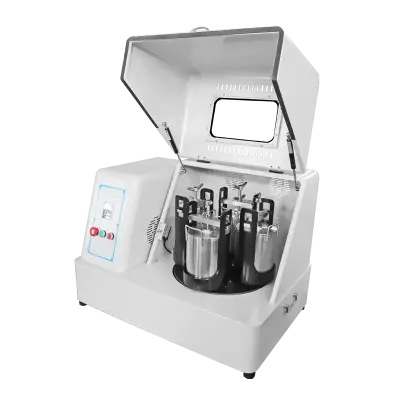
Lab roll ball mills are often classified by how many jars they can hold. A single-station unit holds one jar and is ideal when a researcher needs to focus on one sample or when bench space is limited. A multi-station roll mill holds two, three, four, or more jars on the same set of rollers or on separate roller pairs. Multi-station designs allow parallel processing: several samples can be ground under the same speed and duration, which improves productivity and comparability. They are common in laboratories that handle multiple geological samples, battery materials, or ceramic formulations in a day.
The choice between single and multi-station depends on workload and experimental design. If the goal is to test many variables, a multi-station mill can run several conditions at once, although each jar may still need its own media and sample. If the goal is to produce a single well-characterized powder, a single-station mill may be simpler and easier to control. Some roll mills also offer adjustable roller spacing to accommodate jars of different diameters. This flexibility lets a lab use a range of jar sizes without buying a new machine for each one.
Jar Materials and Lining Options
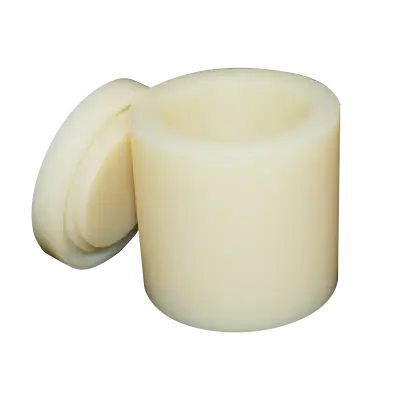
The jar is more than a container; it is part of the grinding system. Common jar materials include stainless steel, nylon, polyurethane, PTFE, alumina, zirconia, agate, and tungsten carbide. Each has a different hardness, wear rate, and potential to introduce contamination. Stainless steel jars are durable and suitable for many hard materials, but they can wear and add iron or chromium to the sample. Ceramic jars such as alumina or zirconia resist wear and are often chosen for high-purity work. Agate jars are relatively soft and can be useful when metallic contamination is unacceptable. Polymer jars are lightweight and can reduce noise, but they may wear faster with abrasive powders.
Some jars are lined or coated to combine the strength of a metal shell with the chemical inertness of a ceramic or polymer surface. The product images for the lab roll ball mill show examples of jars and roller arrangements that reflect this variety. When selecting a jar, operators should consider the hardness of the sample, the acceptable level of contamination, the need for chemical resistance, and the ease of cleaning. A jar that is too soft may wear quickly; a jar that is too hard may damage delicate media or create excessive noise. The best choice is usually the one that balances grinding efficiency with sample purity.
Wet and Dry Grinding Modes
A lab roll ball mill can usually operate in dry or wet mode. Dry grinding is simple and produces a free-flowing powder, but it can generate dust, cause agglomeration, and lead to caking on the jar walls. Wet grinding uses a liquid medium such as water, ethanol, or another solvent to disperse the particles. The liquid reduces dust, improves heat dissipation, and can help prevent agglomeration. It also allows finer grinding because the liquid keeps particles separated and carries them into the grinding zone. After wet milling, the powder must be dried, which adds a step and may cause shrinkage or aggregation during drying.
The choice between wet and dry depends on the material and the intended use. Materials that are sensitive to oxidation may be processed wet with a suitable solvent. Materials that must remain dry for the next process may be milled dry. Some labs use wet grinding for particle size reduction and then dry the slurry in an oven or freeze dryer. Others use dry grinding for simple size reduction before sieving. Because the lab roll ball mill is flexible, it can often be adapted to either route with the right jar, media, and operating parameters.
Key Performance Indicators and Selection Points
Capacity and Sample Volume
When choosing a lab roll ball mill, the first question is how much material must be processed. Capacity is usually expressed in terms of jar volume, not machine footprint. A small jar may hold only a few grams of sample, while a larger jar can hold several kilograms. The usable sample volume is always less than the jar volume because space is needed for grinding media and movement. As a rule, the jar should not be filled too full; leaving free space allows the media to tumble and cascade. Overfilling reduces efficiency and can cause the media to lock together. Underfilling wastes capacity and may increase wear.
For laboratories, capacity should match the analytical workload. If only a few grams are needed for X-ray diffraction, spectroscopy, or thermal analysis, a small jar is sufficient. If the mill must supply powder for pilot-scale testing or small-batch production, a larger jar or multiple jars may be necessary. It is also useful to consider future needs: a mill with adjustable rollers can accept a range of jar sizes, which makes it more adaptable than a fixed-size unit. The product page for the lab roll ball mill can help users see the available configuration and decide whether it fits their sample volume.
Particle Size Control and Uniformity
Particle size control is the reason most labs use a ball mill. The final particle size depends on the material, the media, the rotation speed, and the milling time. In general, longer milling produces finer powder, but there is a practical limit. After a certain point, particles may agglomerate, the mill may contaminate the sample, or the energy input may no longer overcome the strength of the particles. The goal is usually to reach a target size range with a narrow distribution. Uniformity matters because broad distributions can cause inconsistent behavior in sintering, pressing, coating, or chemical reactions.
To improve uniformity, operators can optimize the media size distribution, use a moderate rotation speed, and avoid overfilling. Wet grinding often helps because the liquid disperses particles and prevents them from re-agglomerating. If the powder is intended for particle size analysis, it may be necessary to mill for a set time and then check the result with a sieve or laser diffraction instrument. Because the lab roll ball mill is a mechanical device, reproducibility depends on keeping all variables constant from batch to batch. A written protocol helps ensure that the same sample does not behave differently from one day to the next.
Energy Use, Efficiency, and Heat
Lab roll ball mills are generally not high-power machines, but energy efficiency still matters. The rotating rollers must overcome friction, the weight of the jar, and the tumbling media. A well-designed mill uses stable rollers and appropriate bearings to reduce vibration and wasted energy. The efficiency of grinding also depends on how effectively the media transfer energy to the sample. If the speed is too low, the media may simply slide; if it is too high, the media may centrifuge. Both extremes waste energy and produce poor results.
Heat is another consideration. Grinding generates friction, and friction raises the temperature of the jar and sample. For heat-sensitive materials, excessive temperature can cause degradation, oxidation, or phase changes. Some labs reduce speed, mill in shorter intervals, or use wet grinding to dissipate heat. Others use a cooling jacket or low-temperature setup if the material is very sensitive. The lab roll ball mill can be operated with pauses to let the jar cool, which is a simple way to manage heat without complex equipment. Monitoring temperature and observing the powder after milling can help operators find a safe operating window.
Automation, Programmability, and Ease of Use
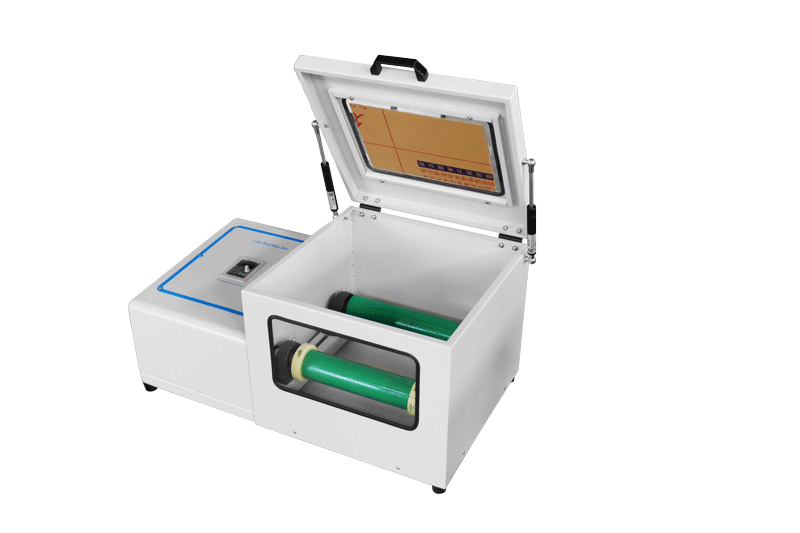
Modern lab roll ball mills may include digital controls for rotation speed and running time. Some models offer programmable cycles that alternate forward and reverse rotation, which can improve mixing and prevent the sample from caking on one side of the jar. Timers allow unattended operation, so a researcher can start a long grind and return when it is finished. Emergency stops and safety covers are important features because rotating jars and heavy media can pose hazards if the mill is not used correctly. A clear display and simple controls make it easier to repeat a method and train new users.
Automation does not replace good method development. Even a programmable mill needs the right jar, media, and sample load. However, programmable control improves consistency. When a protocol is stored, the same speed and time can be reproduced weeks later. This is especially valuable in quality control or collaborative research, where different operators may run the same material. The lab roll ball mill product page can show whether the equipment includes these control features, helping buyers compare options.
Maintenance and Cleaning
Maintenance for a lab roll ball mill is usually straightforward. The rollers, bearings, and drive system should be kept clean and free of dust. Jars and media must be cleaned between samples to avoid cross-contamination. If the same jar is used for different materials, a thorough wash and rinse may be necessary, followed by drying. Some labs keep dedicated jars for specific materials to reduce the risk of contamination. Media should be inspected for wear, cracks, or embedded particles. Worn media can change grinding performance and may release material into the sample.
Roller surfaces should be checked for wear or build-up. If the rollers become uneven or coated with powder, the jar may not rotate smoothly. Belts, couplings, and bearings may need occasional inspection depending on use. A well-maintained mill runs more quietly, uses less energy, and produces more consistent results. Because the lab roll ball mill is often used for small batches, downtime can delay experiments. Simple preventive maintenance and careful cleaning are therefore part of good laboratory practice. The product information for the lab roll ball mill can provide guidance on compatible jars and accessories.
Applications and Selection Advice
Typical Industries and Use Cases
Lab roll ball mills appear in many fields. In geology and mining, they prepare rock, mineral, and ore samples for chemical analysis. In materials science, they grind ceramics, oxides, and battery materials for sintering or characterization. In chemistry, they help produce fine powders for catalysis, pigments, and pharmaceuticals. In environmental testing, they process soil and sediment samples. In metallurgy, they support powder metallurgy research by producing metal powders with controlled size. The common thread is the need for a small, controllable, and reproducible grinding step.
These mills are also used in teaching laboratories, where students learn about comminution, particle size reduction, and powder handling. Because the equipment is relatively compact and easy to operate, it can be used in a fume hood or on a sturdy bench, provided the jar is properly secured. The process can be scaled from a few grams to a few kilograms, depending on the jar and mill size. For many labs, the lab roll ball mill is a bridge between hand grinding and large production mills, offering better consistency than manual methods without requiring a full-scale plant.
How to Choose the Right Lab Roll Ball Mill
Selection should start with the sample. What material will be ground? How hard is it? How much is needed? What particle size is required? Is contamination a concern? Is the material heat-sensitive or oxygen-sensitive? The answers determine the jar material, media type, and whether wet or dry grinding is appropriate. Next, consider capacity and number of jars. A single-station mill may be enough for occasional use, while a multi-station mill improves throughput for busy laboratories. Adjustable rollers add flexibility for different jar sizes.
Then look at controls and safety. A digital timer and variable speed control are useful for method development. A safety cover or enclosure protects operators from moving parts and flying debris. Easy cleaning and access to the jar area save time. Finally, consider support and accessories. Jars and media should be available in the materials the lab needs. The lab roll ball mill described on the product page is one option to evaluate against these criteria. By matching the mill to the material and workload, a laboratory can achieve reliable fine grinding without overspending on capacity it does not need.
Practical Tips for Better Results
Start with a small trial batch before committing a valuable sample to a long run. Record the jar type, media size, media weight, sample weight, rotation speed, and milling time. If the powder is not fine enough, increase time gradually rather than jumping to the highest speed. If the powder cakes, reduce the sample load or consider wet grinding. If contamination is detected, switch to a more wear-resistant jar or media. Clean the jar and media carefully between runs. These simple habits make the lab roll ball mill more predictable and extend the life of the equipment.
It also helps to think about the entire workflow. Milling is usually one step among crushing, splitting, sieving, drying, and analysis. A mill that produces a powder with the right size distribution can improve the accuracy of downstream measurements. A mill that contaminates or overheats the sample can ruin an experiment. Therefore, the best lab roll ball mill is not necessarily the largest or most powerful; it is the one that matches the material, the required fineness, and the laboratory's throughput. With the right setup, it becomes a dependable tool for preparing powders day after day.
Related Products
Get In Touch
Our professional team will reply to you within one business day. Please feel free to contact us!