

What is a Lab Jaw Crusher? A Crushing Equipment for Sample Preparation in Laboratories
What is a Lab Jaw Crusher? A Crushing Equipment for Sample Preparation in Laboratories
At its core, a lab jaw crusher is a professional crushing device used in laboratories, research institutions, and small-scale industrial settings to reduce hard and brittle materials into smaller, uniform particles. It is the go-to equipment for primary crushing of ores, rocks, coal, slag, ceramics, and other brittle substances, ensuring that the sample size meets the requirements for subsequent analysis or further grinding. Unlike industrial-scale crushers, lab jaw crushers are compact, easy to operate, and offer precise control over the output particle size, making them indispensable in material preparation and quality control.
Core Functions and Working Principle
The fundamental function of a lab jaw crusher is to transform large, irregular chunks of material into smaller, more manageable fragments. This is achieved through a simple yet effective mechanical process: two opposing jaw plates create a crushing chamber, with one jaw fixed (stationary) and the other moving (swing jaw). When the motor drives the eccentric shaft, the swing jaw moves in a periodic motion toward and away from the fixed jaw. During the forward stroke, the material caught between the jaws is crushed by compression, shear, and friction forces. During the backward stroke, the crushed material falls downwards by gravity and discharged from the bottom opening.
The key working parameters that influence crushing performance include the rotational speed of the eccentric shaft, the gap (closed side setting) between the jaw plates, and the material's hardness and moisture content. A smaller gap produces finer output but reduces throughput, while a larger gap increases capacity but yields coarser particles. Typical lab jaw crushers can achieve output sizes ranging from 1 mm to 250 mm, depending on the model and adjustment.
Key Components and Core Technologies
While lab jaw crushers share a similar basic structure, their quality and performance depend heavily on the design and materials of key components:
Jaw Plates (Crushing Surfaces)
The jaw plates are typically made of high-manganese steel or wear-resistant alloys. Some premium models use composite materials like ZG30Cr5Mo to extend service life, especially when crushing abrasive ores like granite. The tooth profile (e.g., corrugated or flat) affects the crushing efficiency and product shape.
Frame and Housing
The main frame can be cast iron or welded steel. Welded frames are lighter and more impact-resistant, accounting for about 30% of the total weight compared to 50% for cast frames. Modern lab crushers often adopt welded structures for better durability and easier maintenance.
Adjustment Mechanism
Lab crushers use either wedge or gasket adjustment systems to change the discharge opening. Wedge adjustment is more precise and convenient, allowing operators to fine-tune the output size without stopping the machine. Some advanced models feature hydraulic or electric adjustment for automated control.
Transmission System
The eccentric shaft and bearings must withstand high cyclic loads. High-quality spherical roller bearings and properly lubricated eccentric shafts ensure smooth operation and long life.
Key Performance Indicators and Selection Criteria
When selecting a lab jaw crusher, users should consider the following critical factors:
- Feed Size and Output Size Range: Ensure the crusher can accommodate the maximum feed size of your material (usually up to 60-100 mm for lab models) and achieve the desired output particle size (e.g., <3 mm for further milling).
- Crushing Capacity: Lab jaw crushers typically process 1-200 kg/h. Choose according to your daily sample volume. Higher capacity models often have larger dimensions.
- Material Hardness and Abrasiveness: The crusher's jaw plate material must match the material's Mohs hardness. For hard samples like quartz or corundum, choose wear-resistant alloy or zirconia jaw plates.
- Moisture Content: Materials with >8% moisture may cause clogging. Some lab crushers are designed with smooth surfaces to reduce sticking.
- Automation and Control: Look for models with digital gap indicators, safety interlocks, and easy-clean features to improve efficiency and reduce cross-contamination.
- Maintenance and Cleaning: Removable jaw plates, easy-access adjustment mechanisms, and sealed dust-proof designs simplify maintenance.
Applications and Selection Recommendations
Lab jaw crushers are widely used in mining, metallurgy, geology, chemical engineering, building materials, and environmental testing. Typical applications include:
- Crushing ore samples for assay analysis (e.g., gold, copper, iron)
- Preparing coal, coke, and slag samples for calorific value or chemical testing
- Breaking sintered ceramics, glass, and refractory materials
- Crushing aggregates for construction material testing
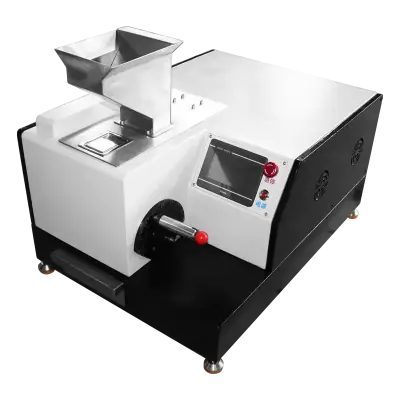
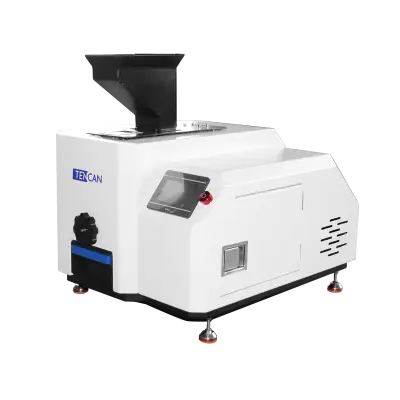
For users who need a reliable, compact unit with good throughput and precise size control, a standard lab jaw crusher like the TENCAN lab jaw crusher is an excellent choice. If your materials are extremely hard or abrasive, consider models with zirconia or tungsten carbide jaw plates. For laboratories handling multiple sample types, a crusher with easy-clean features and adjustable output range is recommended.
References
Related Products
Get In Touch
Our professional team will reply to you within one business day. Please feel free to contact us!