

What is a Horizontal Tube Furnace? A High-Temperature Thermal Processing Equipment for Material Synthesis and Sintering
What is a Horizontal Tube Furnace? A High-Temperature Thermal Processing Equipment for Material Synthesis and Sintering
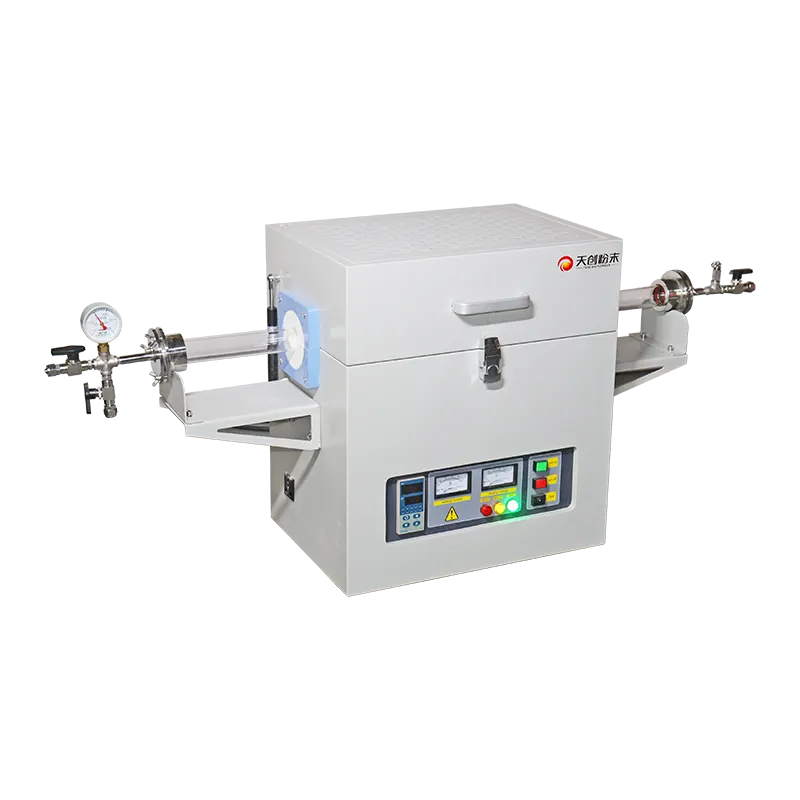
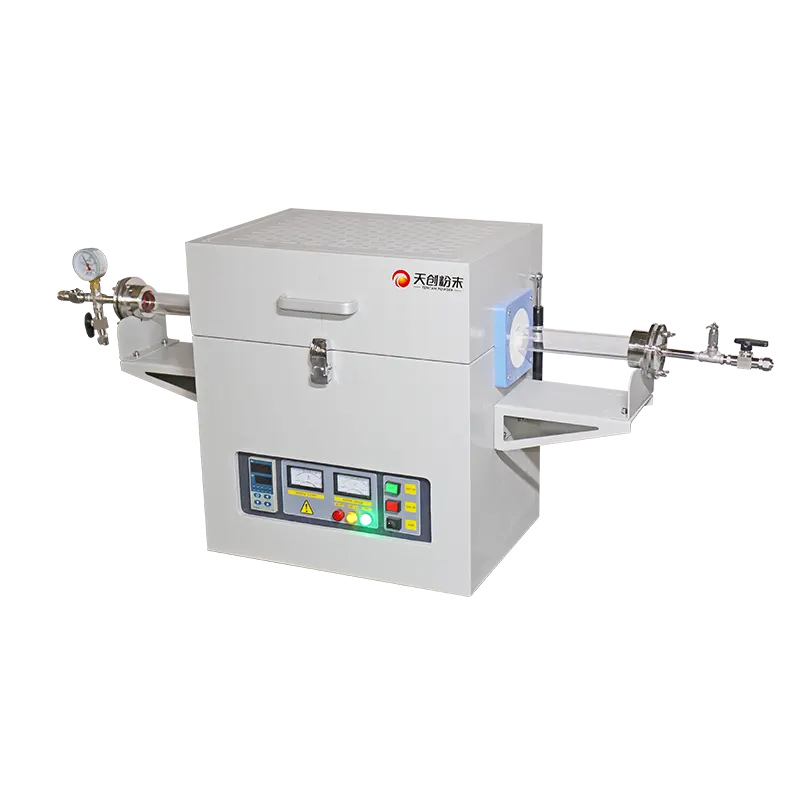
At its core, a horizontal tube furnace is a specialized thermal processing system that materials scientists, chemists, and industrial manufacturers use to heat, sinter, anneal, or synthesize materials under controlled temperature and atmosphere conditions. The equipment features a cylindrical heating chamber (the tube) mounted horizontally, with precise temperature control and often integrated gas or vacuum systems. It is indispensable for processes ranging from ceramic sintering and metal heat treatment to nanomaterial synthesis and catalyst activation.
Core Function and Working Principle
The fundamental function of a horizontal tube furnace is to transform raw materials — such as powder compacts, solid substrates, or precursor gases — into final products with desired physical and chemical properties through precise thermal cycles. The furnace works by heating a sample placed inside a horizontal tube (typically made of quartz, alumina, or silicon carbide) using resistance heating elements (e.g., molybdenum disilicide or silicon carbide rods) that surround the tube. The tube is sealed at both ends and can be connected to a vacuum pump or gas supply system to create an inert, reducing, or oxidizing atmosphere.
The working principle relies on radiant heat transfer: the heating elements raise the temperature of the tube wall, which then radiates heat to the sample. A programmable temperature controller (often using PID algorithms) precisely ramps up and holds the target temperature, ensuring uniform thermal exposure. For example, in ceramic sintering, the furnace heats the green body to a specific temperature (e.g., 1400°C) and holds it for a set duration, allowing grain growth and densification without melting. Key parameters include heating rate, holding time, cooling rate, and atmosphere composition, all of which directly affect the final material's density, phase purity, and mechanical properties.
Main Types and Classification
Horizontal tube furnaces are primarily categorized by their maximum operating temperature and tube material:
1. Low-Temperature Horizontal Tube Furnaces (Up to 1200°C)
These use quartz or transparent quartz tubes and are ideal for applications like sample drying, annealing, and low-temperature chemical vapor deposition (CVD). They are cost-effective and suitable for general laboratory use.
2. Medium-Temperature Horizontal Tube Furnaces (1200°C – 1600°C)
Equipped with alumina tubes or ceramic fiber tubes, these are common for sintering of advanced ceramics, such as alumina, zirconia, or silicon nitride. They often feature silicon carbide heating elements and can be used for both air and inert gas atmospheres.
3. High-Temperature Horizontal Tube Furnaces (Above 1600°C, up to 1800°C or higher)
These use molybdenum disilicide (MoSi2) heating elements and high-purity alumina or zirconia tubes. They are designed for demanding applications like sintering of transparent ceramics, heat treatment of superalloys, and synthesis of high-purity nanomaterials. Some models incorporate vacuum flanges and advanced gas mixing systems for precise atmosphere control.
Additionally, variations like rotary tube furnaces and vertical tube furnaces exist for specific handling needs, but the horizontal configuration remains the most popular due to its ease of sample loading and compatibility with long or continuous processes.
Key Performance Indicators and Selection Criteria
When selecting a horizontal tube furnace, users should evaluate the following core parameters:
- Temperature Range and Uniformity: The maximum achievable temperature (e.g., 1200°C, 1600°C, 1800°C) must match the processing requirements. Temperature uniformity along the tube length (typically ±1-5°C) is critical for consistent results, especially for batch sintering of multiple samples.
- Atmosphere Control Capability: The ability to introduce inert gases (argon, nitrogen), reactive gases (hydrogen, oxygen), or create vacuum (down to 10⁻³ Pa) is essential for preventing oxidation or enabling specific chemical reactions. Look for furnaces with mass flow controllers and vacuum gauges.
- Heating Rate and Cooling Rate: Fast heating and cooling capabilities reduce cycle time and improve productivity. Some advanced models offer programmable multi-step temperature profiles.
- Tube Material and Dimensions: The tube diameter and length determine the sample size. Quartz tubes are cheaper but limited to lower temperatures; alumina tubes are more durable and suitable for higher temperatures. For corrosive atmospheres, special coatings or silicon carbide tubes may be required.
- Automation and Programmability: Modern horizontal tube furnaces feature touch-screen controllers, data logging, and remote monitoring capabilities. This is especially important for research labs that require repeatable, documented processes.
- Safety and Maintenance: Over-temperature protection, leak detection, and easy access to heating elements for replacement are practical considerations. The heating element lifetime and the ease of replacing the tube also affect long-term cost.
Application Fields and Selection Advice
Horizontal tube furnaces are widely used in:
- Materials Research & Development: Sintering of advanced ceramics (e.g., zirconia, alumina), metal-organic framework (MOF) synthesis, and solid-state reactions.
- Electronics & Semiconductor: Annealing of thin films, oxidation of silicon wafers, and CVD coating of nanowires.
- Energy & Battery Materials: Heat treatment of electrode materials (e.g., LiCoO₂, NMC), synthesis of solid electrolytes, and carbonization of precursors for supercapacitors.
- Catalysis & Chemical Engineering: Calcination of catalysts, activation of zeolites, and thermal decomposition of precursors.
For selection, consider the following:
- Academic labs with limited budgets: Opt for a 1200°C quartz tube furnace with basic gas control, sufficient for most routine experiments.
- Industrial R&D requiring high throughput: Choose a 1600°C or 1800°C model with programmable controllers and larger tube diameters (e.g., 60-100mm).
- Production units needing continuous processing: Explore rotary tube furnaces or multiple-zone horizontal furnaces for uniform heating of bulk powders.
Always verify the manufacturer's calibration records and ask for a demonstration of temperature uniformity. A well-chosen horizontal tube furnace accelerates material development and ensures reliable, repeatable results.
References
Related Products
Get In Touch
Our professional team will reply to you within one business day. Please feel free to contact us!