

What is a Horizontal Tube Furnace? A Precision Heating Equipment for Controlled Atmosphere and Vacuum Thermal Processing
What is a Horizontal Tube Furnace?
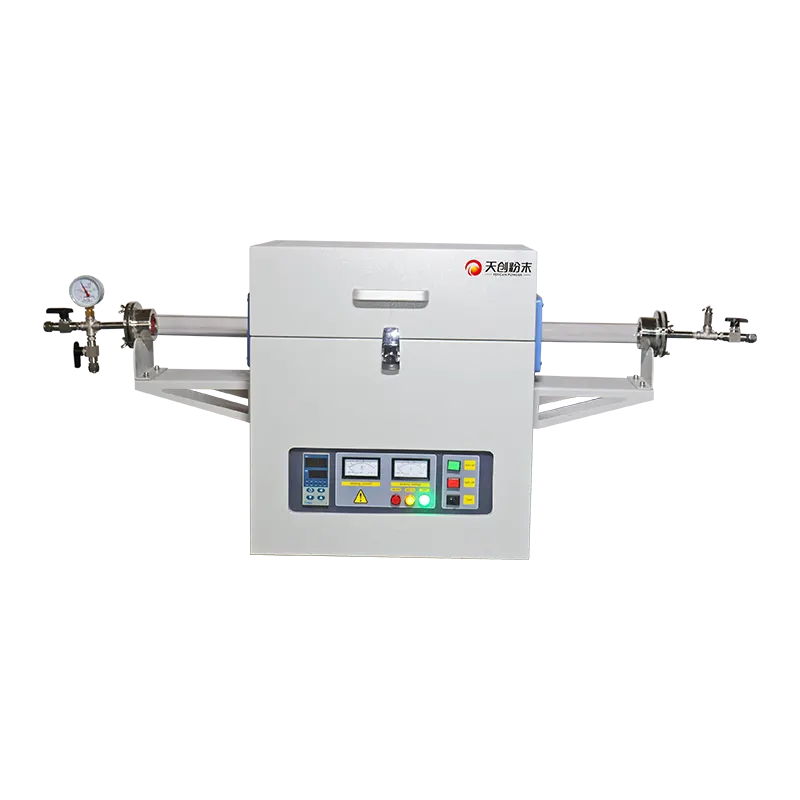
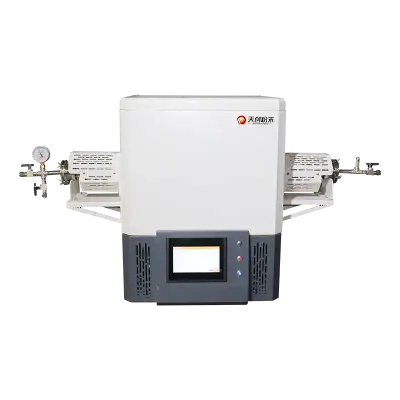
At its core, a horizontal tube furnace is a specialized thermal processing device widely used in materials science, ceramics, metallurgy, electronics, and chemical engineering. It is designed to heat samples in a controlled atmosphere or vacuum environment, enabling precise sintering, annealing, calcination, and heat treatment processes. The equipment features a horizontally oriented furnace tube made of high-purity quartz, alumina, or other refractory materials, surrounded by heating elements and insulated casing, with advanced temperature control systems for repeatable and accurate thermal profiles.
Core Function and Working Principle
The primary function of a horizontal tube furnace is to transform materials from their initial state (e.g., green compacts, powders, or raw ceramics) into a final densified or heat-treated product through controlled thermal exposure. The core working principle involves placing the sample inside a sealed tube, which is then heated by electrical resistance elements (such as Kanthal wire, silicon carbide rods, or molybdenum disilicide) arranged around the tube. The furnace body adopts a double-layer shell structure with a built-in cooling fan to keep the exterior surface temperature low and safe.
Temperature control is achieved via a PID (Proportional-Integral-Derivative) controller, which can regulate the heating rate, holding time, and cooling rate with high precision—typically ±1°C. Modern horizontal tube furnaces support programmable multi-segment curves (e.g., 30 or 50 segments), allowing users to design complex thermal profiles for different processes. The tube is sealed with stainless steel flanges fitted with O-rings, enabling operation under vacuum (down to -0.1 MPa) or various gas atmospheres (argon, nitrogen, hydrogen, oxygen, etc.). The combination of precise temperature control and atmosphere management makes the horizontal tube furnace indispensable for advanced material synthesis and processing.
Key Components and Technology
A horizontal tube furnace consists of several critical components:
- Furnace Tube: Typically made of quartz glass (for up to 1200°C) or high-purity alumina ceramic (for up to 1800°C). The tube diameter and length can be customized, with common diameters ranging from 30 mm to 150 mm and heating zone lengths from 150 mm to 1200 mm.
- Heating Elements: Depending on the maximum temperature, heating elements may be high-temperature alloy resistance wires (for ≤1200°C), silicon carbide rods (for ≤1400°C), or molybdenum disilicide (MoSi2) elements (for ≤1800°C). They are arranged around the tube to ensure uniform heating.
- Insulation: High-quality refractory materials such as ceramic fiber or alumina fiber are used to minimize heat loss and improve energy efficiency.
- Sealing System: Stainless steel flanges with double O-rings provide reliable vacuum or gas-tight sealing. Some models include quick-release mechanisms for easy sample loading.
- Control System: An integrated PID controller with a touch screen or keypad interface allows programming of heating rates (from 1°C/h to 40°C/min), temperature setpoints, and multi-segment profiles. Advanced models offer RS485 or Ethernet communication for remote monitoring and data logging.
Key Performance Indicators and Selection Criteria
When selecting a horizontal tube furnace, users should consider the following parameters:
- Maximum Temperature: Common temperature grades are 1100°C, 1200°C, 1400°C, 1600°C, and 1800°C. Choose based on the melting or sintering point of your materials.
- Temperature Accuracy and Uniformity: Typical control accuracy is ±1°C, and uniformity across the heating zone is also ±1°C (depending on zone length). Longer tubes may require multiple control zones to maintain uniformity.
- Heating Rate and Cooling: The ability to ramp up quickly (e.g., 40°C/min) and cool down rapidly (via forced air or water cooling) can significantly reduce processing time.
- Atmosphere and Vacuum Capability: Check the vacuum level (down to -0.1 MPa) and gas flow control options. Some furnaces support multiple gas inlets and outlets for different atmospheres.
- Tube Material and Diameter: Quartz tubes are suitable for most applications up to 1200°C, while alumina tubes are needed for higher temperatures. The tube diameter determines the sample size that can be accommodated.
- Programmability: For complex thermal cycles, a programmable controller with at least 30 segments is recommended. Touch-screen interfaces and PC connectivity enhance usability.
- Safety Features: Over-temperature protection, over-current protection, thermocouple break detection, and leakage protection are essential for safe operation.
Applications and Selection Advice
Horizontal tube furnaces are widely used in:
- Materials Science Research: Sintering of advanced ceramics, metal powders, and composites under controlled atmospheres.
- Chemical Vapor Deposition (CVD): Growing thin films or nanowires using reactive gases.
- Electronics and Semiconductors: Annealing, oxidation, and diffusion processes in wafer fabrication.
- Energy and Battery Materials: Heat treatment of electrode materials for lithium-ion batteries or solid oxide fuel cells.
- Geology and Environmental Science: Thermal analysis of minerals and waste samples.
For laboratory R&D, a compact horizontal tube furnace with a single temperature zone and quartz tube (up to 1200°C) is often sufficient. For production or pilot-scale work, larger tubes with multiple heating zones and higher temperature capability (e.g., 1600°C with alumina tube) are recommended. Always ensure the furnace is compatible with the required atmosphere (inert, reducing, or oxidizing) and vacuum level.
References
Related Products
Get In Touch
Our professional team will reply to you within one business day. Please feel free to contact us!