
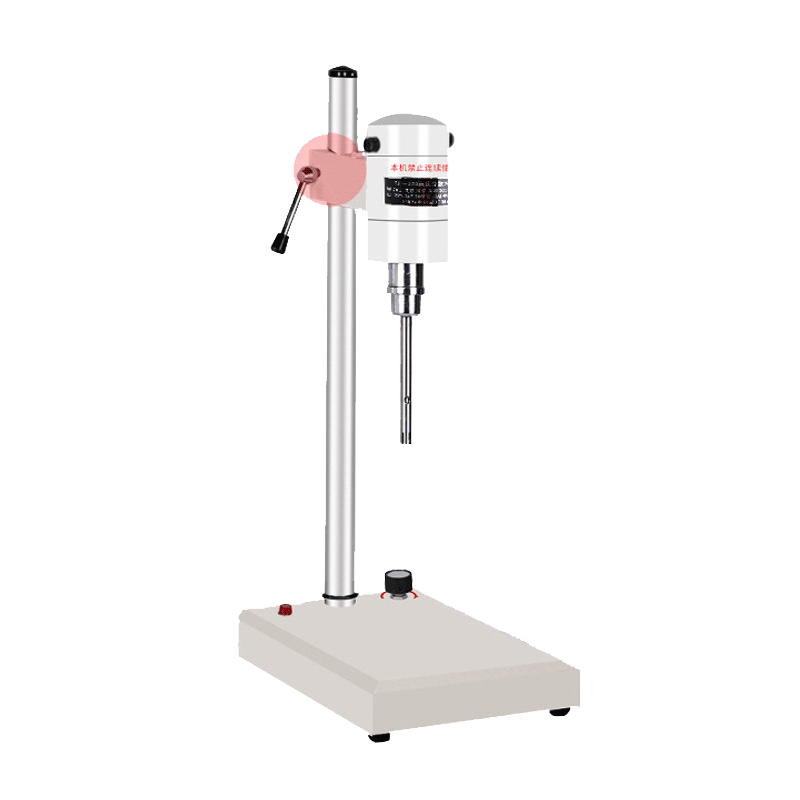
What is a High Speed Dispersing Homogenizer? A Professional Device for Efficient Mixing, Emulsifying and Fine Dispersing of Liquid Materials

Introduction: What is a High Speed Dispersing Homogenizer?
At its core, a high speed dispersing homogenizer is a specialized mixing device used in laboratories and industries to rapidly disperse, emulsify, homogenize and dissolve solid-liquid or liquid-liquid mixtures. It is an essential tool for industries ranging from food and cosmetics to pharmaceuticals and fine chemicals. The machine combines the functions of a high-speed disperser and a homogenizer in one unit, allowing operators to break down agglomerates, reduce droplet size and create stable emulsions or suspensions in a single process.
Core Working Principle: How Does It Work?
The fundamental mechanism of a high speed dispersing homogenizer is based on the principle of high-shear mixing. The device consists of a motor-driven shaft with a rotor (often a toothed or slotted impeller) that rotates at very high speeds inside a stationary stator. When the rotor spins, it creates a strong vacuum that draws the liquid mixture into the gap between the rotor and stator. Within this narrow clearance (typically 0.1–0.5 mm), the material is subjected to intense mechanical forces: shearing, impact, cavitation and turbulence.
These forces effectively tear apart large particles, break down droplets and disperse agglomerates into much finer constituents. The result is a uniform and stable mixture with significantly reduced particle or droplet size, often reaching the submicron or even nanometer range. The entire process is continuous and can be completed in a very short time, making it ideal for both batch and inline production setups.
Main Types and Configurations
High speed dispersing homogenizers come in various designs to suit different scales and applications. The most common types include:
1. Batch Dispersing Homogenizers
These are standalone units where a mixing vessel is placed under the dispersing head. They are widely used for small-scale R&D and pilot production. The operator can easily control the process by adjusting speed, time and batch volume.
2. Inline/Continuous Dispersing Homogenizers
Also known as pipeline or flow-through homogenizers, these machines are installed in a piping system and treat the material as it flows through. They are preferred for large-scale production because they offer high throughput and consistent product quality.
3. Portable or Handheld Homogenizers
These compact units are designed for laboratory use, such as preparing small samples for analysis. They offer flexibility and easy cleaning, making them suitable for quick experiments.
Within each type, the key differences lie in rotor-stator geometry (slotted, toothed, conical), shaft speed range, motor power and material of construction. Selecting the right configuration depends on the viscosity of the material, desired particle size and required throughput.
Key Performance Indicators and Selection Criteria
When choosing a high speed dispersing homogenizer, pay attention to the following parameters:
- Rotor Speed (RPM): Higher speeds generate stronger shear forces, enabling finer dispersion. Typical laboratory units can reach 10,000–30,000 RPM, while industrial models may be lower but with larger diameters.
- Tip Speed (m/s): The linear velocity at the rotor tip is often more critical than RPM alone. A tip speed of 20–50 m/s is common for general applications; up to 66 m/s is available for demanding tasks like nano dispersing.
- Shear Gap: The distance between rotor and stator directly affects the shear intensity. Smaller gaps (0.1–0.3 mm) produce finer results but may limit flow capacity.
- Motor Power: Ranges from hundreds of watts for lab units to tens of kilowatts for production machines. Power must match the material viscosity and batch volume.
- Material Contact Parts: Stainless steel (304/316L) is standard; for corrosive or abrasive materials, options like Hastelloy or ceramic coatings are available.
- Control Features: Modern units offer variable speed drives, timers, temperature sensors and even PLC automation for repeatable processes.
- Ease of Cleaning: For multi-product use, quick-disconnect design and CIP (clean-in-place) capability are valuable.
Application Fields and Selection Advice
High speed dispersing homogenizers are widely used in:
- Food & Beverage: Emulsifying sauces, dressings, dairy products, drinks and flavor emulsions.
- Cosmetics & Personal Care: Creams, lotions, sunscreens, toothpaste and nail polish.
- Pharmaceuticals: Ointments, suspensions, liposomes, vaccines and drug delivery systems.
- Chemicals & Coatings: Paints, inks, adhesives, pigments and polymer dispersions.
- Nanomaterials: Deagglomeration and dispersion of nano-powders, CNTs, graphene, etc.
For laboratory R&D, a compact batch homogenizer with a speed range up to 28,000 rpm is adequate. For pilot or small production, a more robust unit with a higher power motor and larger processing head is recommended. If continuous production is needed, choose an inline homogenizer with the appropriate pump system. Always ensure that the wetted materials are compatible with your product.
Explore Related Products
If you are looking for complementary equipment for mixing and dispersing, consider the Shear Emulsifier for emulsion preparation, or the Lab Disperser for versatile small-scale dispersing. For solid mixing, a V-Type Mixer or Double Cone Mixer can be used in combination with your homogenizer.
References
For more detailed specifications and models, please visit the official product page: High Speed Dispersing Homogenizer.
Related Products
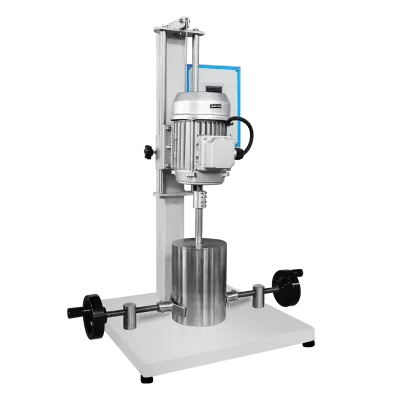
Get In Touch
Our professional team will reply to you within one business day. Please feel free to contact us!