

What Is a Corundum Planetary Mill Jar? A Durable Grinding Jar for Ball Mills
From a practical standpoint, a corundum planetary mill jar is a specialized grinding container used with a planetary ball mill to hold a sample and grinding media during particle size reduction, mixing, and homogenization. Laboratories, pilot plants, and materials-processing teams use it when they need a robust ceramic jar that can withstand abrasive powders while limiting metallic contamination. It is not a stand-alone mill; its performance comes from the combined action of the jar, the grinding balls, and the planetary mill that moves them.
The Role of the Jar in a Planetary Ball Mill
A planetary ball mill creates motion, but the jar defines the environment in which grinding takes place. The mill positions jars on a rotating sun wheel while each jar also turns around its own axis. This compound motion forces the grinding media inside the jar to travel along complex paths, repeatedly contacting the sample. The jar therefore does more than hold material. It contains the powder, transfers mechanical energy, limits contamination, and provides a sealed chamber when the lid is correctly fitted.
For many users, the jar is the most direct point of contact between the sample and the equipment. Powder touches the jar interior, the lid, and the grinding media. If the jar material is too soft, wear can shorten service life and add unwanted material to the batch. If it is chemically unsuitable, the sample may react with the jar surface. A corundum jar is selected when hardness, wear resistance, and a ceramic contact surface are priorities.
The jar also affects practical workflow. Its volume determines how much sample and media can be loaded. Its lid and sealing arrangement influence whether fine powder remains contained during high-energy runs. Its weight and dimensions affect handling, clamping, and the number of jars a mill can carry. These are not secondary details; they influence whether a milling program is repeatable and safe.
How the Grinding Action Works
Motion, Impact, and Friction
Inside the jar, grinding media such as balls are accelerated by the jar wall. As the jar rotates, the media are carried upward and then fall, slide, or roll back into the sample bed. The relative movement generates impact, compression, and shear. Impact is especially important for breaking larger brittle particles, while friction and shear help reduce smaller particles and blend components. Because the jar and the sun wheel move at the same time, the media do not simply settle at the bottom.
The result is a highly energetic mixing and milling environment. The sample is repeatedly trapped between moving media and the jar wall. Over time, coarse particles fracture along flaws and grain boundaries, and the particle-size distribution shifts toward finer sizes. In some systems, the same action can also disperse additives, coat particles, or promote mechanical alloying. The exact outcome depends on the sample, the media, the jar, and the selected operating conditions.
From Coarse Feed to Fine Powder
A corundum planetary mill jar does not change the fundamental physics of milling. It provides a wear-resistant chamber in which the mill can apply energy to the sample. The transformation is from a coarse feed, often a powder or small granules, to a finer powder or a more uniform mixture. Early in the run, large particles are reduced by impact. Later, as the powder becomes finer, friction, attrition, and de-agglomeration become more important. Very fine powders may also tend to agglomerate, so the operator must balance energy input with time and media selection.
Several parameters influence the result. Higher jar rotation speeds generally increase energy input, but they also raise temperature and wear. A larger ball-to-powder ratio can improve breakage, yet it reduces the space available for sample and may increase contamination from media wear. Longer milling times can produce finer particles up to a point, after which agglomeration or saturation may limit further improvement. The jar volume, media size, and fill level all interact, so a process that works in one jar size may need adjustment in another.
Why the Jar Material Matters
In a high-energy planetary mill, the jar surface is not passive. It is exposed to sliding media, impacting particles, and repeated cleaning. A hard ceramic such as corundum is chosen because it resists abrasion better than many softer materials. That helps maintain the jar interior and reduces the chance that jar wear will become a significant source of contamination. For abrasive inorganic powders, this can be a practical advantage.
Material choice also affects chemical compatibility. Corundum is an alumina-based ceramic and is generally regarded as chemically stable for many inorganic samples. However, no jar material is universal. Strongly reactive chemistries, unusual additives, and certain process temperatures can still create compatibility questions. Users should confirm suitability for their specific sample and follow the jar supplier's guidance, especially when the process involves reactive or hazardous materials.
Core Components of a Corundum Jar Assembly
A working jar assembly typically includes the jar body, a lid, a sealing element, and a locking or clamping arrangement. The jar body is the grinding chamber. The lid closes the chamber and may include features that help center or secure the seal. The sealing element is critical because fine powders can migrate into gaps and because high-energy motion can loosen poorly fitted parts. The locking arrangement must hold the lid firmly without distorting the jar.
The grinding media are separate from the jar but equally important. Media should be selected for compatibility with the jar and the sample. Hard media can accelerate wear on softer jar surfaces, while softer media may wear quickly themselves. Media size, quantity, and material all influence energy transfer. A jar that is correctly matched to its media and lid is more likely to deliver repeatable results than a jar that is simply filled as much as possible.
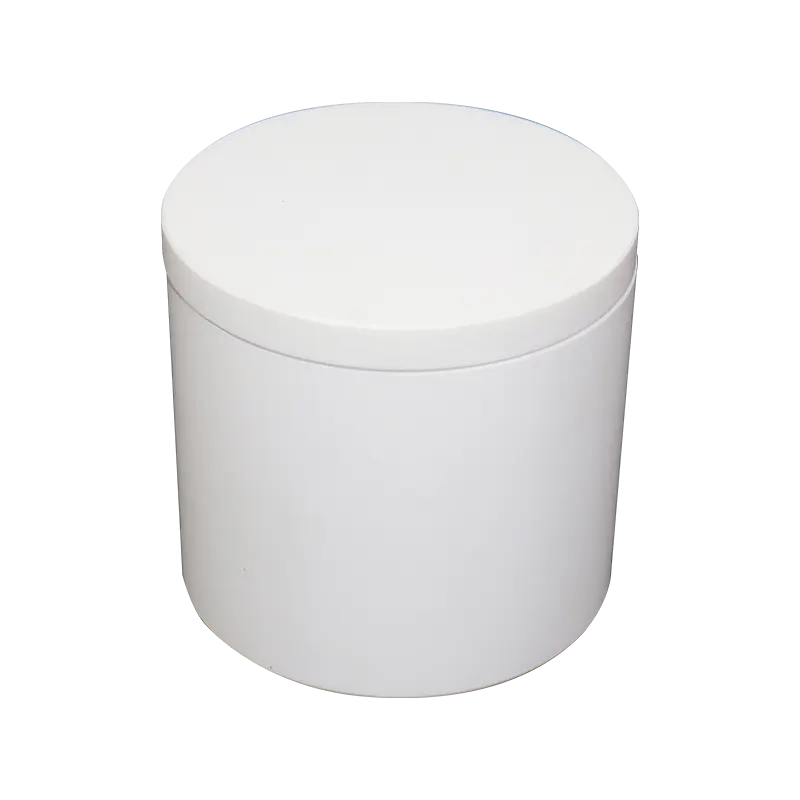
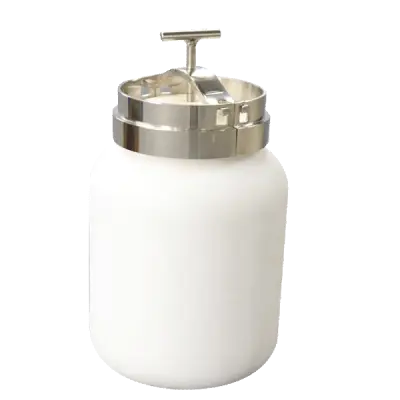
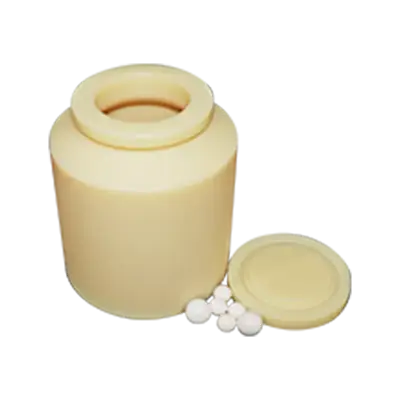
The image above shows the kind of compact jar assembly used in planetary ball milling. Before each run, the operator should confirm that the jar, lid, and seal are clean and undamaged. A small chip or a deformed gasket can cause leakage, loss of sample, or uneven grinding. Because ceramic jars are rigid, they should be handled carefully and stored where they will not strike hard objects.
Why Corundum Is Chosen for Demanding Grinding
Corundum is valued in laboratory milling for a combination of hardness, wear resistance, and chemical stability. These properties are useful when the sample is abrasive, when metallic contamination must be minimized, or when the jar must tolerate repeated cleaning. A metal jar may be tougher, but a ceramic jar can offer a different balance of contamination control and abrasion resistance. The choice is not about one material being best in every case; it is about matching the jar to the sample and the process.
Another reason users consider corundum is that it can be used as a ceramic contact surface for many inorganic powders. Ceramics, minerals, glass, and other hard materials can be aggressive toward softer jar materials. A hard corundum surface can help limit the rate at which the jar itself is worn away. That said, corundum is a ceramic, so it is not indestructible. Impact from oversized media, thermal shock, or careless handling can damage the jar. Users should avoid overloading and should inspect the jar regularly.
Contamination control is a central theme. In trace analysis, battery research, electronic materials, and advanced ceramics, small amounts of unwanted wear debris can matter. A corundum jar does not eliminate contamination, because media and sample also wear, but it gives the user a ceramic option that is often preferred over metal when abrasion and metallic contact are concerns. The correct media choice remains essential, because a mismatched ball material can undermine the benefit of a wear-resistant jar.
Key Performance Indicators and Selection Points
Capacity, Fill Level, and Working Volume
The first selection question is usually capacity. The nominal jar volume is not the same as the usable sample volume. Space is needed for grinding media and for movement. Overfilling can reduce media motion, increase temperature, and place extra stress on the lid. Underfilling can waste capacity and may reduce grinding efficiency because there are too few contacts between media and powder. Users should establish a practical fill range for their process rather than treating the jar as a simple container.
Jar size should match the mill and the experimental plan. A jar that is too large for a small sample may be inefficient, while a jar that is too small may not provide enough material for analysis. In scale-up, changing jar size can change the energy distribution. A process developed in one jar may need re-optimization in another. This is why capacity should be evaluated together with media size, rotation speed, and milling time.
Grinding Efficiency and Media Matching
Grinding efficiency depends on how effectively the media transfer energy to the powder. The jar material sets the wear environment, but the media set the impact energy and contact frequency. Larger media provide more impact energy per collision, which can help break coarse particles. Smaller media provide more contact points, which can be useful for fine grinding and mixing. The best combination depends on the feed size, target fineness, and sensitivity of the sample.
Media density also matters. Dense media can increase impact forces, but they also increase load on the jar and mill. In a ceramic jar, very aggressive media may accelerate wear. Users should select media that are compatible with both the sample and the jar. If contamination is a concern, the media should be chosen with the same care as the jar. A corundum jar paired with an unsuitable media set may not deliver the expected cleanliness or service life.
Sealing, Fit, and Mill Compatibility
A planetary mill jar must fit its holder correctly. The jar dimensions, lid height, and clamping surfaces must match the mill. Poor fit can cause vibration, noise, and uneven motion. The lid and seal must also suit the process. Fine powders are difficult to contain, and high-energy motion can expose weak seals. Before a long run, it is wise to perform a short trial and inspect the lid area for leakage or loosening.
Compatibility is not only mechanical. The jar should be suitable for the intended atmosphere and temperature. Some processes require an inert atmosphere or a sealed environment. Others generate heat during milling. Users should not assume that a standard jar is appropriate for every condition. They should review the product information and confirm that the jar, lid, and seal are intended for the planned use.
Cleaning, Inspection, and Service Life
Cleaning is part of performance. Residual powder can contaminate the next batch, and aggressive cleaning can damage the jar surface. Soft tools and appropriate cleaning agents are generally preferable to harsh abrasion. After cleaning, the jar should be inspected for chips, cracks, dull wear patches, and seal damage. A damaged ceramic surface can shed particles or initiate a crack. A worn seal can allow leakage.
Service life depends on the sample, media, speed, run time, and handling. A jar used for mild mixing will last differently from one used for high-energy grinding of abrasive powders. Rather than waiting for failure, users should establish an inspection routine. If the lid no longer seals, if the interior shows deep wear, or if a crack is visible, the jar should be removed from service. Safety and data quality both depend on replacing worn components before they fail.
Applications and Selection Advice
Corundum planetary mill jars are used in laboratories and small-scale production where planetary ball milling is part of sample preparation, materials research, or quality control. Typical settings include ceramic and glass processing, mineral and inorganic powder preparation, advanced materials development, and applications where a ceramic grinding surface is preferred over metal. The jar is also useful for mixing and homogenizing powders before analysis or further processing.
Selection should begin with the sample. Ask whether the material is hard, abrasive, reactive, heat-sensitive, or prone to agglomeration. Then consider the target result: coarse crushing, fine grinding, mixing, or dispersion. Next, match the jar volume and media to the mill and the batch size. Finally, review sealing, cleaning, and handling requirements. A jar that is convenient to fill but difficult to seal is not a good choice for fine powders.
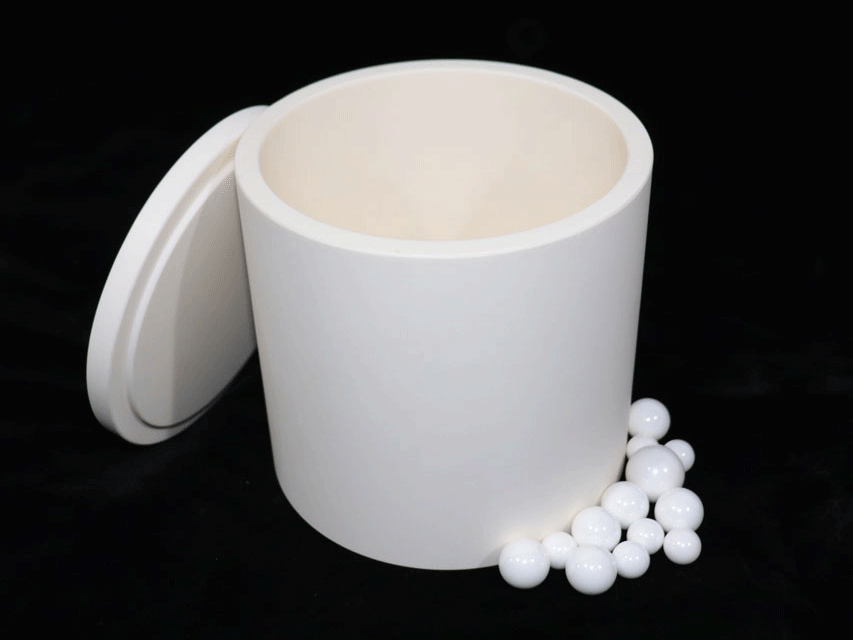
For users who need a ceramic jar with good wear resistance, the corundum planetary mill jar product page provides a starting point for checking the available configuration. Selection should still be based on the actual sample, mill model, and operating conditions rather than on jar name alone.
Frequently Asked Questions
Is a corundum planetary mill jar a complete milling machine?
No. The jar is a grinding container. It must be used with a compatible planetary ball mill, grinding media, and a suitable lid and seal. The mill supplies the motion; the jar contains the sample and helps define the wear environment. Buying a jar without confirming mill compatibility can lead to poor fit or unsafe operation.
Can one jar be used for many different materials?
It can be used for multiple materials only if cleaning is effective and cross-contamination is acceptable. Fine powders can lodge in seals and surface features. A jar used for one sample may require careful cleaning before another. For trace analysis or sensitive materials, a dedicated jar or a documented cleaning procedure may be preferable.
How full should the jar be loaded?
There is no single fill level that works for every process. The jar needs enough free space for media movement and powder displacement. Overloading can reduce motion and stress the lid. Underloading can waste capacity. Users should follow the mill and jar guidance and establish a fill range through trials. The sample-to-media ratio should be recorded so the process can be repeated.
Are corundum jars suitable for very fine grinding?
They can be used in fine-grinding programs, but the result depends on the mill, media, time, and sample. A wear-resistant jar does not guarantee a specific particle size. Very fine powders may agglomerate, and long runs can increase wear. Users should optimize the process and inspect the jar for wear when pursuing fine or ultra-fine results.
How should a ceramic jar be cleaned?
Use methods that do not chip or scratch the ceramic. Soft brushes, suitable solvents, and gentle drying are generally safer than aggressive scraping. Avoid thermal shock and avoid striking the jar against hard surfaces. If the supplier provides cleaning instructions, follow them. After cleaning, check the lid and seal before the next run.
When should a jar be replaced?
Replace or remove a jar from service if it has a visible crack, a chip at the sealing surface, deep wear, or a lid that no longer seals reliably. A jar that has become difficult to clean may also pose a contamination risk. Since ceramic failure can be sudden, regular inspection is important. Do not use a damaged jar simply because it still holds powder.
Practical Operation and Maintenance Checklist
Before use, confirm that the jar matches the mill and that the lid, seal, and locking parts are present and undamaged. Load the sample and media within the recommended working range, then close the jar firmly. Perform a short trial run if the process is new. Listen for unusual noise and check for leakage after the run. These simple steps can prevent lost samples and premature wear.
After use, empty the jar carefully and clean it without harsh impact. Inspect the interior, rim, and seal area. Store the jar where it will not roll or collide with other hard objects. Keep records of sample type, media, speed, and run time so that results can be traced. If a jar is used for multiple projects, maintain a cleaning and inspection log.
During milling, follow the mill manufacturer's instructions for balancing, clamping, and run time. Do not exceed the mill's limits or the jar's intended use. If the sample is hazardous, use appropriate containment and personal protection. If the process generates heat or pressure, confirm that the jar and lid are suitable. A corundum jar is a durable tool, but it is still a ceramic component that deserves careful handling.
Where to Find Product Details
For configuration details, images, and the current product listing, visit the corundum planetary mill jar page. Use the listed information to confirm dimensions, available options, and intended use before ordering. If a process is sensitive to contamination or sealing, discuss the application with the supplier and run a small trial before committing to a larger batch.
Related Products
Get In Touch
Our professional team will reply to you within one business day. Please feel free to contact us!