

What is Agate Grinder with Three Working Stations? A Laboratory Grinding Device Used for Contamination-Free Fine Pulverization
Opening Definition
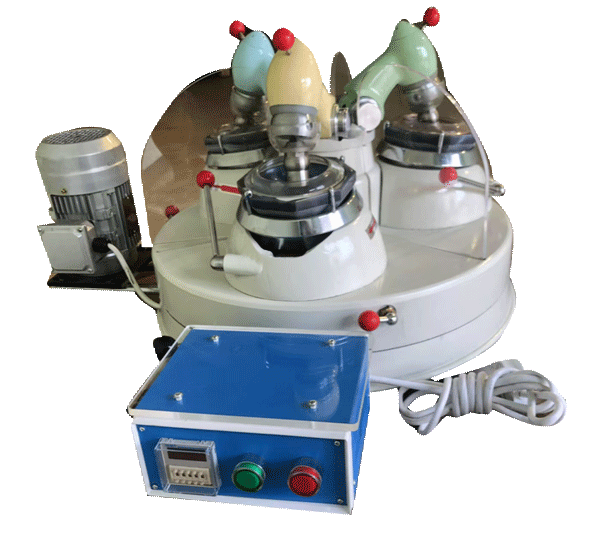
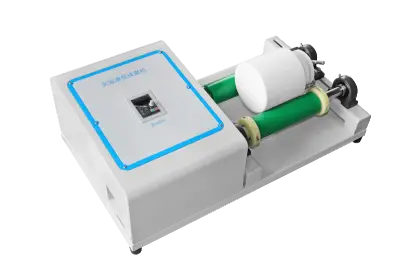
From a core perspective, the Agate Grinder with Three Working Stations is a specialized laboratory grinding device that research institutes, universities, and quality control laboratories use to pulverize hard and brittle materials into fine powders without metallic contamination. It serves as a critical tool for sample preparation where purity and precise particle size distribution are paramount.
Core Functions & Working Principles
The fundamental function of this equipment is to transform coarse granular or crystalline materials into ultra-fine, homogeneous powders. Its core working mechanism relies on the friction and impact generated between agate grinding balls and the inner walls of agate mortars. When the machine operates, the drive system rotates the mounting platform, causing the sealed jars to undergo a combined orbital and self-rotation motion. This dynamic movement forces the heavy agate media to cascade and grind the sample material trapped inside. This mechanical action ensures that the final powder retains the original chemical composition, completely avoiding cross-contamination from steel or other alloy components commonly found in conventional mills.
Key process parameters such as rotational speed, grinding time, ball-to-material ratio, and jar volume directly dictate the fineness and uniformity of the output. Higher speeds increase kinetic energy and reduce grinding time but may generate localized heat, which can be mitigated through intermittent cycling or external cooling. Longer durations improve homogeneity up to a saturation point, after which further milling yields diminishing returns. Operators can precisely control these variables to achieve target particle sizes ranging from tens of microns down to sub-micron levels, depending on the material hardness and brittleness.
Key Components & Technologies
The reliability and performance of the three-station agate grinder hinge on its precision-engineered components. The system typically features a robust motor-driven base unit capable of synchronously operating three independent grinding stations. Each station holds a high-purity natural agate mortar and matching agate grinding balls, chosen for their exceptional hardness, wear resistance, and chemical inertness. The transmission mechanism utilizes a low-vibration gear or belt drive system to ensure stable operation at variable speeds. Additionally, modern models incorporate adjustable speed controllers, safety interlocks, and standardized jar interfaces. This modular design allows users to swap out different sized agate jars to accommodate varying batch volumes, from milligram-scale R&D samples to larger pilot batches.
Key Performance Indicators & Selection Points
When selecting a three-station agate grinder, buyers should focus on several core metrics. First, the throughput capacity per station, typically ranging from 50 mL to 500 mL per jar, dictates daily processing volume. Second, the speed range and controllability are crucial; variable frequency drives offering speeds from 100 to 600 RPM allow fine-tuning for different material properties. Third, operational stability and noise reduction matter significantly for lab environments, so checking the vibration damping system and motor quality is essential.
Furthermore, ease of maintenance and cleaning plays a vital role. Aggressive surface finishes on the agate jars prevent sample adhesion, while standardized interfaces simplify part replacement. Energy efficiency and programmable timer functions also enhance workflow automation and cost-effectiveness over long-term use. Prospective users should verify the certification of the agate material to ensure it meets strict iron oxide and impurity limits, particularly when processing sensitive electronic or pharmaceutical compounds.
Application Fields & Selection Advice
This equipment is widely applied across diverse sectors including ceramic materials development, battery electrode preparation, pharmaceutical formulation, geological analysis, and advanced electronics manufacturing. In battery research, for instance, mixing cathode active materials with conductive additives requires zero iron contamination to preserve electrochemical performance. For academic researchers handling precious or highly reactive samples, the multi-station configuration offers unparalleled efficiency by enabling parallel processing of multiple formulations or comparative tests simultaneously. The Agate grinder with three working stations exemplifies how dedicated lab equipment bridges the gap between manual pestle grinding and large-scale industrial milling.
Procurement professionals should match the grinder specifications to their primary use case. Opt for smaller capacity jars and lower maximum speeds for delicate or soft materials, whereas harder minerals or industrial ceramics benefit from larger jars and higher torque settings. Always verify the purity grade of the agate components and ensure the manufacturer provides comprehensive technical support and warranty coverage to maximize equipment lifespan and experimental reproducibility.
References
Related Products
Get In Touch
Our professional team will reply to you within one business day. Please feel free to contact us!